
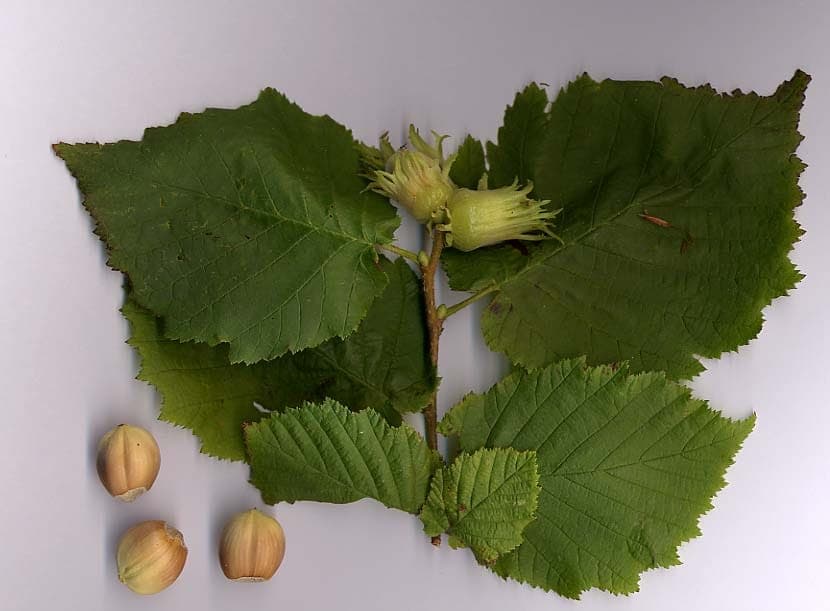
Wikimedia Commons / CC BY-SA 3.0, via Wikimedia Commons
Hazel (Corylus avellana): complete guide
Corylus avellana
Want to see Hazel (Corylus avellana): complete guide in your garden?
1 minute, no credit card
Overview
Hazel (Corylus avellana) is one of the most valuable native shrubs of Western Europe and a plant that deserves a place in every nature-friendly garden. This deciduous large shrub or small tree from the birch family (Betulaceae) has shared a special bond with humanity for thousands of years - as a food source, as a supplier of wood for hurdles and tools, and as a symbol of wisdom and fertility in countless European cultures. Hazel was one of the first plants to recolonise Europe after the last ice age, making it a true botanical pioneer.
Hazel grows as a multi-stemmed shrub reaching 4-8 metres, or as a small tree when trained on a single stem. On gardenworld.app you can create a garden design where hazel plays a natural role - as a specimen shrub, in a mixed hedge, as a backdrop for a border, or as a shade provider for a seating area. Through its early flowers (February-March), its nuts (September-October), and its dense structure, hazel attracts a wealth of birds, insects, and small mammals throughout the year. Hazel is therefore not only beautiful but also ecologically irreplaceable.
Appearance and seasonal interest
Hazel offers interest in every season. In February-March, when the rest of the garden still slumbers, the male catkins open - graceful, pendulous tassels 5-8 cm long that shed golden-yellow pollen at the lightest breeze. The female flowers are far less conspicuous: tiny bud-like structures with bright red stigmas protruding from the bud. Pollination is carried out by wind, not by insects.
In spring the foliage appears: rounded to heart-shaped leaves of 6-12 cm with a doubly serrated margin and a soft pubescence. The foliage is fresh green and casts light shade - ideal for underplanting with shade-loving species. In autumn the leaves turn warm yellow to golden-brown. The hazelnuts ripen in September-October in clusters of two to four, each enclosed in a leafy husk (involucre). The nuts are a prized food source for squirrels, mice, jays, and woodpeckers - and of course for the gardener as well.
Top cultivars
Beyond the wild hazel, numerous cultivars each bring their own character. The most famous is 'Contorta', the corkscrew hazel, with spectacularly twisted branches that stand out in winter when the bare branch architecture is fully visible. This cultivar is a living sculpture in the garden and a favourite with flower arrangers. It grows more slowly than the species, reaching 3-4 metres.
'Red Majestic' is the purple-leaved corkscrew hazel - a combination of twisted branches and deep purple-red foliage that gradually turns greener through summer. This striking cultivar makes a magnificent specimen in a small garden. 'Purpurea' (purple-leaved hazel) has straight-growing branches but dark purple-brown foliage that creates a dramatic contrast with green-leaved neighbours. For nut production, 'Cosford' is a reliable choice with large, thin-shelled nuts and good yields. Most well-stocked garden centres carry both the wild hazel and several ornamental cultivars.
Ideal location
Hazel is remarkably tolerant of its position - one of the reasons it is so successful as a native species. The shrub grows in full sun to deep shade, though nut production is best in a sunny to partially shaded spot. The ideal position offers morning sun with some shelter from the harshest winter winds, particularly during the flowering period in February-March when the catkins are vulnerable to storm damage.
Hazel suits virtually any garden situation: as a specimen in a lawn, in a mixed hedge with hawthorn, blackthorn, and dog rose, as a backdrop in a large border, or in a woodland planting scheme. In smaller gardens, the corkscrew hazel 'Contorta' is an excellent choice due to its slower growth. Be aware that hazel can spread via root suckers - in a small garden this is manageable with regular sucker removal.
Soil requirements
Hazel is undemanding about soil and thrives on virtually any type: clay, sand, loam, and even slightly peaty ground. The ideal soil is moisture-retentive but well-drained, slightly alkaline to neutral (pH 6.0-8.0), and moderately fertile. On chalky soil, hazel performs especially well - this is its natural habitat on the limestone slopes found across Europe.
Even on poor, dry sand the hazel survives, though growth will be less vigorous and the nut crop smaller. Extremely wet, waterlogged soil is the only condition hazel truly cannot tolerate - in permanently saturated ground the roots rot. Soil improvement at planting is rarely necessary, but a spadeful of compost in the planting hole helps young plants establish faster.
Planting
The best planting time for hazel is November to March, while the plant is dormant. Bare-root plants are cheaper than container-grown specimens and often establish more readily. Dig a planting hole comfortably twice as wide as the root system and the same depth. Position the plant at the same depth it sat in the nursery - on bare-root plants you can identify this by the dark discolouration on the stem.
Water generously immediately after planting - 10-15 litres - and apply a mulch layer of 5-8 cm around the base (but not against the stem). During the first year after planting, regular watering in dry spells is important to establish the root system. After that, hazel is self-sufficient. Spacing in a hedge is 80-100 cm; as a specimen, allow at least 3-4 metres.
Free design
Want to see Hazel (Corylus avellana): complete guide in your garden? Make a free design now.
Pruning
Hazel has a natural tendency to grow as a multi-stemmed shrub with a bushy character. Without pruning it becomes an imposing shrub of 4-8 metres in both height and spread. Pruning is not strictly necessary but is advisable to keep the plant healthy, productive, and shapely.
The traditional management technique is coppicing: every 7-10 years you cut all stems back to 10-15 cm above ground level. Hazel regenerates vigorously and forms a full shrub again within two to three years. This system yields a regular supply of hazel poles ideal for garden supports, wattle fencing, and bean poles. For a more gradual approach, remove one quarter to one third of the oldest stems at the base each year, so the shrub is constantly rejuvenated. Always prune in late winter (January-February) when the plant is leafless and the structure clearly visible.
Harvesting hazelnuts
Hazelnuts are one of the rewards of growing hazel, though you must compete with squirrels, jays, and mice for a good crop. The nuts ripen in September-October: they are ready when the husk turns brown and the nuts release easily from their shell. Pick up fallen nuts daily - leaving them on the ground increases the risk of mould and theft by wildlife.
Dry the nuts after harvest by spreading them in a single layer in a dry, airy spot for two to three weeks. Well-dried hazelnuts keep for months. For good cross-pollination and therefore a better nut crop, it is advisable to plant two or more different cultivars or seedlings. A single hazel produces some nuts through self-pollination, but the yield is significantly higher with a pollination partner.
Ecological value
Hazel is an ecological powerhouse and one of the most valuable plants for garden biodiversity. The early catkins are a first source of pollen for bees and bumblebees that become active on warm February days. The dense shrub structure offers nesting sites for numerous bird species: blackbird, robin, dunnock, garden warbler, and wren all nest willingly in hazel.
The nuts provide food for squirrels, wood mice, dormice (which take their name from the plant), jays, and nuthatches. Fallen leaves decompose quickly, forming a fertile humus layer that stimulates soil life. More than 70 species of moth use hazel as a host plant. In an ecological or naturalistic garden, hazel is therefore an indispensable plant that supports an entire food web.
Maintenance calendar
January-February: Ideal pruning time. Remove deadwood and a proportion of the oldest stems. Admire the catkins opening now.
March-April: Pollination takes place. Foliage begins to unfurl. Remove any root suckers you do not wish to keep.
May-June: The shrub is in full leaf. Check for big bud mite (swollen buds that fail to open) and remove affected buds.
July-August: Nuts are developing. Enjoy the shade of the canopy.
September-October: Harvest time. Collect nuts daily. Enjoy the autumn colour.
November-December: Leaf fall. Plant new hazels. Begin pruning once leaves have dropped.
Winter hardiness
Corylus avellana is outstandingly winter-hardy, surviving temperatures down to -30 degrees C or lower (USDA zones 4-8). As a native species, hazel is perfectly adapted to the Western European climate and needs no winter protection whatsoever. Even the most severe winters of recent centuries have left hazel unscathed.
The only risk is late spring frost that may damage the flowering catkins and female flowers, leading to a reduced nut crop. The plant itself is unharmed. The ornamental cultivars 'Contorta' and 'Red Majestic' are equally hardy as the species.
Pests and diseases
Hazel is generally a robust plant with few serious pest or disease problems. The most common pest is the nut weevil (Curculio nucum), a snout beetle whose larva bores into the ripening nuts. Affected nuts are recognisable by a small round hole. Control is difficult - collect all fallen nuts promptly and destroy any with holes.
Big bud mite (Phytoptus avellanae) causes conspicuously swollen buds that fail to open in spring. Remove and destroy affected buds in winter. Powdery mildew can occur in damp weather but is rarely serious. Bacterial blight (Xanthomonas) can in rare cases cause dieback of branches - prune affected branches 30 cm below the diseased wood and disinfect your secateurs.
Companion plants
Hazel is an excellent backdrop plant and combines well with both native and garden plants. In a mixed hedge, hazel partners classically with hawthorn (Crataegus monogyna), blackthorn (Prunus spinosa), dog rose (Rosa canina), and guelder rose (Viburnum opulus). Such a hedge provides year-round food and shelter for birds and insects.
As a specimen or in a woodland planting, hazel combines beautifully with serviceberry (Amelanchier lamarckii) for spring blossom, elder (Sambucus nigra) for summer bloom and berries, and beech (Fagus sylvatica) for contrasting foliage texture. Beneath hazel, shade plants such as wood anemone, snowdrop, wild garlic, hostas, ferns, and brunnera thrive in the dappled light. The light, open shade cast by hazel is ideal for these species.
Final thoughts
Hazel is one of those rare plants that truly offers everything: year-round ornamental interest, edible nuts, ecological richness, cultural significance, and an uncomplicated nature that even the most inexperienced gardener can handle. No other shrub so effortlessly combines beauty with utility and wildlife value.
Choose your hazel from a reputable garden centre - select the wild species for a natural garden or 'Contorta' if you want a striking specimen. On gardenworld.app you can create a garden design that combines hazel with native shrubs and shade plants tailored to your specific garden. Plant a hazel this autumn and give your garden a plant that was there before the Romans came.
Want to see Hazel (Corylus avellana): complete guide in your garden? Make a free design now.
Upload a photo, pick a style, and get a photorealistic design with plant list in under a minute.
No credit card required


Similar plants
Juneberry: complete guide
Amelanchier lamarckii
Everything about the Juneberry (Amelanchier lamarckii): spring blossom, autumn colour, edible berries and care. Expert tips for this versatile four-season tree.
Elderberry: complete guide
Sambucus nigra
Everything about Common Elder (Sambucus nigra): planting, pruning, care, and culinary uses of flowers and berries. Practical tips for this versatile native tree.
Beech (Fagus sylvatica): complete guide
Fagus sylvatica
Everything about beech as a hedge plant and specimen tree: planting, pruning, growth rate and winter interest. Practical tips for a dense beech hedge.