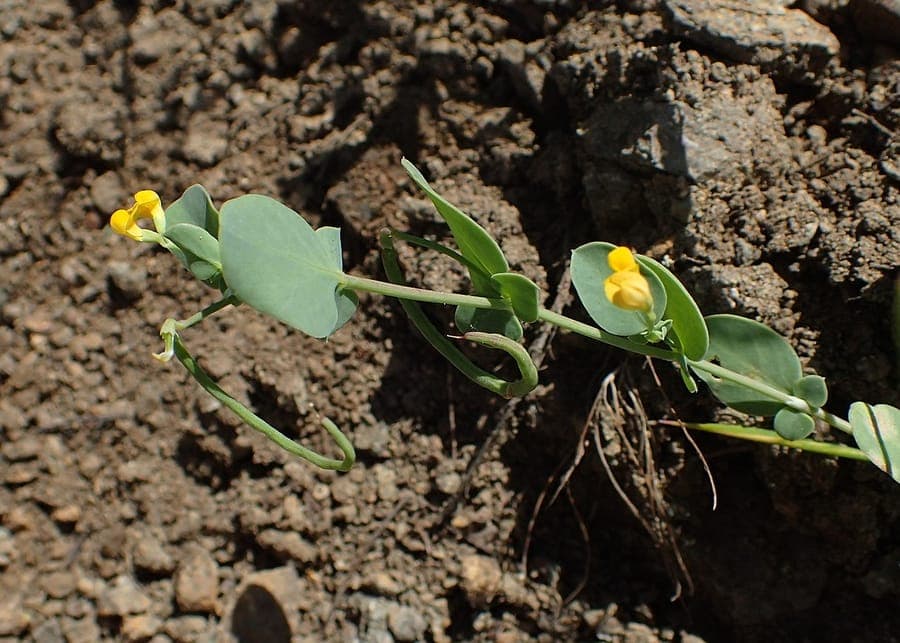
Krzysztof Ziarnek, Kenraiz / CC BY-SA 4.0, via Wikimedia Commons
Coronilla scorpioides: complete guide
Coronilla scorpioides
Want to see Coronilla scorpioides: complete guide in your garden?
Full design in HD: €7.99
Look after your Coronilla scorpioides with the GardenWorld app
Identify plants with your camera and get a care calendar with reminders for this plant.


Overview
Coronilla scorpioides, commonly known as annual scorpion-vetch, is a fascinating annual plant belonging to the Fabaceae family. This distinctive species impresses gardeners with its yellow flowers and particularly with its characteristic scorpion-like fruit formation. The plant originates from Mediterranean regions and thrives in dry, sunny locations.
Although coronilla scorpioides remains less famous than many other garden plants, this species deserves greater attention from gardeners seeking distinctive elements. The plant offers both flowering qualities and botanical interest thanks to its unique fruits. For gardeners interested in architectural and botanical curiosities, visit gardenworld.app for inspiration on integrating such special plants.
Appearance and bloom
Coronilla scorpioides forms a compact plant typically reaching 20-40 centimeters in height. The plant grows upright with thin, branching stems that remain weak. Leaves prove pinnate, constructed from small leaflets arranged along the central vein, giving the plant an elegant appearance.
Flowers display yellow coloring and small size, usually approximately 0.5 centimeters in diameter, growing in small clusters. They appear throughout summer and are not particularly spectacular, but possess pleasant appearance. However, what truly distinguishes this plant are its fruits.
Following flowering, the plant produces characteristic fruit pods that closely resemble scorpions, hence the common name. The fruit appears curved and segmented, with seeds appearing stacked together. These unique fruits grant coronilla scorpioides a botanical curiosity value that interests many gardeners.
Ideal location
Coronilla scorpioides thrives in full sun on dry, sunny locations. This plant proves excellently adapted to dry conditions and tolerates drought remarkably well. Plant in locations where minimum six hours direct sunlight remains available. The plant also grows acceptably in partial shade but produces fewer flowers.
The plant remains unbothered by wind and grows well even in exposed locations. This makes it ideal for roof gardens, balconies, and open gardens where significant wind occurs. In temperate climates, it grows well as ground cover in dry gardens.
Coronilla scorpioides represents an interesting choice for xeric gardens where water conservation proves important. The plant combines well with other drought-loving species.
Soil
Coronilla scorpioides grows well in virtually all soil types, but prefers well-draining, sandy or loamy soil. A pH around 6.0 to 8.0 proves ideal. The plant tolerates poor soil excellently, so soil preparation remains not really necessary.
What truly matters is good drainage. Waterlogging proves far more damaging to this plant than drought. Ensure water drains well. In heavy clay soils, add sand or perlite for improved drainage.
The plant proves undemanding nutritionally and actually performs better in poor soil. Excessive fertilization can lead to excessive foliage growth and reduced flowering.
Free preview
Want to see Coronilla scorpioides: complete guide in your garden? Make a free preview of your design.
Watering
Once established, coronilla scorpioides becomes very drought tolerant and requires only moderate water. Water when soil feels very dry to touch, but avoid excessive watering. During dry periods, water deeply to encourage roots to penetrate deeper into soil, though often even this proves unnecessary.
As seedlings, plants prove more tender and require regular watering until well established. After that point, they survive with minimal water.
When growing coronilla scorpioides in pots, check moisture regularly but water only when soil feels reasonably dry. The plant tolerates drought better than excess moisture.
Pruning
Coronilla scorpioides requires minimal pruning. Remove only dead or damaged portions. If you want plants to remain more compact, pinch growing tips in July so plants branch more prolifically.
When interested in the scorpion-like fruits, allow some flowers to remain so they mature properly. This looks botanically interesting and many gardeners appreciate this aspect.
At season's end, when plants die back, remove all dead growth.
Maintenance calendar
During growing season (May-October), provide occasional water during dry periods. Pinch growing tips in July for more branching.
In late summer (August-September), allow some flowers to remain for fruit development. The fruits prove decorative and interesting.
In autumn (October-November), reduce watering as the plant dies back.
Coronilla scorpioides represents an annual crop and dies after first frost.
Winter hardiness
Coronilla scorpioides lacks winter hardiness. This annual plant dies after first frost and must be replanted each year. In temperate climates, seeds falling from mature fruits can overwinter and germinate next spring.
If you want coronilla to return next season, allow some plants their fruits to mature fully and disperse seeds naturally.
Companion plants
Coronilla scorpioides works well in dry gardens alongside other drought-loving species. Combine it with lavender, rosemary, salvia, and other Mediterranean plants. Yellow flowers create beautiful effects against gray foliage of Artemisia or Senecio.
The plant grows well with ornamental grasses for textural interest. The plant proves a good companion for other botanical curiosities such as Echinacea or other architectural plants.
Conclusion
Coronilla scorpioides offers a unique combination of flowers and botanical interest with its characteristic scorpion-like fruits. If you appreciate distinctive, lesser-known plants and possess dry, sunny locations, this represents an excellent choice. For gardeners interested in botanical details and sustainable drought-loving plants, visit gardenworld.app for further inspiration. This plant proves difficult to find in regular shops, but seeds remain available from specialized seed companies.
Frequently asked questions about Coronilla scorpioides
Is Coronilla scorpioides winter hardy?
Coronilla scorpioides lacks winter hardiness. This annual plant dies after first frost and must be replanted each year.
When and how do you prune Coronilla scorpioides?
Coronilla scorpioides requires minimal pruning. Remove only dead or damaged portions.
How much water does Coronilla scorpioides need?
Once established, coronilla scorpioides becomes very drought tolerant and requires only moderate water. Water when soil feels very dry to touch, but avoid excessive watering.
Where does Coronilla scorpioides grow best?
Coronilla scorpioides thrives in full sun on dry, sunny locations. This plant proves excellently adapted to dry conditions and tolerates drought remarkably well.
What soil does Coronilla scorpioides need?
Coronilla scorpioides grows well in virtually all soil types, but prefers well-draining, sandy or loamy soil. A pH around 6.0 to 8.0 proves ideal.

See it in your garden
See Coronilla scorpioides in your garden
One photo of your garden and a few questions. You see the result in about a minute.
Try it with a photoIdentify this plant in your own garden. Identify a plant
Similar plants
Pineapple broom (Argyrocytisus battandieri): complete guide
Argyrocytisus battandieri
Everything about pineapple broom (Argyrocytisus battandieri), the Moroccan wall shrub with silver leaves and pineapple-scented flowers: site, pruning and hardiness.
Blue false indigo: complete guide
Baptisia australis
Everything about blue false indigo (Baptisia australis): position, soil, watering, cutting back, hardiness and toxicity. A long-lived prairie perennial with indigo flowers.
Warminster broom (Cytisus × praecox): complete guide
Cytisus × praecox
Everything about Warminster broom (Cytisus × praecox): position, poor soil, pruning after flowering, hardiness and what you need to know about its toxicity.
