
Mason Brock (Masebrock) / Public domain, via Wikimedia Commons
Crimson clematis: complete guide
Clematis texensis
Want to see Crimson clematis: complete guide in your garden?
1 minute, no credit card
Overview
Clematis texensis, known as Crimson clematis, Scarlet clematis, or Scarlet leather flower, is a graceful climbing vine native to Texas. It distinguishes itself with gorgeous red to deep red flowers in a unique urn or bell shape, very different from typical clematis blooms.
This native American climbing vine reaches 2-3 meters in optimal conditions. It is very popular with flower enthusiasts for its long-lasting flowers (June through October) and easy growth in warm climates.
Appearance & Bloom
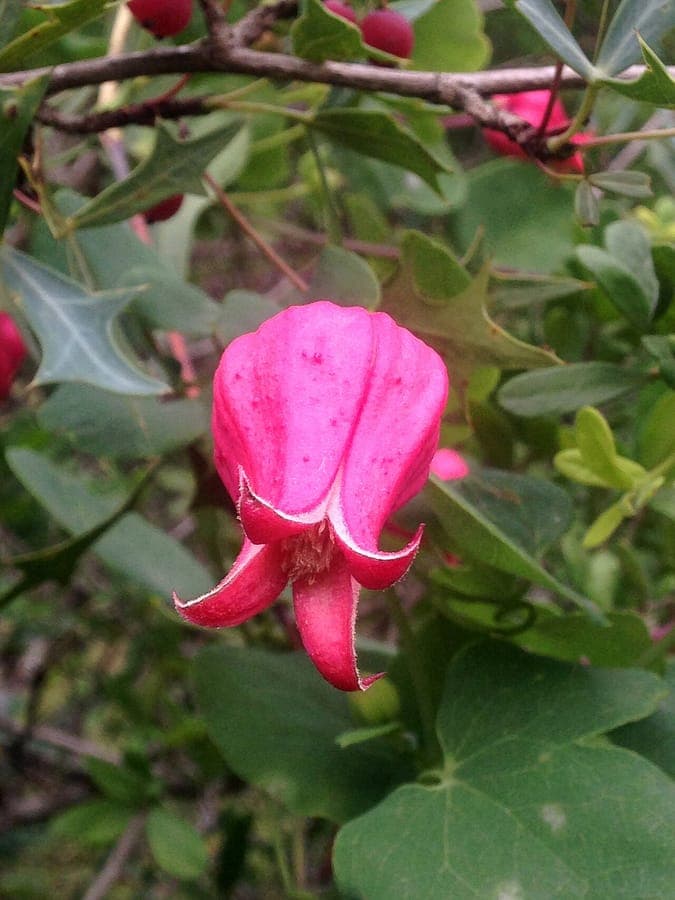
Clematis texensis grows as a slender, delicate climber with fine foliage. The flowers are truly the highlight: thick-walled, urn or bell-shaped flowers 2-3 centimeters long in bright red to crimson-red.
Unlike many other clematis, the flowers are not flat-open, but rather hanging, closed forms like small lanterns. They are pleasantly fragrant. The bloom period extends from June through October with intermittent flowering.
The seeds have long, silky tails that are decorative.
Ideal Location
Clematis texensis grows best in warm, sunny environments (zones 8-10 in USDA terms). It needs at least 5-6 hours direct sun daily for good flower production. In cooler climates, it can grow against a heated wall or in a greenhouse.
The plant thrives in open, sunny settings rather than in shading. It tolerates wind reasonably well.
Soil
Clematis texensis prefers well-draining, slightly nutrient-rich soil. In its native Texas habitats, it grows in dry, sandy to rocky ground. It absolutely cannot survive waterlogged conditions.
At planting, work some sand and compost through the soil for better drainage. Alkaline soils are suitable.
Watering
Once established, Clematis texensis is moderately drought-tolerant. During growth and bloom (June-October), regular water encourages better flowers. Once established, water 2-3 times weekly may suffice depending on rainfall.
Ensure drainage is perfect - waterlogged roots will kill the plant. Mulch around the plant base for moisture retention.
Free design
Want to see Crimson clematis: complete guide in your garden? Make a free design now.
Pruning
Clematis texensis belongs to "group 3" (heavy pruners). In early spring (February-March), cut all last year's growth back to about 30 centimeters above ground. This encourages denser, more compact growth.
Alternatively, you can leave some supporting growth at lower levels (45 centimeters) for earlier flowers. Perform pruning carefully.
Maintenance Calendar
February-March: Heavy pruning; fertilizer application. April-May: Rapid growth; training work. June-August: First and second flowering periods; regular water. September-October: Third flowering period; reduce water. November-January: Winter dormancy; no maintenance.
Winter Hardiness
Clematis texensis is not fully winter-hardy in temperate climates. It is recognized as USDA zones 8-10 plant, suitable for warm regions including southern France, southern Spain, and southern Italy. In the Netherlands, Belgium, or northern France, it does not overwinter without shelter.
Companion Plants
Companion plants for Clematis texensis:
- Clematis armandii: green-leaf climber provides contrast
- Solanum: yellow-orange fruits give temporal color
- Hedera: green climber background
- Rosa: red roses can be combined for integration
Closing Thoughts
Clematis texensis deserves a place in warm, sunny gardens with proper attention to pruning. With long bloom period from June through October and gorgeous red flowers, it offers years of flowering pleasure. Available at specialized plant nurseries. For more landscape inspiration, visit gardenworld.app.
Recognize Crimson clematis by its characteristic red, urn-shaped flowers and slender, fine climbing habit. With proper attention to pruning and warmth, you will enjoy years of gorgeous blooms.
Want to see Crimson clematis: complete guide in your garden? Make a free design now.
Upload a photo, pick a style, and get a photorealistic design with plant list in under a minute.
No credit card required


Similar plants
Asian virginsbower: complete guide
Clematis florida
Discover Clematis florida with double blooms from East Asia. Elegant climbing vine for warm climates, summer bloomer, long season.
Hairy clematis: complete guide
Clematis hirsutissima
Discover Clematis hirsutissima, a sturdy sedge-flower for dry mountain gardens. Silky purple flowers, low maintenance, native North America.
Purple clematis: complete guide
Clematis viticella
How to grow Clematis viticella successfully: ideal conditions, pruning, watering, companion plants and design tips for your garden.