
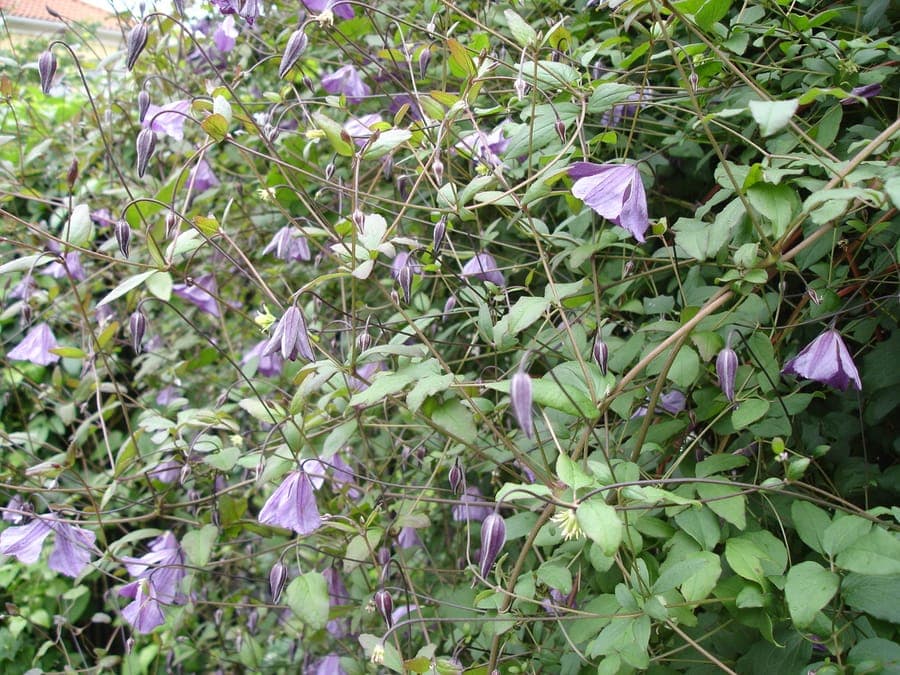
Epibase / CC BY 2.5, via Wikimedia Commons
Purple clematis: complete guide
Clematis viticella
Want to see Purple clematis: complete guide in your garden?
1 minute, no credit card
Overview
Clematis viticella, commonly known as purple clematis, is a resilient and graceful vine that brings late-season colour to gardens across temperate zones. Native to southern Europe and western Asia - including regions like Greece, Italy, Turkey and the Balkans - this species thrives in climates with warm, dry summers. It's a popular choice among gardeners for its hardiness, manageable size and long flowering period. Belonging to the Ranunculaceae family, it behaves differently from early-flowering clematis types, making it ideal for gardeners who want reliable summer-to-autumn performance.
One of the biggest advantages of Clematis viticella is its adaptability. It grows well in a range of garden styles, from cottage gardens to modern urban spaces. On gardenworld.app, you can create a custom garden layout that incorporates this vine to maximise vertical interest and seasonal bloom.
Appearance & bloom cycle
Purple clematis produces slender, twining stems that typically reach 2.5 to 3 metres in length. The leaves are compound, dark green on top and slightly paler underneath, with a delicate, airy texture. The flowers, usually 3 to 5 cm in diameter, have four to six spreading sepals. While most cultivars bloom in shades of violet or deep purple, the white-flowered forms are increasingly popular for their elegant contrast.
Flowering begins in mid-July and continues through October, peaking in August and September. Because it blooms on new growth from the current season, proper pruning is crucial. After flowering, the plant develops silky seed heads that add winter texture and visual interest to the garden.
Ideal location
For best results, plant Clematis viticella in a spot that receives at least 5–6 hours of direct sun daily. The flowers need sunlight to open fully and develop rich colour. However, the roots prefer to stay cool and shaded. Achieve this by planting low-growing companions around the base - such as nepeta or thyme - or by applying a layer of organic mulch.
Provide a sturdy support structure like a trellis, obelisk, or pergola. The vine climbs by twisting leaf stalks (tendrils), so avoid smooth metal poles. Wooden or textured metal supports work best. On gardenworld.app, you can preview how different structures suit your space and enhance the vine's natural growth pattern.
Soil requirements
This clematis isn't fussy about soil type as long as it's well-drained. A loamy or sandy mix with moderate fertility is ideal. Heavy clay soils should be amended with compost or grit to improve drainage. The pH range should be slightly acidic to neutral (6.0–7.0).
Avoid waterlogged areas - Clematis viticella is prone to root rot in consistently wet conditions. If your garden has poor drainage, consider planting in a raised bed or adding a gravel layer at the bottom of the planting hole.
Free design
Want to see Purple clematis: complete guide in your garden? Make a free design now.
Watering
During the first growing season, water regularly - about once or twice a week, depending on weather. Deep watering encourages strong root development. Once established, the plant is fairly drought-tolerant but benefits from occasional watering during prolonged dry spells.
Always water at the base to prevent fungal issues. Wet foliage can lead to clematis wilt, a common problem in humid conditions. Water early in the morning to reduce evaporation and avoid stressing the roots.
Pruning
Clematis viticella falls into pruning group 3, meaning it should be cut back hard every year in late winter or early spring (February to early March). Trim all stems to 30–50 cm above ground level. This encourages vigorous new growth and a compact shape with abundant blooms.
Because flowers form on new wood, cutting back is essential. Without pruning, the plant becomes leggy, with blooms only at the top and bare stems below.
Maintenance calendar
- January: Inspect stems, remove any winter damage
- February–March: Hard prune to 30–50 cm
- April–May: Begin light feeding, keep soil evenly moist
- June: Guide new shoots, watch for slugs
- July–September: Peak bloom period, enjoy the display
- October: Remove spent flowers, leave seed heads for winter interest
- November–December: No action needed, plant is dormant
Winter hardiness
This clematis is hardy to USDA zone 4 (down to -30°C). In the UK and most of northern Europe (zones 7–8), it survives winter without protection. The top growth may die back completely, but the roots remain alive and resprout in spring.
In areas with harsh, wet winters, a light mulch of compost or well-rotted manure over the root zone can help. Avoid covering the stems - this can trap moisture and promote rot.
Companion plants
Pair Clematis viticella with low-growing, drought-tolerant perennials that shade the roots. Good options include lavender, catmint (Nepeta), or ornamental grasses. These companions also extend the garden's flowering season.
You can also grow it with roses - let the clematis climb up the rose's structure while the rose provides base-level blooms. Just ensure both plants have enough space and airflow. On gardenworld.app, you can explore curated plant combinations that match bloom time, colour and care needs.
Closing
Purple clematis is a low-maintenance, high-reward plant that adds vertical drama and long-lasting colour. With full sun, well-drained soil and an annual hard prune, it delivers a stunning display from midsummer into autumn.
Find Clematis viticella at reputable garden centres across the UK and Europe. Look for named cultivars like 'Etoile Violette' or 'Alba Luxurians' for reliable performance. With minimal effort, this clematis becomes a dependable feature in your garden year after year.
Want to see Purple clematis: complete guide in your garden? Make a free design now.
Upload a photo, pick a style, and get a photorealistic design with plant list in under a minute.
No credit card required


Similar plants
Drummond's anemone: complete guide
Anemone drummondii
Discover Drummond's anemone (Anemone drummondii): a silvery-grey mountain plant for cool rock gardens and alpine troughs.
Korean clematis: complete guide
Clematis serratifolia
Clematis serratifolia is a hardy climber with fragrant yellow bell flowers in August-September. Pruning group 3, location and care tips.
Aquilegia brevistyla: complete guide
Aquilegia brevistyla
Discover Aquilegia brevistyla, the elegant North American columbine. Growing tips, shade tolerance, and design ideas for woodland and shadowed gardens.