H. Zell / CC BY-SA 3.0, via Wikimedia Commons
Asian virginsbower: complete guide
Clematis florida
Want to see Asian virginsbower: complete guide in your garden?
Full design in HD: €7.99
Look after your Asian virginsbower with the GardenWorld app
Identify plants with your camera and get a care calendar with reminders for this plant.


Overview
Clematis florida, commonly known as Asian virginsbower or Florida clematis, is a graceful climbing vine originating from South China. This member of the Ranunculaceae (buttercup family) distinguishes itself with elegant, fully double flowers featuring prominent staminodia (inner petal-like structures) in the center.
This climber is quintessentially elegant and ornamental, typically reaching 3-5 meters in ideal conditions. It is popular with flower enthusiasts for its refined blooms and extended flowering period from May through October.
Appearance & Bloom
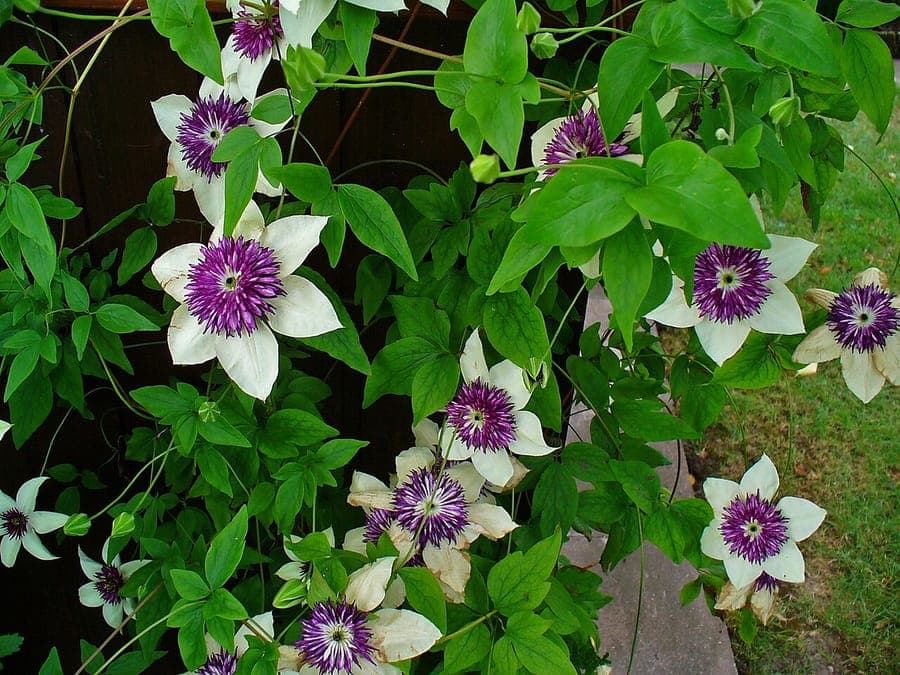
Clematis florida produces elegant, largely double flowers of 5-10 centimeters diameter. The primary petals are white to pale green, with striking central staminodes in purple-red to dark purple. This color contrast makes each bloom a work of art.
Flowers appear in June and continue into October, with multiple flowering waves throughout the season. They are pleasantly lightly fragrant. The seeds develop feathery tails that are also decorative.
Ideal Location
Clematis florida grows best with warm, sheltered microclimate. In warm-temperate climates (zones 8-10), it thrives against south or west-facing walls. In cooler climates, it can be grown in a greenhouse or against very heated walls. The plant needs 5-6+ hours direct sunlight for optimal flowering.
Roots must have shade - plant other low-growing plants at the base to keep roots cool.
Soil
Clematis florida prefers well-draining, nutrient-rich soil with pH 6.5-7.5. It cannot survive waterlogged ground. Work generous amounts of compost or rotted manure into planting holes, and provide slow-release fertilizer during the growing season.
Heavy clay soils must be amended with sand and compost for proper drainage.
Watering
Once established, this clematis is fairly drought-tolerant, though regular watering stimulates flower production. Water deeply and regularly during the growing season (May-October), but ensure drainage is perfect.
In very hot, dry summers, daily watering may be necessary. Mulch around the plant base with 5 centimeters of compost for moisture retention.
Free preview
Want to see Asian virginsbower: complete guide in your garden? Make a free preview of your design.
Pruning
Clematis florida belongs to "group 2" clematis (pruning to prevent congestion). After flowering (October-November), cut back to approximately 50 centimeters height to maintain shape and encourage density. Remove dead or diseased tissue.
In early spring (March), you can prune lightly to refine shape, but avoid heavy pruning.
Maintenance Calendar
March-April: Light pruning for shape; fertilizer application. May-June: First flowering period; regular watering; support/training work. July-August: Second flowering period; water support; deadheading for more blooms. September-October: Third flowering period; reduce watering toward month-end. November-February: Heavy pruning; winter dormancy.
Winter Hardiness
Clematis florida is not fully winter-hardy in temperate climates. It is recognized as USDA zones 8-10 plant (to about -7 to -12 degrees Celsius). In zone 7 or colder, it must grow against a very protected south-facing wall or even in a greenhouse. In the Netherlands and Belgium, it does not overwinter outdoors without protection.
Companion Plants
Companion plants for Clematis florida:
- Solanum (ornamental): yellow to orange fruits give contrast
- Forsythia: yellow spring bloomers give supporting color
- Rosa: pink or red climbers combine gracefully
- Jasminum: white night-blooming jasmine combines with light
Closing Thoughts
Clematis florida deserves a place in warm, sheltered gardens with proper care for its elegant double flowers and extended blooming period. Perform clear pruning and ensure good drainage. Available at specialized plant nurseries. For more landscape inspiration, visit gardenworld.app.
Recognize Clematis florida by its characteristic double white flowers with red centers. With adequate warmth, shelter, and pruning, you will enjoy years of elegant flowering pleasure.
Frequently asked questions about Asian virginsbower
Is Asian virginsbower winter hardy?
Clematis florida is not fully winter-hardy in temperate climates. It is recognized as USDA zones 8-10 plant (to about -7 to -12 degrees Celsius).
When and how do you prune Asian virginsbower?
Clematis florida belongs to "group 2" clematis (pruning to prevent congestion). After flowering (October-November), cut back to approximately 50 centimeters height to maintain shape and encourage density.
How much water does Asian virginsbower need?
Once established, this clematis is fairly drought-tolerant, though regular watering stimulates flower production. Water deeply and regularly during the growing season (May-October), but ensure drainage is perfect.
Where does Asian virginsbower grow best?
Clematis florida grows best with warm, sheltered microclimate. In warm-temperate climates (zones 8-10), it thrives against south or west-facing walls.
What soil does Asian virginsbower need?
Clematis florida prefers well-draining, nutrient-rich soil with pH 6.5-7.5. It cannot survive waterlogged ground.

See it in your garden
See Asian virginsbower in your garden
One photo of your garden and a few questions. You see the result in about a minute.
Try it with a photoIdentify this plant in your own garden. Identify a plant
Similar plants
Crimson clematis: complete guide
Clematis texensis
Discover Clematis texensis with gorgeous red flowers. Texas-native climbing vine, drought-tolerant, long bloom season, warm climate.
Hairy clematis: complete guide
Clematis hirsutissima
Discover Clematis hirsutissima, a sturdy sedge-flower for dry mountain gardens. Silky purple flowers, low maintenance, native North America.
