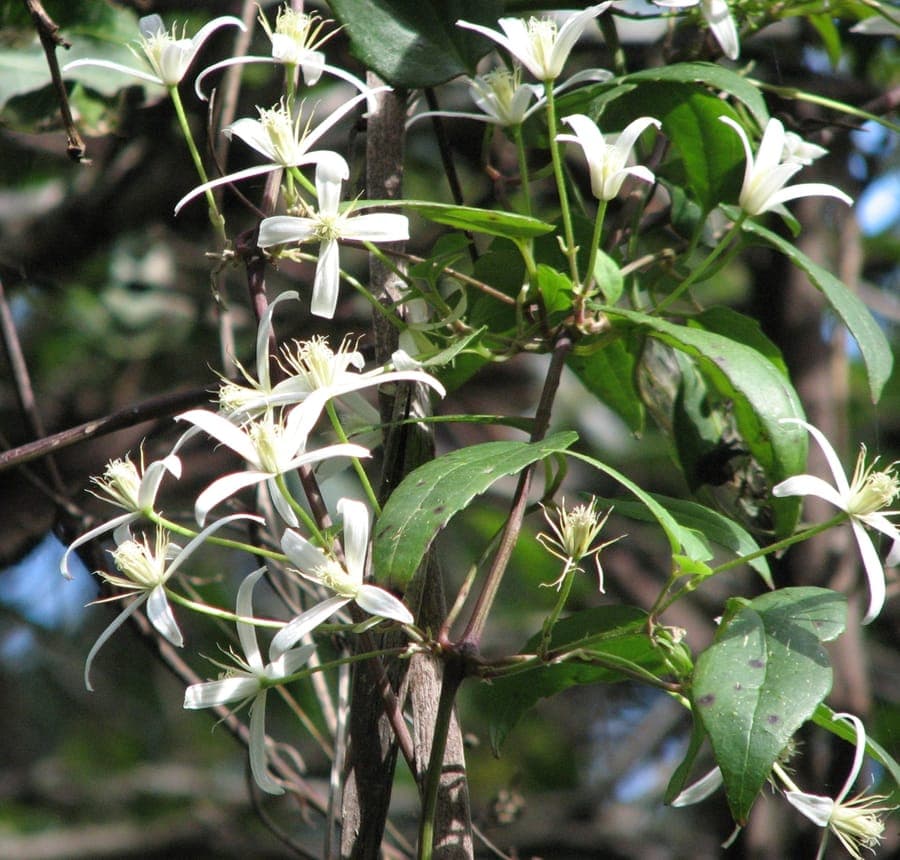
Melburnian / CC BY 3.0, via Wikimedia Commons
Clematis aristata: complete guide
Clematis aristata
Want to see Clematis aristata: complete guide in your garden?
Full design in HD: €7.99
Look after your Clematis aristata with the GardenWorld app
Identify plants with your camera and get a care calendar with reminders for this plant.


Overview
Clematis aristata, commonly known as mountain clematis or toothed clematis, is a beautiful flowering climbing plant from the Ranunculaceae family native to southeastern Australia. This impressive plant is highly appreciated for its abundant flowering and adaptability to various growing conditions. In its natural habitat, the plant grows in temperate forests and forest edges where it climbs against trees and shrubs.
The plant has considerable decorative value both during flowering and afterwards, when the seed heads take on beautiful fluffy forms. Mountain clematis is suitable for gardens in temperate climates and can grow both against walls and on trellis structures.
Appearance and Bloom
Clematis aristata is a slender climbing plant that can grow quickly against suitable support. The stems are thin but sturdy, and the leaves appear in groups of three (trifoliate). The leaves have sharp, toothed edges, which gives the plant its other name 'toothed clematis'.
The flowers are small to medium and appear in white or light pink tones with a striking cluster of yellow stamens in the center. The flowers form in rich sprays and virtually cover the plant during its blooming peak. This usually occurs in spring and early summer.
After flowering, fluffy seed heads form which are very decorative and remain on the plant for a long time, providing additional visual interest.
Ideal Location
Clematis aristata thrives best in full sun to light shade conditions. The plant needs at least 4-6 hours of direct sunlight daily for optimal flowering. Too little light results in fewer flowers.
The plant accepts both full sun and light shade, though full sun produces the best blooms. In hot climates, light afternoon shade can be beneficial.
Mountain clematis is well tolerant of frost conditions and can grow outdoors in most temperate climate zones. The plant feels at home in climates where winter temperatures do not routinely drop below -10 degrees Celsius.
Free preview
Want to see Clematis aristata: complete guide in your garden? Make a free preview of your design.
Soil
Clematis aristata prefers well-draining soil with neutral to slightly acidic pH (6.0-7.5). The plant is fairly tolerant of various soil types as long as drainage is good.
Add humus or compost to planting holes to improve soil structure. The plant appreciates nutrient-rich soil but also grows in less fertile soils.
Ensure the soil does not become waterlogged, which can lead to root rot.
Watering
Clematis aristata requires regular water during the growing season. Watering when the top centimeter of soil feels dry is a good guideline.
During the first year after planting, provide more water to help establish the root system. Once established, the plant is relatively drought tolerant.
In winter, when the plant goes dormant, reduce watering.
Pruning
Pruning is essential for healthy growth and abundant flowering of Clematis aristata. After flowering, you can cut the plant back to desired size. This stimulates better branching and denser growth.
Remove dead or damaged stems with sharp scissors.
Pruning should occur in late summer or early fall, after flowering is over.
Maintenance Calendar
Spring: Growth begins, regular watering, start feeding. Summer: Bloom peaks, abundant water needed, monthly feeding beneficial. Fall: Prune after blooming, reduce watering. Winter: Minimal water, protective covering possible in very harsh climates.
Winter Hardiness
Clematis aristata is hardy in temperate climates. The plant can remain outdoors in areas where temperatures do not routinely drop below -10 to -15 degrees Celsius. In more extreme climates, protection may be needed.
Companion Planting
Clematis aristata combines well with:
Other clematis varieties for extended flowering Roses in complementary colors Fig trees for texture Hedge or screen as backdrop Lavender for fragrance
This combination creates a beautiful, flower-covered screen.
Conclusion
Clematis aristata is a distinguished bloomer suitable for gardens in temperate climates. With its abundant flowering, winter hardiness, and adapted maintenance requirements, it is a strong choice. Plant it against a wall or trellis in a sunny location, and you will enjoy its beautiful flowers year after year. The fluffy seed heads add extra beauty in the fall. Visit gardenworld.app to transform your garden.
Frequently asked questions about Clematis aristata
Is Clematis aristata winter hardy?
Clematis aristata is hardy in temperate climates. The plant can remain outdoors in areas where temperatures do not routinely drop below -10 to -15 degrees Celsius.
When and how do you prune Clematis aristata?
Pruning is essential for healthy growth and abundant flowering of Clematis aristata. After flowering, you can cut the plant back to desired size.
How much water does Clematis aristata need?
Clematis aristata requires regular water during the growing season. Watering when the top centimeter of soil feels dry is a good guideline.
Where does Clematis aristata grow best?
Clematis aristata thrives best in full sun to light shade conditions. The plant needs at least 4-6 hours of direct sunlight daily for optimal flowering.
What soil does Clematis aristata need?
Clematis aristata prefers well-draining soil with neutral to slightly acidic pH (6.0-7.5). The plant is fairly tolerant of various soil types as long as drainage is good.

See it in your garden
See Clematis aristata in your garden
One photo of your garden and a few questions. You see the result in about a minute.
Try it with a photoIdentify this plant in your own garden. Identify a plant
Similar plants
Chinese Aconite (Aconitum carmichaelii): complete guide
Aconitum carmichaelii
Everything about Chinese aconite (Aconitum carmichaelii): position, soil, pruning and care, plus clear advice on its severe toxicity to people and pets.
Bugbane (Actaea simplex): complete guide
Actaea simplex
Everything about bugbane (Actaea simplex): position, soil, pruning and hardiness of this shade-loving perennial with fragrant white spires in September and October.
Grecian windflower: complete guide
Anemone blanda
Everything about Grecian windflower (Anemone blanda): soaking and planting the tubers, position, soil, March to April flowering and naturalising. Tips for a blue carpet.
