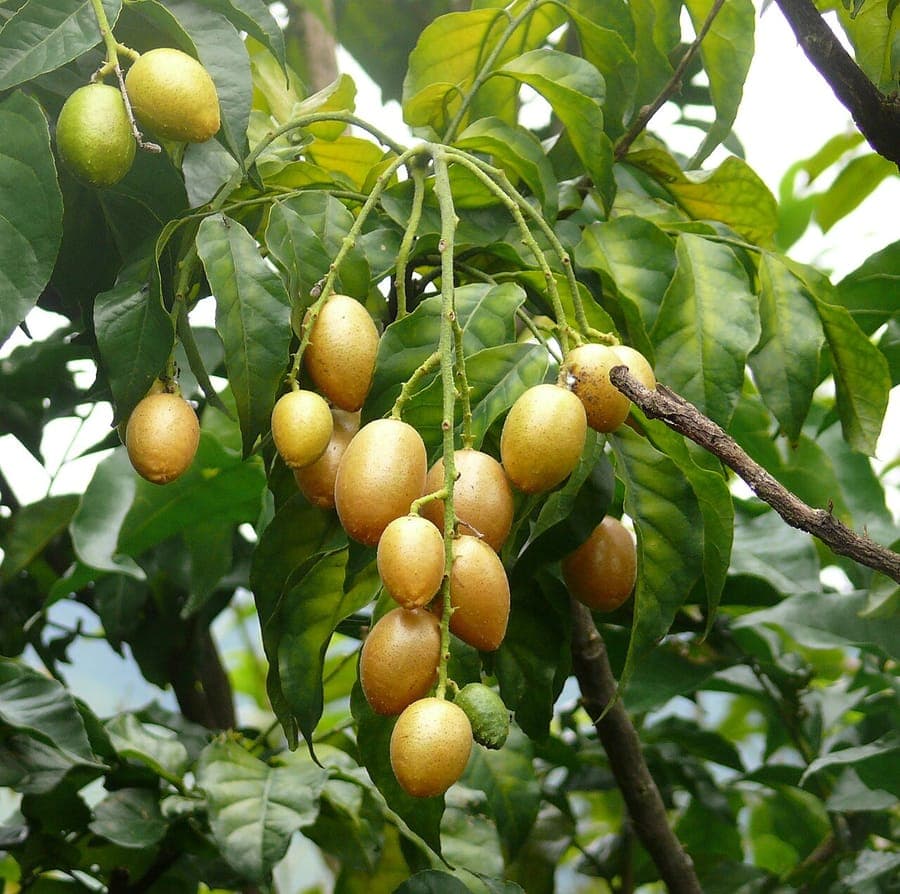
WingkLEE / Public domain, via Wikimedia Commons
Wampi (Clausena lansium): complete guide
Clausena lansium
Want to see Wampi (Clausena lansium): complete guide in your garden?
Full design in HD: €7.99
Look after your Wampi with the GardenWorld app
Identify plants with your camera and get a care calendar with reminders for this plant.


Overview
The Wampi, scientifically known as Clausena lansium, is a promising small fruit tree native to southern China and Indo-China. This productive species produces delicious, tangy fruits resembling tiny lemon-like berries and has been treasured in Asian gardens for centuries. The Wampi grows relatively slowly, forming a compact crown with elegant compound leaves. For gardeners seeking something different from common fruit trees, the Wampi offers a fascinating alternative that provides both nutritional and ornamental value to the landscape.
Appearance and bloom
The Wampi is typically a small to medium-sized tree, usually reaching 4 to 6 meters in height. Its compound, fern-like leaves create an airy, feathery appearance throughout the crown. In spring, small, fragrant white to yellowish flowers emerge in clusters, attracting bees and other pollinators. Following successful pollination, small, golden-yellow to orange fruits develop from July through September, roughly the size of chickpeas. These fruits feature translucent, juicy flesh with a pleasant, refreshing acidic taste.
Ideal location
The Wampi thrives in full sun locations receiving at least 6-8 hours of direct sunlight daily. In very hot climates, some afternoon shade may help optimize fruit set. Being less cold-hardy than many other fruit trees, the Wampi requires protection from frost and should be positioned in a sheltered spot that breaks wind and captures heat. South-facing walls or garden structures can provide beneficial extra warmth and protection from cold winds.
Soil
The Wampi prefers well-draining, fertile soil with a pH between 6.0 and 7.5. Organic-rich soil promotes vigorous growth and abundant fruiting. Heavy clay soils require improvement with compost, peat moss, or coco coir to enhance drainage. When planting, incorporate plenty of organic matter and apply a mulch layer around the trunk to retain moisture and suppress weeds. Regular compost additions during the growing season keep the tree properly nourished.
Watering
The Wampi requires consistent watering, especially during the first year and flowering stages. Water deeply but not excessively - soil should dry slightly between waterings but never completely. During hot periods, weekly watering may be necessary, while in cooler months, watering can be reduced. Excessive moisture causes root damage, so ensure good drainage. Drip irrigation works ideally for consistent moisture without wetting foliage.
Free preview
Want to see Wampi (Clausena lansium): complete guide in your garden? Make a free preview of your design.
Pruning
The Wampi benefits from occasional pruning to maintain form and improve air circulation. Prune best during late winter when the tree is dormant. Remove dead, damaged, or diseased branches. Thin crowded branches to allow sunlight penetration into the interior, promoting fruiting. Avoid drastic pruning that might reduce flowering. Small, regular pruning yields better results than one heavy annual cut.
Maintenance calendar
Feb-Mar: Prune; apply early-spring fertilizer Apr-May: Flowering period; provide consistent water Jun-Jul: Small fruits develop; maintain regular watering Aug-Sep: Fruits ripen; harvest when golden-yellow Oct-Nov: Reduce watering as temperatures decline Dec-Jan: Rest period; minimal care needed
Winter hardiness
The Wampi is frost-sensitive and cannot tolerate harsh winters outdoors. In regions where winter temperatures drop below 0 degrees Celsius, grow the tree in a container and bring it indoors for winter. In milder zones, the Wampi can grow outdoors in sheltered locations with frost protection measures. An insulating wrap around the trunk helps prevent root damage. For southern gardens, particularly in wine-growing climates, permanent outdoor cultivation is possible.
Companion plants
The Wampi pairs well with other warmth-loving plants. Complement surrounding areas with herbaceous plants like lavender, rosemary, or sage that share similar sunlight and drainage requirements. These low-growing herbs help retain soil moisture and provide visual contrast. Avoid plants with deep roots that compete with the Wampi. Citrus plants complement Wampi well, though they may compete for nutrients.
Closing thoughts
The Wampi is a unique addition to any productive or decorative garden. With its elegant foliage, fragrant flowers, and delicious, tangy fruits, it offers year-round interest. While it requires careful warmth management, the delicious harvests reward the effort. For plant enthusiasts in warmer climates or protected garden spots, it is definitely worth considering. Find the right location and the Wampi will enhance your garden with tropical charm.
The Wampi can be purchased in the UK from specialized tree nurseries and online plant retailers. Visit gardenworld.app for more information about growing tropical fruit trees in temperate climates. For advice about the best location for your Wampi tree, consult gardenworld.app.
Frequently asked questions about Wampi
Is Wampi winter hardy?
The Wampi is frost-sensitive and cannot tolerate harsh winters outdoors. In regions where winter temperatures drop below 0 degrees Celsius, grow the tree in a container and bring it indoors for winter.
When and how do you prune Wampi?
The Wampi benefits from occasional pruning to maintain form and improve air circulation. Prune best during late winter when the tree is dormant.
How much water does Wampi need?
The Wampi requires consistent watering, especially during the first year and flowering stages. Water deeply but not excessively - soil should dry slightly between waterings but never completely.
Where does Wampi grow best?
The Wampi thrives in full sun locations receiving at least 6-8 hours of direct sunlight daily. In very hot climates, some afternoon shade may help optimize fruit set.
What soil does Wampi need?
The Wampi prefers well-draining, fertile soil with a pH between 6.0 and 7.5. Organic-rich soil promotes vigorous growth and abundant fruiting.

See it in your garden
See Wampi in your garden
One photo of your garden and a few questions. You see the result in about a minute.
Try it with a photoIdentify this plant in your own garden. Identify a plant
Similar plants
Mandarin: complete guide to growing it in a pot
Citrus reticulata
Everything about the mandarin (Citrus reticulata) as a container plant: position, compost, watering, pruning, overwintering indoors and harvesting your own fruit.
Calamondin: complete guide to the indoor citrus
Citrus × microcarpa
Everything about the calamondin (Citrus × microcarpa): position indoors and out, compost, watering, pruning, overwintering and what to do with the sour little fruit.
Skimmia × confusa 'Kew Green': complete guide
Skimmia × confusa
Everything about Skimmia × confusa and 'Kew Green': partial shade, acid soil, watering, pruning and hardiness for this compact, fragrant evergreen shrub.
