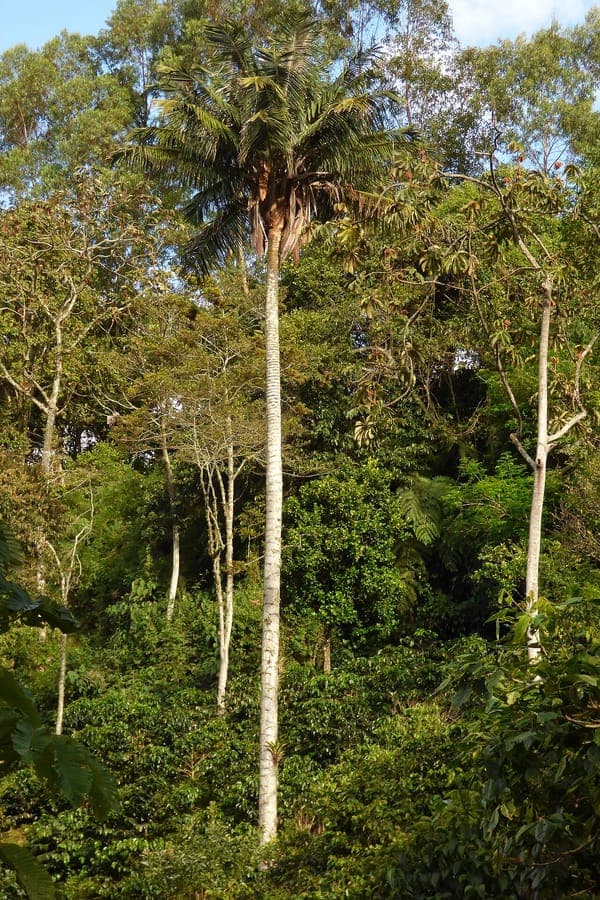
Alejandro Bayer Tamayo / CC BY-SA 2.0, via Wikimedia Commons
Ceroxylon alpinum: complete guide
Ceroxylon alpinum
Want to see Ceroxylon alpinum: complete guide in your garden?
Full design in HD: €7.99
Look after your Ceroxylon alpinum with the GardenWorld app
Identify plants with your camera and get a care calendar with reminders for this plant.


Overview
Ceroxylon alpinum, commonly known as the wax palm or Andean wax palm, is a majestic palm tree native to the mountain regions of Colombia and Venezuela. This spectacular plant is distinguished by its trunk covered with a thick layer of white wax, giving it an unparalleled appearance.
The wax palm grows in the Andes at enormous elevations where temperatures are cool and humidity high. This palm is perfect for gardeners with subtropical gardens or for container cultivation in milder climates.
Appearance & Bloom
Ceroxylon alpinum can reach 20-25 meters tall in its natural habitat, though container specimens remain considerably smaller. The trunk is completely covered with a characteristic white, waxy coating that's very distinctive. At the top of the trunk grow long, elegant, feather-like leaves that can reach 3-4 meters long.
At maturity the palm blooms with small yellow flowers appearing on large flower stalks. The plant produces red berries as fruits. The overall appearance is tropical and majestic.
Ideal Location
Ceroxylon alpinum grows best in protected, partially shaded locations in warmer climates. The plant prefers cool to mild subtropical climate, not extremely hot conditions.
In colder regions, grow this palm best in large containers that can be moved indoors for winter. In ideal subtropical zones, it can be planted in protected garden locations. Ensure protection from strong winds.
Soil
Ceroxylon alpinum grows best in well-draining, organically rich soils. Use potting soil with added compost. The plant prefers slightly acidic to neutral pH.
In garden cultivation, amend soil thoroughly with organic material. Ensure excellent drainage; the plant cannot tolerate stagnant water. In container culture use high-quality potting soil with extra perlite or bark mulch.
Free preview
Want to see Ceroxylon alpinum: complete guide in your garden? Make a free preview of your design.
Watering
Ceroxylon alpinum grows in zones with consistent rainfall. Water regularly during growing season, but watch for waterlogging. The plant prefers evenly moist but well-drained soils.
During winter months or dormant periods, water less. The plant can experience drought stress in extremely dry conditions. In containers, check moisture regularly.
Pruning
Ceroxylon alpinum requires minimal pruning. Remove dead leaves when they're completely discolored. Avoid pruning living foliage.
The plant's natural growth habit is attractive, so keep most of the plant's form intact. In containers you can carefully trim old fronds for aesthetics.
Maintenance Calendar
February-March: Check plant for winter damage. Begin of growing season.
April-May: Regular watering. Monitor for pests.
June-August: Consistent moisture levels. Check for fungal issues.
September-October: Preparation for winter. Reduce watering.
November-January: Minimal water. Frost protection.
Winter Hardiness
Ceroxylon alpinum is not frost hardy in cold climates. The plant dies at temperatures below approximately 10 degrees Celsius. In Europe, container growing is needed with winter protection or moving indoors.
In subtropical or tropical zones without frost, the palm can remain outdoors permanently. In milder temperate zones, protect against frost.
Companion Plants
Ceroxylon alpinum combines beautifully with other subtropical plants. Underplanting with tropical flowers, bananas, and other exotic plants works well. In containers, use the palm as an accent with lower plants underneath.
The trunk and leaves form a dramatic statement piece. Combine with other bold-leaved plants for tropical effect, or with finer plants for contrast.
Closing
Ceroxylon alpinum is a spectacular choice for gardeners with subtropical zones or container palm enthusiasts. With its characteristic white, waxy trunk and majestic foliage, it adds tropical drama to any garden. For more exotic plant ideas and subtropical gardening advice, visit gardenworld.app and discover how you can transform your garden into a tropical paradise.
Frequently asked questions about Ceroxylon alpinum
Is Ceroxylon alpinum winter hardy?
Ceroxylon alpinum is not frost hardy in cold climates. The plant dies at temperatures below approximately 10 degrees Celsius.
When and how do you prune Ceroxylon alpinum?
Ceroxylon alpinum requires minimal pruning. Remove dead leaves when they're completely discolored.
How much water does Ceroxylon alpinum need?
Ceroxylon alpinum grows in zones with consistent rainfall. Water regularly during growing season, but watch for waterlogging.
Where does Ceroxylon alpinum grow best?
Ceroxylon alpinum grows best in protected, partially shaded locations in warmer climates. The plant prefers cool to mild subtropical climate, not extremely hot conditions.
What soil does Ceroxylon alpinum need?
Ceroxylon alpinum grows best in well-draining, organically rich soils. Use potting soil with added compost.

See it in your garden
See Ceroxylon alpinum in your garden
One photo of your garden and a few questions. You see the result in about a minute.
Try it with a photoIdentify this plant in your own garden. Identify a plant
Similar plants
Metallic palm (Chamaedorea metallica): complete guide
Chamaedorea metallica
Everything about the metallic palm (Chamaedorea metallica): light, watering, compost, repotting, propagation and what is known about its safety for pets.
Areca palm: complete guide
Dypsis lutescens
Everything about the areca palm (Dypsis lutescens): light, compost, watering, humidity and overwintering for this popular, lush indoor palm.
Kentia palm: complete guide
Howea forsteriana
Everything about the kentia palm (Howea forsteriana): indoor position, compost, watering, leaf care and overwintering for this classic houseplant palm.
