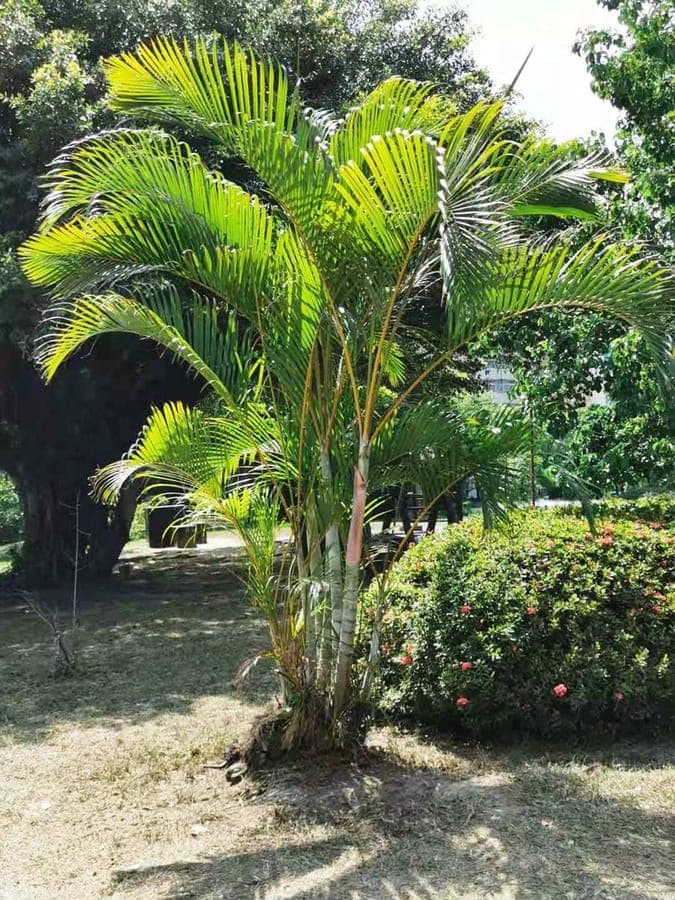
Ping an Chang / CC BY-SA 4.0, via Wikimedia Commons
Areca palm: complete guide
Dypsis lutescens
Want to see Areca palm: complete guide in your garden?
Full design in HD: €7.99
Look after your Areca palm with the GardenWorld app
Identify plants with your camera and get a care calendar with reminders for this plant.


Overview
The areca palm (Dypsis lutescens) is one of the best-selling indoor palms in garden centres and DIY stores. With its cluster of slender, yellow-green stems and gracefully arching, fresh green fronds, it brings an instant tropical feel to any room. It belongs to the palm family (Arecaceae) and originates from Madagascar, where it grows along riverbanks and in humid forest. Botanists have recently moved it back to the genus Chrysalidocarpus, but in the trade it is nearly always sold as Dypsis lutescens or simply as areca palm.
In the wild the areca palm forms dense clumps of stems reaching 6 to 10 metres. Indoors it stays much smaller, usually between 1.5 and 2.5 metres, and grows noticeably faster than the kentia palm, for example. Because it keeps producing new shoots from the base, you end up with a full, bushy palm that fills an empty corner or a large window beautifully.
The areca palm is a little more demanding than its reputation suggests. It wants plenty of light, steady warmth and decent humidity. Get those three things right and you will have a lush plant for years. It is not toxic to cats or dogs, which makes it a safe choice in a home with pets.
Appearance and growth
Dypsis lutescens grows in clumps: new stems keep rising from the base, green when young and turning golden yellow with age, with clear rings that recall bamboo. That is why it is also known as the golden cane palm or butterfly palm. The leaf stalks are yellowish too, adding to its golden look.
The fronds are feather-shaped and 1 to 1.5 metres long indoors. The narrow leaflets are held in a shallow V along the midrib and curve gracefully downwards, so each frond looks a little like a bird's feather. New fronds appear as an upright spear in the centre of a stem and unfurl within a few weeks.
You will practically never see flowers or fruit indoors; the plant puts all its energy into leaves and new shoots. Growers often place ten or more seedlings together in one pot, which makes the plant extra full but also means the roots fill the pot quickly.
Ideal indoor position
The areca palm needs more light than most indoor palms. A spot close to a large east- or west-facing window is ideal, or a metre from a south-facing window with a sheer curtain in between. It copes well with some morning or evening sun, but harsh midday sun through glass turns the fronds yellow and scorched. Too little light shows as limp, pale leaves and a lack of new shoots.
Choose a warm, draught-proof spot and away from cold windows in winter. Do not place it right next to a radiator: the dry, warm air browns the leaf tips and attracts spider mite. A bathroom with a large window or a bright conservatory are excellent places, as humidity there is higher.
In warm summers the areca palm can go outside from mid-June to late August, on a sheltered patio in light shade, provided nights stay above 15 °C. On gardenworld.app you can have a garden design made in which your patio offers indoor palms a sheltered, partly shaded spot for the summer. Let the plant adjust in shade first, or the leaves will burn.
Compost and repotting
Use an open palm compost, or mix ordinary houseplant compost with a quarter perlite and some fine bark. The mix should hold moisture but let excess water drain away quickly. A pot with a drainage hole is essential, and a layer of clay pebbles at the bottom helps prevent soggy roots.
Because the areca palm grows relatively fast and produces many shoots, it needs repotting more often than a kentia: every two years, in April or May. Choose a pot a few centimetres larger. It does not mind being slightly pot-bound, but when roots appear on the surface or grow out of the drainage hole, it is time. Work gently, as the roots are sensitive. Large plants can be split into two or three sections when repotting, provided each section has enough roots and stems.
Free preview
Want to see Areca palm: complete guide in your garden? Make a free preview of your design.
Watering and humidity
During the growing season the areca palm likes evenly moist compost, but it will not tolerate standing water. Water as soon as the top 2 cm feels dry; in summer that is often twice a week, in winter once every seven to ten days. Empty the saucer after fifteen minutes.
This palm is sensitive to lime, salts and fluoride in tap water. These build up in the compost and cause the typical brown leaf tips. Use rainwater or filtered water at room temperature where possible, and flush the pot through thoroughly a few times a year.
Humidity matters for this tropical plant: aim for 50 % or more. In winter mist the leaves regularly with tepid, soft water, stand the pot on a tray of damp pebbles or place a humidifier nearby. From April to September feed every three to four weeks with a palm fertiliser at half strength. Yellowing older fronds often point to a shortage of magnesium or potassium.
Leaf care and pruning
Pruning is limited to removing dead material. Cut off fronds that have turned completely yellow or brown, close to the stem. Cut an old stem that has died right back at the base to make room for new shoots. Never cut off healthy green fronds or the top of a stem: each stem has a single growing point, and without it the stem stops growing.
You can trim brown leaf tips with sharp scissors, leaving a thin brown edge. Wipe the fronds regularly or give the plant an occasional lukewarm shower. This keeps the leaves clean and is the best way to prevent spider mite, the areca palm's main enemy indoors. Also check the leaf axils and stalks for mealybug and scale insects.
Maintenance calendar
March-April: Growth picks up. Repot every other year and start feeding.
May-June: More water needed. Check weekly for spider mite, especially on the undersides of the leaves.
July-August: Main growth period. Keep the compost evenly moist and feed regularly. In warm weather the plant can move to a sheltered patio.
September: Bring the plant indoors before nights drop below 15 °C. Last feed of the year.
October-February: Less water, no feed, more misting to counter dry central heating. The plant calendar on gardenworld.app lists the monthly care jobs for all your houseplants.
Temperature and overwintering
The areca palm is happiest at 18 to 27 °C. In winter it should not drop below 15 °C; below that, growth stops and the leaves are quickly damaged. Below 10 °C the plant is at serious risk. It is anything but hardy and spends most of the year indoors in Britain and northern Europe.
Even in southern Europe, Dypsis lutescens can only live outside in truly frost-proof places such as the Canary Islands. In winter, keep it away from cold windows and avoid icy draughts when airing the room.
Companion plants
The areca palm forms a lovely tropical group with other houseplants that enjoy light and warmth. Bird of paradise (Strelitzia reginae) and Swiss cheese plant (Monstera deliciosa) offer big, bold leaves that contrast with the palm's fine feathers. A bird's nest fern (Asplenium nidus) and a spider plant (Chlorophytum comosum) can sit lower down at its feet.
For a calmer look, pair the areca with the small parlour palm (Chamaedorea elegans). Together they create a layered palm corner from low to high. Avoid placing it next to plants that need a cool, dark room.
Final thoughts
The areca palm (Dypsis lutescens) is a fast-growing, lush indoor palm that gives any interior a tropical character. It asks for a little more attention than a kentia: plenty of light, steady warmth, soft water and moist air. Provide those and you will have a full palm that puts out new shoots every year.
Start with a bright spot by a large window, keep a can of rainwater within reach and wipe the leaves now and then. That way your areca palm will stay golden in the stem and fresh green in the leaf for years to come.

See it in your garden
See Areca palm in your garden
One photo of your garden and a few questions. You see the result in about a minute.
Try it with a photoIdentify this plant in your own garden. Identify a plant
Similar plants
Parlor Palm: complete guide
Chamaedorea elegans
Discover the Parlor Palm (Chamaedorea elegans), an elegant, compact palm perfect for indoors and outdoors. This beginner-friendly plant grows slowly to 1.5 meters and thrives in partial shade.
Strelitzia reginae: complete guide
Strelitzia reginae
Strelitzia reginae is a beautiful plant from the Strelitziaceae family. Discover everything about cultivation and care in this guide.
Monstera deliciosa: complete guide
Monstera deliciosa
Discover the fruit-salad plant (Monstera deliciosa) - a popular houseplant with characteristic holes in leaves. Professional care and growing tips for success.
