
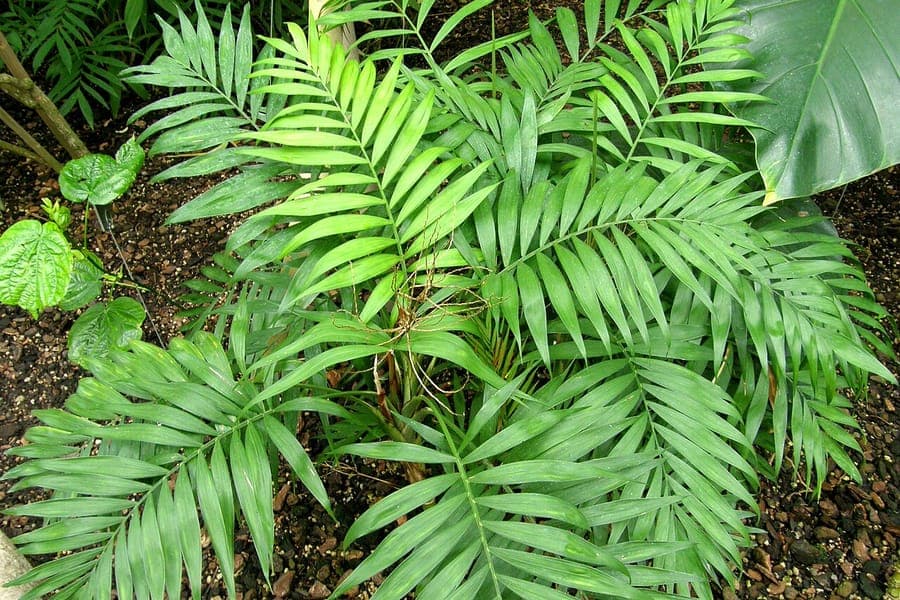
Bachelot Pierre J-P / CC BY-SA 3.0, via Wikimedia Commons
Parlor Palm: complete guide
Chamaedorea elegans
Want to see Parlor Palm: complete guide in your garden?
1 minute, no credit card
Introduction
The Parlor Palm (Chamaedorea elegans), also known as Good-Luck Palm or Neanthe bella, is one of the most popular and adaptable palms for indoor use worldwide. Native to Mexico and Honduras, this palm is renowned for its elegant appearance, compact growth, and ability to thrive in less-than-ideal indoor light conditions. It's a fantastic introductory palm for those just beginning their plant-collecting journey.
Appearance and Characteristics
The Parlor Palm grows as an elegant, upright palm with a slender trunk and graceful, feathered frond crowns. In indoor conditions, it typically reaches 1 to 1.5 meters in height, though under ideal conditions it might grow slightly larger. The fronds are dark green, feathered, and lend the plant a refined, graceful character. Since this palm grows slowly, it will take years to reach maximum size. Mature plants occasionally produce small yellow flowers that are inconspicuous.
Ideal Location
The Parlor Palm feels at home in indirect bright light to partial shade. While it can technically tolerate a few hours of direct sunlight, this palm prefers bright, filtered light or partial shade. East or west-facing windowsills are ideal. Direct sunlight can cause leaf scorch. Indoor temperature between 15-24°C is ideal.
Soil
Use well-draining potting soil, preferably a mix specially formulated for palms. You can use standard multipurpose soil enriched with extra perlite or sand to improve drainage. The plant dislikes waterlogged soils. Repot every two to three years in spring for best results.
Watering
Water regularly during the growing period (spring and summer) so the soil stays lightly moist but not wet. In autumn and winter, water less frequently and allow the soil to dry out somewhat more between waterings. Preferably use lukewarm, filtered water since hard water can cause mineral spots on fronds. Underwatering is worse than overwatering for this palm - it prefers slightly moist conditions.
Free design
Want to see Parlor Palm: complete guide in your garden? Make a free design now.
Feeding
Feed monthly during the growing period (spring and summer) with dilute tropical plant fertilizer. Taper feeding in autumn and winter. Excessive feeding can cause mineral buildup that turns leaf tips brown.
Cleaning
Dust accumulation on fronds reduces photosynthesis. Gently clean fronds with lukewarm water and a soft cloth or sponge. Never use leaf shine products as these can clog pores.
Maintenance Calendar
Spring (April-May): Possible repotting. Begin feeding. Summer (June-August): Water regularly. Monthly feeding. Autumn (September-October): Taper feeding. Winter (November-March): Minimal watering and feeding.
Winter Hardiness
The Parlor Palm is tropical and cannot tolerate frost. It must be kept indoors in frost-prone regions. Ideal temperature range is 15-24°C; exposure to temperatures below 10°C can cause damage.
Common Issues
Spider mites: Can occur in dry indoor air. Clean regularly with neem oil and increase humidity. Mealybugs: Treat with neem oil. Brown leaf tips: Often due to overwatering, chemicals in water, or low humidity. Improve water quality and increase humidity by regular misting.
Propagation
Propagation occurs almost exclusively via seed, which is rarely available in home cultivation. Seed can be sown in warm seed compost and grows very slowly into mature plants.
Conclusion
The Parlor Palm is an incomparable classic houseplant suitable for nearly everyone. With its elegant appearance, easygoing nature, and ability to thrive under normal household conditions, it's a valued addition to any plant collection. Available at virtually all garden centers and plant shops.
Want to see Parlor Palm: complete guide in your garden? Make a free design now.
Upload a photo, pick a style, and get a photorealistic design with plant list in under a minute.
No credit card required


Similar plants
Needle palm: complete guide
Rhapidophyllum hystrix
Everything about the needle palm: the world's hardiest palm, suitable for gardens in temperate climates down to USDA zone 7b.
Saw palmetto: complete guide
Serenoa repens
A complete guide to saw palmetto (Serenoa repens), the iconic fan palm from Florida and the southeastern United States, prized for its toughness.
Puerto Rican hat palm: complete guide
Sabal causiarum
Grow Puerto Rican hat palm successfully. A majestic fan palm with tropical presence suited to sheltered Mediterranean-style gardens.