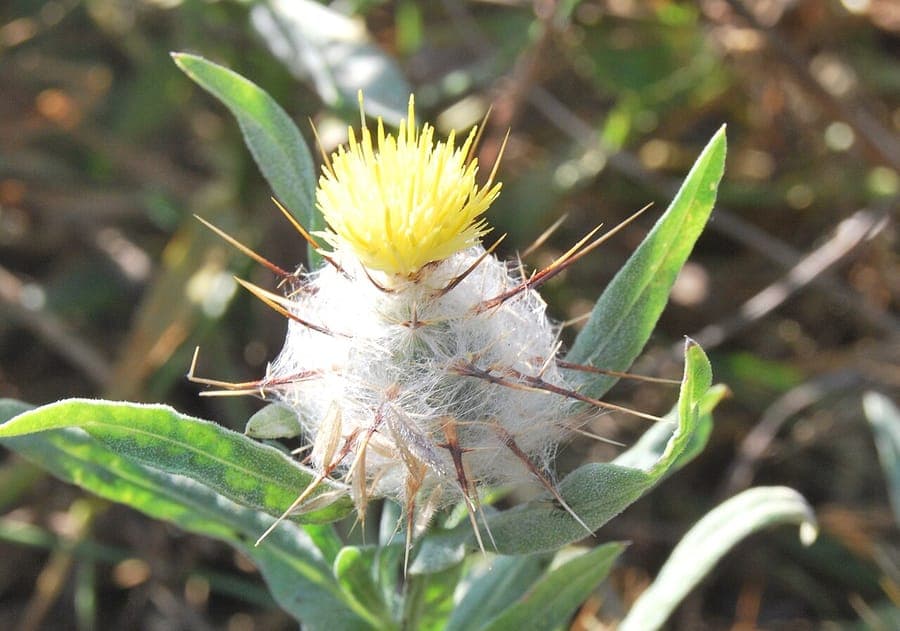
Eusebiol / CC BY-SA 3.0, via Wikimedia Commons
Woolly Star-thistle: complete guide
Centaurea eriophora
Want to see Woolly Star-thistle: complete guide in your garden?
Full design in HD: €7.99
Look after your Woolly Star-thistle with the GardenWorld app
Identify plants with your camera and get a care calendar with reminders for this plant.


Overview
Woolly Star-thistle (Centaurea eriophora), also known as woolly knapweed, is a charming perennial from the Asteraceae family. This Mediterranean native thrives beautifully in dry, sandy environments. The elegant purple flowers attract pollinators and provide color from spring through summer.
This plant is ideal for those wishing to cultivate drought-tolerant species with minimal maintenance. The flowers make perfect cut flowers and dry well for dried arrangements.
Appearance & Bloom
Woolly Star-thistle grows into a sturdy plant with grayish-green, hairy foliage that is narrow and linear. The plant reaches 30-60 cm height depending on growing conditions.
Blooming occurs from May to August with beautiful purple-pink flower clusters. These are densely packed with small florets and feature characteristic woolly texture. After blooming, seedheads form that attract birds.
Ideal Location
Woolly Star-thistle thrives in warm, sunny spots with a minimum of 6-8 hours of direct daily sunlight. The plant is perfect for heated walls, dry pergolas or open grasslands.
Avoid shady corners - this plant desires full sun for optimal blooming. Windy, open locations are ideal as these promote air circulation and dryness.
Soil
Woolly Star-thistle grows optimally in well-draining, sandy to loamy soils. This plant tolerates poor soils well and requires no rich fertilization.
Ensure excellent drainage as wet roots are problematic. In clay soil, sand addition improves drainage. Neutral to slightly alkaline pH is preferred.
Free preview
Want to see Woolly Star-thistle: complete guide in your garden? Make a free preview of your design.
Watering
Once established, Woolly Star-thistle requires minimal watering. During the growing season water regularly, but allow soil to dry between waterings.
Once plants reach full height growth, supplementary watering can be largely stopped. Excess moisture leads to root rot and disease problems. In extreme droughts supplement only.
Pruning
Remove spent flower heads regularly to encourage further blooming. This also prevents unwanted self-seeding.
After the blooming season the plant can be cut back to the base to support compact growth next season. Winter pruning is unnecessary in milder climates.
Maintenance Calendar
Spring: Plant seedlings or divide old specimens. Summer: Deadhead regularly, water during heat waves. Fall: Allow some flowers to set seed for bird attraction. Winter: Minimal maintenance; protect in very hard frosts.
This is a low-maintenance plant that thrives largely independently.
Winter Hardiness
Woolly Star-thistle is moderately winter-hardy in temperate zones. In continental climates supplement with mulch around the root collar for extra protection.
In very cold regions this plant tolerates brief freezing but dies at prolonged -15°C. Good drainage significantly increases winter survival.
Companion Plants
Plant Woolly Star-thistle with other dry/sand-loving plants such as sage (Salvia), lavender (Lavandula) and helianthemum (Helianthemum). This combination creates authentic Mediterranean charm.
Layer with grasses such as feather grass (Stipa) for texture contrast.
Closing
Woolly Star-thistle is a premier specimen for gardens where drought and low maintenance are priorities. This Mediterranean classic delivers years of purple color and pollinator-friendliness. For small spaces and dry grassland imitation, this quietly overlooked jewel deserves attention on gardenworld.app.
Frequently asked questions about Woolly Star-thistle
Is Woolly Star-thistle winter hardy?
Woolly Star-thistle is moderately winter-hardy in temperate zones. In continental climates supplement with mulch around the root collar for extra protection.
When and how do you prune Woolly Star-thistle?
Remove spent flower heads regularly to encourage further blooming. This also prevents unwanted self-seeding.
How much water does Woolly Star-thistle need?
Once established, Woolly Star-thistle requires minimal watering. During the growing season water regularly, but allow soil to dry between waterings.
Where does Woolly Star-thistle grow best?
Woolly Star-thistle thrives in warm, sunny spots with a minimum of 6-8 hours of direct daily sunlight. The plant is perfect for heated walls, dry pergolas or open grasslands.
What soil does Woolly Star-thistle need?
Woolly Star-thistle grows optimally in well-draining, sandy to loamy soils. This plant tolerates poor soils well and requires no rich fertilization.

See it in your garden
See Woolly Star-thistle in your garden
One photo of your garden and a few questions. You see the result in about a minute.
Try it with a photoIdentify this plant in your own garden. Identify a plant
Similar plants
Frikart's aster (Aster × frikartii): complete guide
Aster × frikartii
Everything about Frikart's aster (Aster × frikartii): position, soil, pruning and hardiness of the aster that flowers lavender-blue from July to October.
False aster (Boltonia asteroides): complete guide
Boltonia asteroides
False aster (Boltonia asteroides) covers itself in white daisies from late August to October. How to plant, cut back and combine this tough, tall perennial.
Daisy bush (Brachyglottis greyi): care guide
Brachyglottis greyi
Brachyglottis greyi, formerly Senecio greyi, pairs silver felted leaves with yellow summer daisies. Advice on position, soil, pruning, hardiness and companions.
