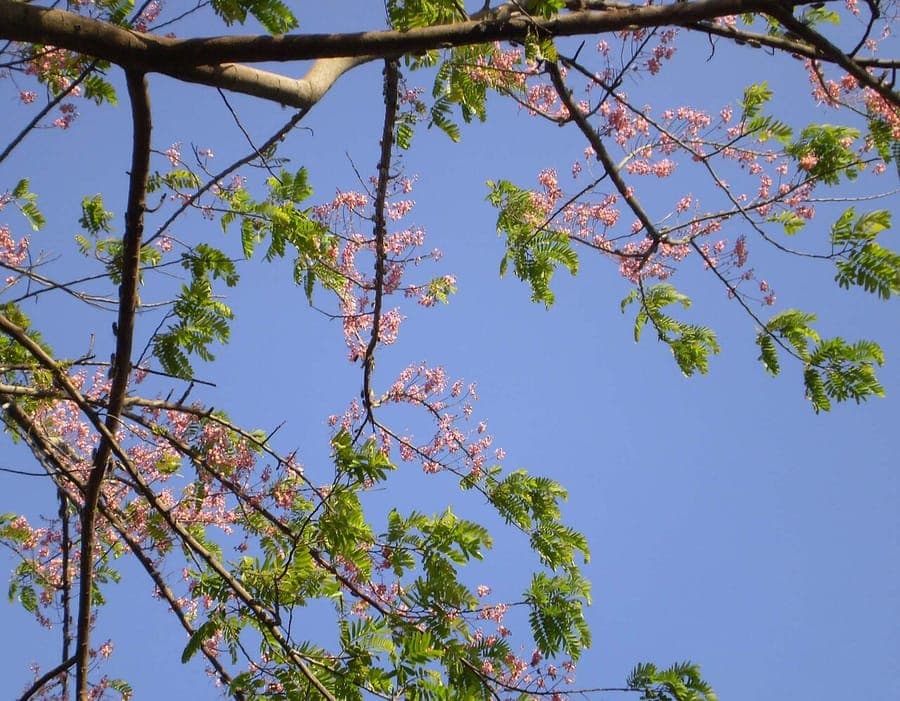
DXLINH / CC BY-SA 3.0, via Wikimedia Commons
Appleblossom Cassia: complete guide
Cassia grandis
Want to see Appleblossom Cassia: complete guide in your garden?
Full design in HD: €7.99
Look after your Appleblossom Cassia with the GardenWorld app
Identify plants with your camera and get a care calendar with reminders for this plant.


Overview
The Appleblossom Cassia, scientifically known as Cassia grandis, is a stunning tropical tree native to Mexico and Central America. Also called Coral Shower or Pink Shower, this tree is prized for its showy coral-pink flowers that bloom in dense clusters. In warm climates, it grows into a medium to large tree reaching 15-20 meters tall.
In temperate regions, it thrives as a container plant or greenhouse specimen. The tree features large, graceful compound leaves with numerous leaflets that create lush green foliage during the growing season. For garden design in Mediterranean areas, this is a striking focal point that flowers prolifically throughout summer.
Appearance & Bloom
The Appleblossom Cassia has an elegant form with widely spreading branches. Its leaves reach 60 centimeters long and are composed of ten to twenty pairs of small, elongated leaflets. The foliage displays a glossy dark green appearance.
Flowers emerge in dense, drooping racemes with colors ranging from light pink to deep coral. Individual blooms measure up to 3 centimeters across and appear in impressive profusion. The flowering period extends from April through October in warm climates. After bloom, elongated brown seed pods develop, reaching 50 centimeters in length, adding textural interest through autumn and winter.
Ideal Location
Position this tree where it receives abundant sunlight - at least six to eight hours of direct sun daily. In very hot regions, light afternoon shade helps prevent leaf scorch. The tree performs best in a sheltered spot where strong winds cannot damage developing growth.
For container cultivation indoors, place near a bright window or in a warm greenhouse. Maintain minimum temperatures of 10-12°C. For permanent outdoor planting, Mediterranean or subtropical climates are essential.
Soil
This tree prefers well-draining, fertile soil. A mixture of garden loam with compost works excellently. Soil pH can range from neutral to slightly acidic. For container growing, use quality potting mix amended with perlite or bark chips for improved drainage.
Soil moisture must not become waterlogged, as roots are susceptible to rot. Ensure water drains quickly after watering. Annual additions of organic matter support strong growth and abundant flowering.
Free preview
Want to see Appleblossom Cassia: complete guide in your garden? Make a free preview of your design.
Watering
During the growing season (spring and summer), water regularly when the top centimeter of soil feels dry. In containers, this typically means watering two to three times weekly. Avoid overwatering - allow the soil to partially dry between applications.
Reduce watering in autumn and winter, especially during cold periods. The tree requires considerably less moisture during dormancy. Prevent soil drying completely but avoid waterlogging. Rainwater is preferred over hard tap water.
Pruning
Regular pruning keeps the tree compact and well-branched. In spring, cut back growth by up to one-third to encourage a fuller crown. Remove dead or damaged branches at any time throughout the year.
Prune young plants early to develop a well-branched form. After flowering, remove spent blooms. Large cuts heal well without wound dressing in most cases.
Maintenance Calendar
January-February: Inspect for pests, water sparingly. March-April: Increase watering and feeding. Pruning is effective now. May-September: Peak growth and flowering. Water regularly, feed monthly. October-November: Gradually reduce watering. Stop feeding. December: Winter rest, minimal water, tolerate cooler conditions.
Winter Hardiness
This tropical tree is not frost-hardy in temperate zones. In areas with freezing winters, grow in containers and move indoors by autumn. Maintain minimum temperatures of 10°C, ideally 15-18°C.
In southern Europe (Spain, southern France, southern Italy), the tree can overwinter outdoors in sheltered locations. Young trees are more frost-sensitive than mature specimens. When frost threatens, reduce watering to harden tissues.
Companion Plants
Appleblossom Cassia combines beautifully with other tropical species. Pair it with Plumbago, Mandevilla, or Bougainvillea. In container settings, dwarf forms of Ficus, Datura, or Nerium work well in the same greenhouse arrangement.
In Mediterranean gardens, it harmonizes with Oleander, Lagerstroemia, and Jasmine. Underplanting options include Solanum, Cestrum, or dwarf boxwood.
Closing
Appleblossom Cassia is spectacular for anyone seeking tropical beauty at home. With attention to location, watering, and warmth, you'll enjoy this magnificent plant for years. In frost-free gardens, it creates unforgettable summer atmosphere. Available at major garden centers. Visit gardenworld.app for additional plant guides. This is also a strong focal point for Belgian garden designs that gardenworld.app recommends.
Frequently asked questions about Appleblossom Cassia
Is Appleblossom Cassia winter hardy?
This tropical tree is not frost-hardy in temperate zones. In areas with freezing winters, grow in containers and move indoors by autumn.
When and how do you prune Appleblossom Cassia?
Regular pruning keeps the tree compact and well-branched. In spring, cut back growth by up to one-third to encourage a fuller crown.
How much water does Appleblossom Cassia need?
During the growing season (spring and summer), water regularly when the top centimeter of soil feels dry. In containers, this typically means watering two to three times weekly.
Where does Appleblossom Cassia grow best?
Position this tree where it receives abundant sunlight - at least six to eight hours of direct sun daily. In very hot regions, light afternoon shade helps prevent leaf scorch.
What soil does Appleblossom Cassia need?
This tree prefers well-draining, fertile soil. A mixture of garden loam with compost works excellently.

See it in your garden
See Appleblossom Cassia in your garden
One photo of your garden and a few questions. You see the result in about a minute.
Try it with a photoIdentify this plant in your own garden. Identify a plant
Similar plants
Pineapple broom (Argyrocytisus battandieri): complete guide
Argyrocytisus battandieri
Everything about pineapple broom (Argyrocytisus battandieri), the Moroccan wall shrub with silver leaves and pineapple-scented flowers: site, pruning and hardiness.
Blue false indigo: complete guide
Baptisia australis
Everything about blue false indigo (Baptisia australis): position, soil, watering, cutting back, hardiness and toxicity. A long-lived prairie perennial with indigo flowers.
Warminster broom (Cytisus × praecox): complete guide
Cytisus × praecox
Everything about Warminster broom (Cytisus × praecox): position, poor soil, pruning after flowering, hardiness and what you need to know about its toxicity.
