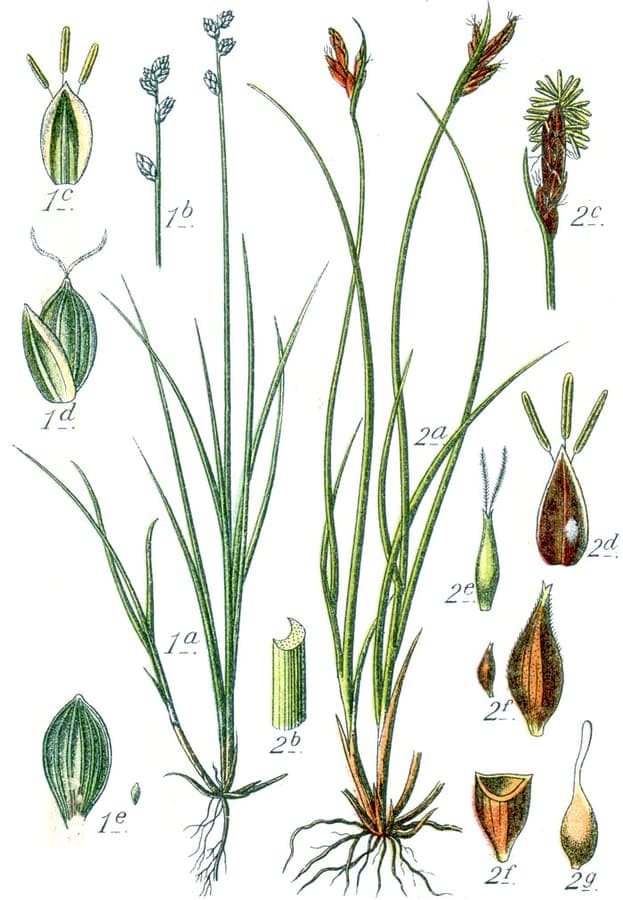
Johann Georg Sturm (Painter: Jacob Sturm) / Public domain, via Wikimedia Commons
Carex mucronata: complete guide
Carex mucronata
Want to see Carex mucronata: complete guide in your garden?
Full design in HD: €7.99
Look after your Carex mucronata with the GardenWorld app
Identify plants with your camera and get a care calendar with reminders for this plant.


Overview
Carex mucronata, known as Spiny-pointed sedge or Laiche mucronee, is a distinctive sedge species from the Cyperaceae family. Native to alpine regions of central and southern Europe, this plant thrives at elevations between 1500-2500 meters. The species is notable for its unique spiky, brown-red utricles and distinctive flowering appearance. In gardens, it offers botanical interest and exceptional character for those seeking alpine authenticity.
Appearance and bloom
Spiny-pointed sedge is characterized by brown-red, needle-pointed utricles with prominent, sharp-tipped extensions. The plant reaches 20-40 centimeters tall, forming dense tufts with green foliage. Flowering occurs June to August with striking brown to reddish-brown flower spikes arranged in compact, spiny inflorescences. This distinctive botanical character defines the plant's visual appeal and garden presence.
Ideal location
This sedge performs best in full sun to partial shade, though more tolerant than many sedges. Alpine plants require well-drained, rocky growth environments. Position this sedge on slopes, rocky outcrops, or raised beds where water drains quickly. Good air circulation is essential for disease prevention and vigorous growth. Avoid low-lying, permanently moist sites.
Soil requirements
Carex mucronata prefers rocky, well-drained soil with moderate moisture. The plant tolerates poor to moderately fertile soil and thrives in mineral-rich, gritty substrates. Add gravel, sand, or small stones to enhance drainage. A neutral to slightly acidic pH is ideal. Unlike many sedges, this alpine species appreciates drier soils provided stagnation doesn't occur. Mimic mountain scree conditions for best results.
Watering
Once established, Carex mucronata shows remarkable drought tolerance compared to other sedges. Water regularly during the first growing season to establish roots. Thereafter, mature plants require only moderate watering, with supplemental water only during extreme drought. Prevent water accumulation around roots. In temperate climates, established plants typically need no supplemental water except during severe summer dry spells.
Free preview
Want to see Carex mucronata: complete guide in your garden? Make a free preview of your design.
Pruning
Pruning demands are minimal. In March, gently remove last year's dead foliage, stimulating neat growth and spring emergence. Leave old flowering spikes through winter for architectural interest and protection. Hand-pruning works better than mechanical cutting for this delicate alpine species. Careful removal of damaged or diseased material maintains plant health.
Maintenance calendar
March: Remove dead foliage, light fertilizer application. April-May: Monitor drainage during rainy periods, weed control. June-August: Monitor flowering progress and bloom development. September-October: Gradually reduce fertilizer applications. November-February: Minimal intervention, avoid waterlogging.
Winter hardiness
Carex mucronata is hardy to approximately -10 to -15 degrees Celsius in temperate zones, though its alpine origin suggests preference for cooler winters with excellent drainage. In gardens, this species benefits from elevated planting where cold air drains freely. Wet, heavy clay soils combined with poor drainage during winter pose greater risk than cold temperatures. Generally overwinters successfully in well-drained sites.
Companion plants
Pair Carex mucronata with other alpines and sedges: Silene species for color contrast, Sempervivum for succulent texture, and other alpine sedges. Rock-dwelling plants like Echinacea, Verbascum, and Lavender make excellent companions. Plant among stone elements where the brown-red spikes display dramatically against grey stone. Strong architectural forms create appealing contrasts.
Closing remarks
Carex mucronata offers unique botanical character with distinctive brown-red flowers and spiky utricles. This alpine sedge adds special interest to raised beds, alpine gardens, and well-drained perennial arrangements. Available from specialized alpine plant nurseries and mountain gardening specialists. Explore more alpine plant combinations on gardenworld.app for your next garden project. This rare sedge brings authentic alpine character to temperate gardens.
Frequently asked questions about Carex mucronata
Is Carex mucronata winter hardy?
Carex mucronata is hardy to approximately -10 to -15 degrees Celsius in temperate zones, though its alpine origin suggests preference for cooler winters with excellent drainage. In gardens, this species benefits from elevated planting where cold air drains freely.
When and how do you prune Carex mucronata?
Pruning demands are minimal. In March, gently remove last year's dead foliage, stimulating neat growth and spring emergence.
How much water does Carex mucronata need?
Once established, Carex mucronata shows remarkable drought tolerance compared to other sedges. Water regularly during the first growing season to establish roots.
Where does Carex mucronata grow best?
This sedge performs best in full sun to partial shade, though more tolerant than many sedges. Alpine plants require well-drained, rocky growth environments.
What soil does Carex mucronata need?
Carex mucronata prefers rocky, well-drained soil with moderate moisture. The plant tolerates poor to moderately fertile soil and thrives in mineral-rich, gritty substrates.

See it in your garden
See Carex mucronata in your garden
One photo of your garden and a few questions. You see the result in about a minute.
Try it with a photoIdentify this plant in your own garden. Identify a plant
Similar plants
Carex conica: a small evergreen sedge for edges
Carex conica
Carex conica is a compact evergreen sedge from Japan and Korea. A guide to 'Snowline', where to plant it, soil, tidying, dividing and how hardy it really is.
Carex oshimensis: the evergreen striped sedge
Carex oshimensis
Carex oshimensis is an evergreen Japanese sedge with fine, striped leaves. How to plant, place, tidy and divide 'Evergold' and the EverColor series in your garden.
Orange New Zealand sedge (Carex testacea): a guide
Carex testacea
Orange New Zealand sedge (Carex testacea) turns copper and orange in sun and cold. Where to plant it, which soil it likes, how to tidy it and how hardy it is.
