
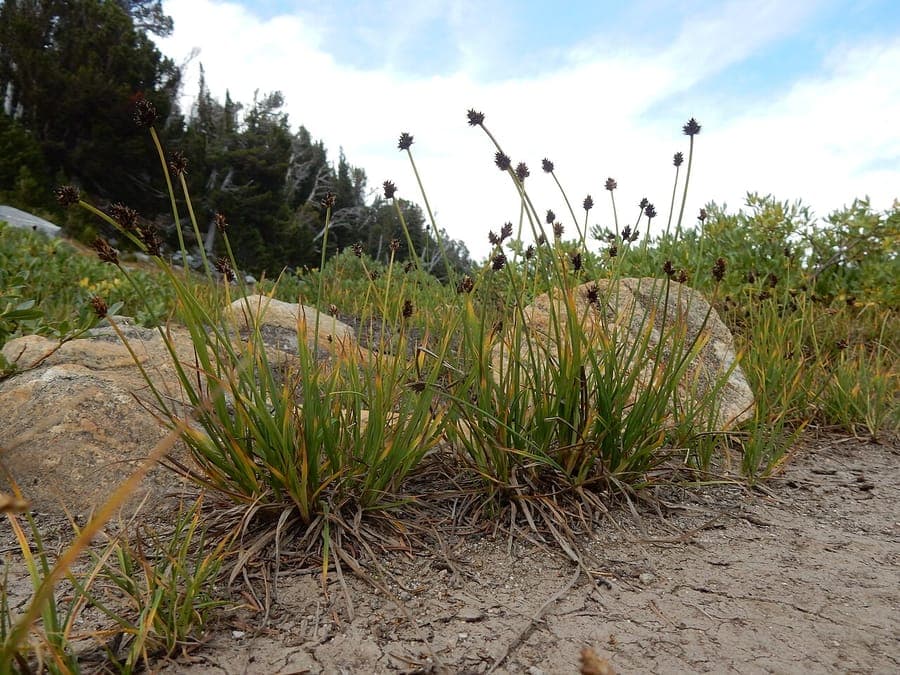
Matt Lavin from Bozeman, Montana, USA / CC BY-SA 2.0, via Wikimedia Commons
Lachenal's Sedge: complete guide
Carex lachenalii
Want to see Lachenal's Sedge: complete guide in your garden?
1 minute, no credit card
Overview
Lachenal's sedge (Carex lachenalii) is an elegant, evergreen sedge from the sedge family (Cyperaceae). This fine-textured plant inhabits temperate and subarctic regions of the northern hemisphere, from Europe to Japan and North America.
This compact sedge excels as an edging plant, in groupings, and as a structural element in borders. Dark, glossy foliage provides year-round appeal.
Appearance and bloom cycle
Lachenal's sedge forms dense, low mounds only 15-30 cm tall. Leaves are fine and linear, dark green to grayish-green. The plant remains attractive year-round with evergreen color.
Small, inconspicuous brown-black flower spikes appear in April-May. While not showy flowers, they add refinement. The real beauty lies in the fine-textured foliage.
Ideal location
Lachenal's sedge grows best in part shade to full sun. It tolerates shade better than many other sedges. At least 2-3 hours of sun daily promotes optimal color development.
This low-growing sedge is perfect as an edging plant, groundcover, and border accent. Also suitable for rock gardens, alpine troughs, and container planting.
Soil requirements
Lachenal's sedge prefers moist to wet soil, but tolerates drought reasonably well once established. Sedges are not fussy about soil type, adapting to most garden soils.
Good drainage is important for long-term health. Very acidic soils (below pH 5) may cause problems. Sand, loam, and silt are suitable soil types.
Watering
Water regularly the first year until well-established. Once mature, Lachenal's sedge tolerates drought reasonably well. Provide supplementary water during extended dry periods.
Keep moist rather than dry during the growing season. Very wet winters risk waterlogging; good drainage helps. As a groundcover, it also performs well in drier areas.
Free design
Want to see Lachenal's Sedge: complete guide in your garden? Make a free design now.
Pruning
Minimal pruning needed. Only remove winter-damaged foliage if necessary. Use a "saw cut" along ground level rather than sharp shearing.
In very wet winters, removing very old, collapsed stems keeps plants fresh. Usually unnecessary; let the plant grow naturally.
Maintenance calendar
March-April: New growth appears. Remove previous year's dead foliage. Sedges don't need feeding, but rich soil helps.
May-June: Flower spikes appear, inconspicuous. Plant in full growth.
July-September: Continued full growth. Water in dry periods.
October-November: Growth slows. Plant remains green.
December-February: Dormant season. Plant stays attractively evergreen.
Winter hardiness
Lachenal's sedge is extremely hardy to USDA zone 2 (-40°C). No winter protection needed in temperate and cold climates. Excellent for alpine and subalpine gardens.
Evergreen foliage provides year-round structure and color, even beneath snow.
Companion plants
Combine beautifully with other low-growing evergreens like other sedges, alpine herbs, and hardy grasses. Helleborus and helleborus niger thrive in similar conditions.
Excellent as foreground planting for taller perennials and as a solid structural element. Also attractive with dwarf conifers.
Closing thoughts
Lachenal's sedge is a reliable choice for garden structure, especially where evergreen texture matters. It's low-maintenance and long-lived. Check your local garden center for sedge varieties. For more garden inspiration, visit gardenworld.app.
Want to see Lachenal's Sedge: complete guide in your garden? Make a free design now.
Upload a photo, pick a style, and get a photorealistic design with plant list in under a minute.
10,000+ gardens designed already
No credit card required


Similar plants
Flat-stemmed club-rush: complete guide
Bolboschoenus planiculmis
Everything about Bolboschoenus planiculmis: growing conditions, watering, care, and use as a pond margin or wetland plant in garden design.
Great Plains flatsedge: complete guide
Cyperus lupulinus
Everything about Great Plains flatsedge (Cyperus lupulinus): growing conditions, care, garden uses, and ecological value. Tips for pond margins and dry sandy soils.
Golden beak sedge: complete guide
Rhynchospora corymbosa
Everything about golden beak sedge (Rhynchospora corymbosa): a dramatic tropical marginal for pond edges, bog gardens, and wet habitats.