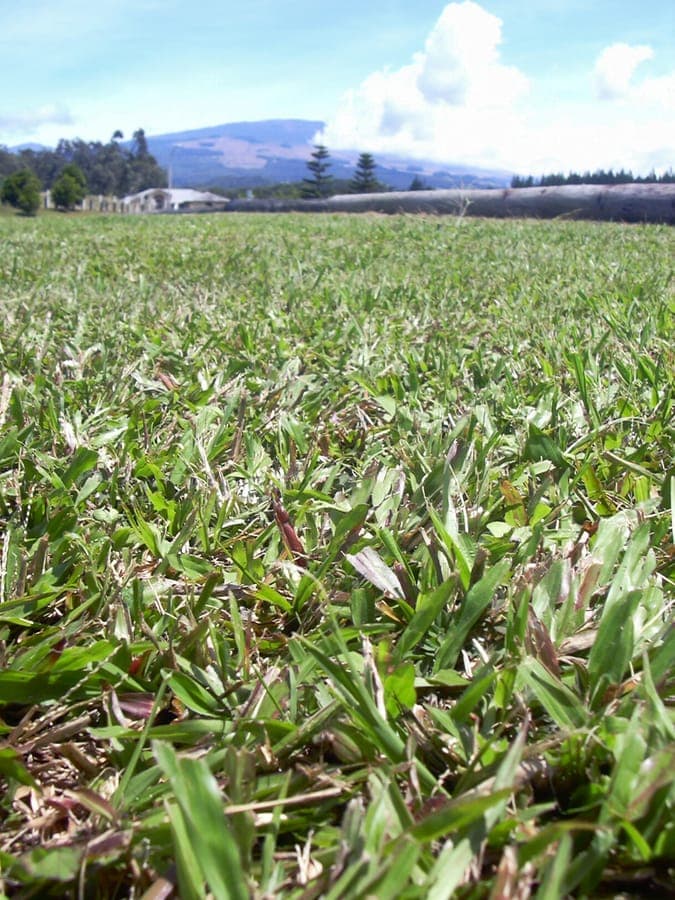
Forest & Kim Starr / CC BY 3.0, via Wikimedia Commons
American Carpet Grass: complete guide
Axonopus compressus
Want to see American Carpet Grass: complete guide in your garden?
Full design in HD: €7.99
Look after your American Carpet Grass with the GardenWorld app
Identify plants with your camera and get a care calendar with reminders for this plant.


Axonopus compressus, commonly known as American carpet grass or tropical carpet grass, is an outstanding groundcover that can transform warm gardens. This grass species originates from tropical and subtropical America and has become popular in warm regions worldwide.
Overview American carpet grass is a stoloniferous, modestly fast-growing grass that excels at groundcover and lawn establishment. It forms a compact, fine-textured canopy that rapidly suppresses weeds. The plant maintains a low profile and creates dense mats suitable for foot traffic.
Appearance and Bloom The foliage features fine, green leaves with a soft, delicate texture. Flowers are inconspicuous white tinges that emerge periodically. The brown seeds are not visually prominent, contributing to a neat garden appearance. The overall aesthetic is tidy and uniform.
Ideal Location American carpet grass thrives in warm, sunny positions. In temperate climates, frost protection is necessary during cold months. Position your plant in full sun to light dappled shade for optimal performance and density.
Soil This species is relatively undemanding regarding soil composition. Well-draining soil suits it best, with slightly acidic to neutral pH optimal. Avoid waterlogged conditions, as this promotes root rot and poor establishment.
Watering Regular moisture during the growing season ensures vigorous development. Water thoroughly to keep soil moist but not waterlogged. Established plants become more drought-tolerant, particularly in rainfall-rich regions.
Pruning Regular mowing maintains compact form and dense coverage. Routine cutting stimulates lateral growth and prevents leggy appearance. Well-maintained specimens present a manicured, professional look.
Maintenance Calendar Year-round maintenance is minimal with this species. Feed monthly during growing season with balanced fertilizer. Reduce watering in winter, especially in cooler regions.
Winter Hardiness This plant is frost-sensitive and cannot survive sub-zero temperatures outdoors in temperate zones. In warm regions, winter protection is unnecessary. Consider container cultivation in cool climates for winter relocation indoors.
Companion Plants American carpet grass pairs beautifully with heat-loving species such as tropical shrubs and sun-worshippers. Use as a base layer with taller plants behind for layered depth. Frangipani, zinnias, and other summer bloomers create stunning combinations.
Conclusion American carpet grass represents an excellent choice for warm gardens seeking practical, low-maintenance groundcover. With rapid establishment and compact habit, it quickly fills garden spaces. Source specimens from quality garden centres for best results. Via gardenworld.app, you can design complete garden schemes incorporating this versatile material.

See it in your garden
See American Carpet Grass in your garden
One photo of your garden and a few questions. You see the result in about a minute.
Try it with a photoIdentify this plant in your own garden. Identify a plant
Similar plants
Pheasant's tail grass (Anemanthele lessoniana): a guide
Anemanthele lessoniana
Pheasant's tail grass (Anemanthele lessoniana) is an evergreen New Zealand grass with orange-streaked leaves and airy summer flower heads. Siting, soil, care and hardiness.
Korean feather reed grass (Calamagrostis brachytricha): guide
Calamagrostis brachytricha
Everything about Korean feather reed grass (Calamagrostis brachytricha): position, soil, cutting back and planting partners for its glistening autumn plumes.
Northern sea oats (Chasmanthium latifolium): growing guide
Chasmanthium latifolium
Northern sea oats (Chasmanthium latifolium) carries flat, dangling spikelets and thrives in part shade. Learn how to site, water, cut back and partner it.
