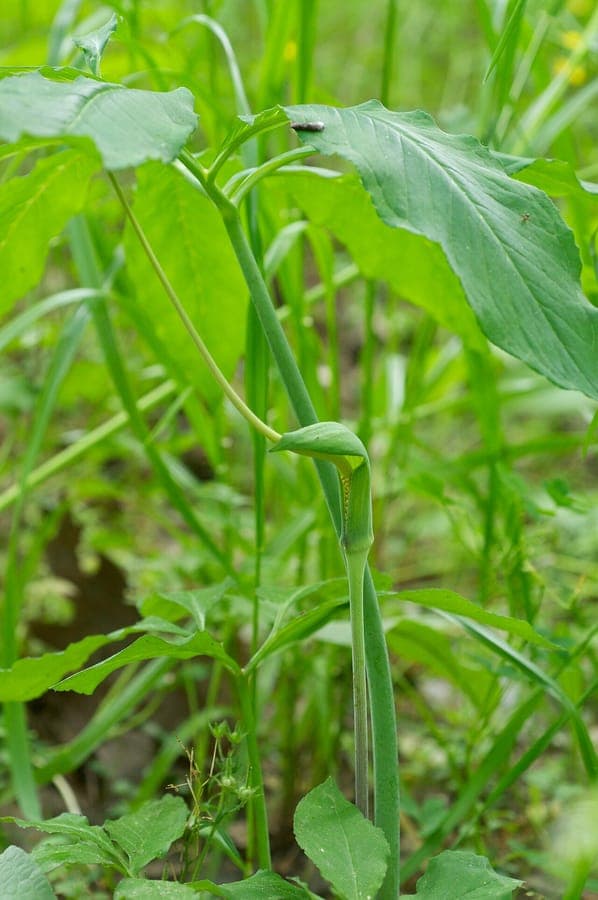
Eric Hunt / CC BY-SA 4.0, via Wikimedia Commons
Anemone cylindrica: complete guide
Arisaema dracontium
Want to see Anemone cylindrica: complete guide in your garden?
Full design in HD: €7.99
Look after your Anemone cylindrica with the GardenWorld app
Identify plants with your camera and get a care calendar with reminders for this plant.


Overview
Arisaema dracontium, also known as green dragon, dragon-arum, or dragonroot, is a fascinating exotic plant from North America. This unique herb naturally occurs in wet forests from eastern Canada to northeast Mexico. The plant is renowned for its striking green flower spathe that resembles a sprouting dragon, hence the name.
Although Arisaema dracontium is native to North America, it also grows well in European gardens, especially in temperate climates. It is a spectacular addition to shade borders and woodland gardens where it brings exotic interest.
Appearance and Bloom
Arisaema dracontium grows as an elegant plant reaching 30-90 cm in height. The stem is smooth and green. Most striking are the leaves: they are large and intricately divided, with many small leaflets arranged like fingers on a hand.
The flower is a special feature. It consists of a green spathe (modified leaf) that wraps around a tall, thin spadix (flower spike) that protrudes from the top like an antenna. This gives the plant its "dragon" appearance. The flower appears in May-June.
After flowering, interesting berries form, first green then turning bright red. These berries persist long and attract birds.
Ideal Location
Arisaema dracontium thrives best in dappled shade to full shade. Plant it in a location with at least 2-4 hours of filtered sunlight daily, but protect from hot midday sun. The plant feels at home beneath deciduous trees.
Place this plant in woodland gardens, under trees, or in shade borders. It adds exotic texture and form to shaded areas where many other plants do not grow.
Soil
Arisaema dracontium grows best in moist, humus-rich soils. The plant accepts sandy to clayey soils as long as they drain well. Add plenty of compost for moisture and nutrition.
The pH can be slightly acidic to neutral (6.5-7.5). Heavy clay is not ideal without improvement. Add abundant organic material. This plant grows in wet forest soils in its natural habitat, so it appreciates consistent moisture levels.
Free preview
Want to see Anemone cylindrica: complete guide in your garden? Make a free preview of your design.
Watering
Arisaema dracontium requires regular moisture. After planting, water regularly. Once established, do not let the soil dry completely, but avoid stagnant water.
The plant thrives in moist soils. Water during dry periods. Mulch around the base helps retain moisture. In wetter climates like northern Europe, natural rainfall is usually sufficient.
Pruning
Arisaema dracontium requires very little pruning. Leave dead leaves in place where they decompose and enrich the soil. Remove only severely damaged leaves.
Leave the red berries in place so birds can eat them and disperse seeds. This helps natural regeneration in your garden.
Maintenance Calendar
Spring (March-May): Plant new tubers, add compost, monitor for growth.
Summer (June-August): Water regularly, allow berries to turn red and attract birds.
Autumn (September-October): Leaves disappear, minimal activity.
Winter (November-February): Plant dormancy underground, protect very wet areas.
Winter Hardiness
Arisaema dracontium is moderately hardy in northern European climates. The plant tolerates temperatures down to approximately -10 to -15 degrees Celsius if dry. In very wet winters, the plant may experience problems.
In areas with very harsh or wet winters, it may be better to dig up tubers and store dry. Ensure excellent drainage in winter. Mulch around the base provides protection.
Companion Plants
Arisaema dracontium grows well in woodland gardens with:
- Hosta species (for leaf form contrast)
- Helleborus niger (Christmas rose)
- Trillium species
- Epimedium species (fairy-wing)
- Maianthemum dilatatum
- Ferns like polystichum
Conclusion
Arisaema dracontium is a truly exotic gem that brings exotic interest to shaded areas. With its fascinating flower spathe, intricate leaves, and red berries, it is a striking piece of North American flora.
The plant is available from specialized herb suppliers. Plant tubers in spring. This truly unique focal point will surely attract attention. Integrate this exotic wonder via gardenworld.app for a more adventurous garden experience.
Frequently asked questions about Anemone cylindrica
Is Anemone cylindrica winter hardy?
Arisaema dracontium is moderately hardy in northern European climates. The plant tolerates temperatures down to approximately -10 to -15 degrees Celsius if dry.
When and how do you prune Anemone cylindrica?
Arisaema dracontium requires very little pruning. Leave dead leaves in place where they decompose and enrich the soil.
How much water does Anemone cylindrica need?
Arisaema dracontium requires regular moisture. After planting, water regularly.
Where does Anemone cylindrica grow best?
Arisaema dracontium thrives best in dappled shade to full shade. Plant it in a location with at least 2-4 hours of filtered sunlight daily, but protect from hot midday sun.
What soil does Anemone cylindrica need?
Arisaema dracontium grows best in moist, humus-rich soils. The plant accepts sandy to clayey soils as long as they drain well.

See it in your garden
See Anemone cylindrica in your garden
One photo of your garden and a few questions. You see the result in about a minute.
Try it with a photoIdentify this plant in your own garden. Identify a plant
Similar plants
Velvet cardboard anthurium (Anthurium clarinervium): care
Anthurium clarinervium
Grow Anthurium clarinervium, the velvet cardboard anthurium: light, watering, humidity, an airy aroid mix, propagation and toxicity to pets.
Crystal anthurium: caring for a velvet-leaved houseplant
Anthurium crystallinum
Crystal anthurium (Anthurium crystallinum) indoors: light, high humidity, an airy potting mix, watering, propagation and why it is toxic to cats and dogs.
Golden pothos (Epipremnum aureum): complete guide
Epipremnum aureum
Everything about golden pothos (Epipremnum aureum): position indoors, watering, repotting, rooting cuttings in water and toxicity to cats and dogs.
