Hectonichus / CC BY-SA 3.0, via Wikimedia Commons
Arbutus andrachne: complete guide
Arbutus andrachne
Want to see Arbutus andrachne: complete guide in your garden?
Full design in HD: €7.99
Look after your Arbutus andrachne with the GardenWorld app
Identify plants with your camera and get a care calendar with reminders for this plant.


Overview
Arbutus andrachne, commonly known as the Greek strawberry tree, is a stunning native Mediterranean shrub belonging to the Ericaceae family. This elegant plant is renowned for its year-round green foliage, striking white flowers, and characteristic red fruits resembling small strawberries. In its natural habitat, it grows throughout the eastern Mediterranean region, from Greece to northern Iraq.
The Greek strawberry tree is an excellent choice for gardens requiring Mediterranean flair. With its compact growth habit, beautiful peeling bark, and extended flowering season, this plant is both practical and decorative.
Appearance and Bloom
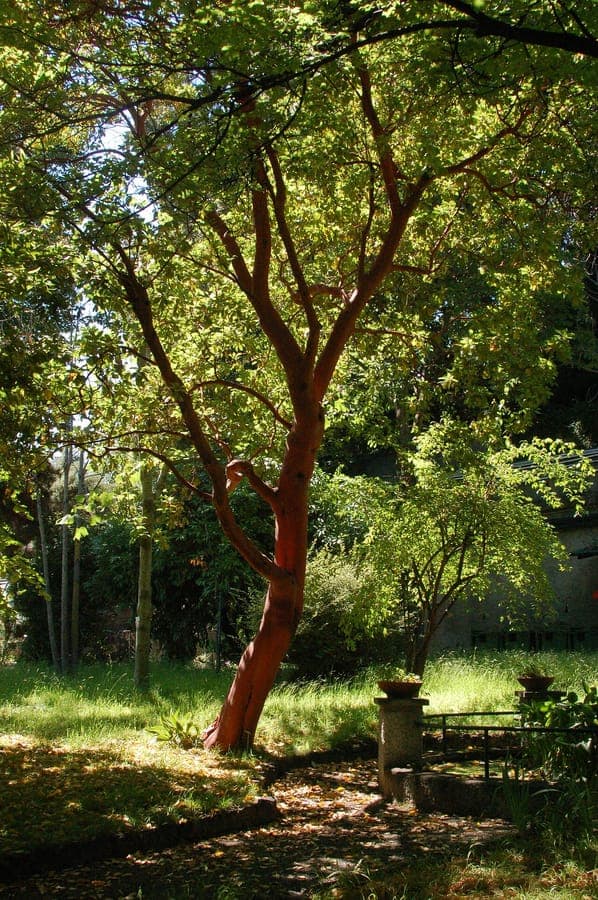
Arbutus andrachne grows as an attractive layered shrub reaching approximately 5-8 meters in height. Its leaves are glossy green, leathery, and remain on the plant year-round. The bark is smooth reddish-brown, providing an attractive contrast with the green foliage canopy.
From late winter through early spring, the first white flowers appear in hanging clusters. These fragrant blooms smell pleasantly sweet and attract pollinators. After flowering, small round fruits develop that slowly ripen from yellow to red and can remain on the plant for up to four years.
Ideal Location
The Greek strawberry tree prefers a sunny position with at least 6-8 hours of direct sunlight daily. In Mediterranean climates, summer afternoon shade can be beneficial. Provide shelter from strong, windy zones.
This plant grows best in well-drained locations. Avoid wet, stagnant soils. In warmer regions, it can also tolerate drought conditions reasonably well.
Soil
Arbutus andrachne prefers slightly acidic to neutral soils with a pH of 6.0-7.0. Well-drained, sandy loam soils are ideal. Add compost or leaf mold to improve soil structure.
This is not a plant for boggy or heavy clay soils. Ensure adequate drainage by applying mulch.
Free preview
Want to see Arbutus andrachne: complete guide in your garden? Make a free preview of your design.
Watering
Once the plant is well-established, the Greek strawberry tree is reasonably drought-tolerant. In the first year after planting, water regularly, especially during dry spells. Ensure the soil remains moist but not waterlogged.
In mature growth, water only during prolonged dry spells and extreme heat. In regions with regular rainfall, supplementary watering is usually unnecessary.
Pruning
The Greek strawberry tree requires minimal maintenance. Remove dead, damaged, or crossing branches after flowering. Gently shape the plant by light trimming. Heavy pruning can limit flowering capacity.
Also remove lower leaves for a neater appearance. This improves air circulation around the plant.
Maintenance Calendar
In early spring, remove all dead branches and shape the plant. After flowering (May-June), deadhead spent flowers. In autumn, check for disease. Winter: only prune damaged sections.
This is also an excellent time to apply compost around the base for nutrition.
Winter Hardiness
Arbutus andrachne is moderately hardy. It tolerates temperatures down to approximately minus 10 to minus 12 degrees Celsius in sheltered locations. In colder regions outside the Mediterranean area, protection against severe frost is required.
Container plantings can be moved indoors during winter. Provide abundant light and cool temperatures.
Retailers
Netherlands: Intratuin, Gamma Germany: OBI, Hornbach France: Truffaut, Jardiland
Visit gardenworld.app for more information about plant arrangements for your garden.
Final Thoughts
The Greek strawberry tree is a wonderful choice for the Mediterranean garden enthusiast. With its year-round interesting structure, beautiful flowers, and ornamental fruits, this plant brings considerable beauty and character to your garden. With proper placement and basic maintenance, it will grow into a healthy, flourishing specimen that will grace your garden for generations.
Try this classic Mediterranean plant and enjoy its natural elegance. Visit gardenworld.app for garden design inspiration.
Frequently asked questions about Arbutus andrachne
Is Arbutus andrachne winter hardy?
Arbutus andrachne is moderately hardy. It tolerates temperatures down to approximately minus 10 to minus 12 degrees Celsius in sheltered locations.
When and how do you prune Arbutus andrachne?
The Greek strawberry tree requires minimal maintenance. Remove dead, damaged, or crossing branches after flowering.
How much water does Arbutus andrachne need?
Once the plant is well-established, the Greek strawberry tree is reasonably drought-tolerant. In the first year after planting, water regularly, especially during dry spells.
Where does Arbutus andrachne grow best?
The Greek strawberry tree prefers a sunny position with at least 6-8 hours of direct sunlight daily. In Mediterranean climates, summer afternoon shade can be beneficial.
What soil does Arbutus andrachne need?
Arbutus andrachne prefers slightly acidic to neutral soils with a pH of 6.0-7.0. Well-drained, sandy loam soils are ideal.

See it in your garden
See Arbutus andrachne in your garden
One photo of your garden and a few questions. You see the result in about a minute.
Try it with a photoIdentify this plant in your own garden. Identify a plant
Similar plants
Redvein enkianthus (Enkianthus campanulatus): complete guide
Enkianthus campanulatus
Redvein enkianthus (Enkianthus campanulatus): shrub for acid soil with hanging cream bells in May and fiery autumn colour. Site, soil, pruning, hardiness and companions.
Darley Dale Heath: complete guide
Erica × darleyensis
Everything about Darley Dale heath (Erica × darleyensis): planting, position, soil, pruning and care. Months of winter flowers in pots and borders.
Prickly heath (Gaultheria mucronata): growing guide
Gaultheria mucronata
Prickly heath (Gaultheria mucronata, formerly Pernettya) carries white, pink or red berries from autumn to spring. Dioecious and toxic: how to grow it well.
