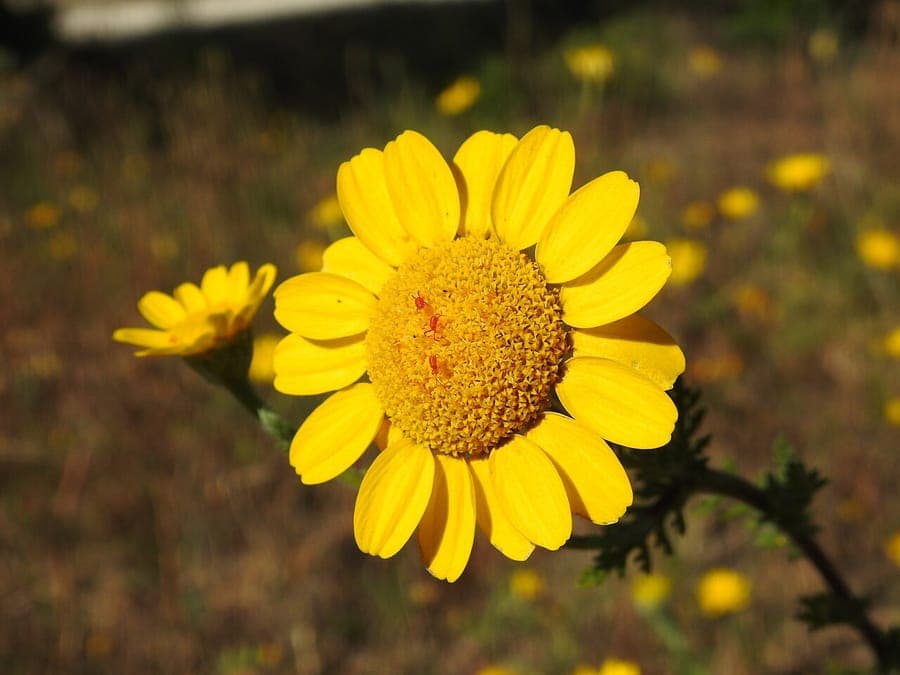
(c) Duarte Frade, some rights reserved (CC BY) / CC BY 4.0, via Wikimedia Commons
Anacyclus radiatus: complete guide
Anacyclus radiatus
Want to see Anacyclus radiatus: complete guide in your garden?
Full design in HD: €7.99
Look after your Anacyclus radiatus with the GardenWorld app
Identify plants with your camera and get a care calendar with reminders for this plant.


Overview
Anacyclus radiatus, commonly known as yellow bertram or radiant anacyclus, is an elegant flowering plant in the Asteraceae family. This Mediterranean treasure originates from the Mediterranean region and North Africa, where it naturally thrives in dry, sunny habitats. The plant is prized for its vibrant golden-yellow flowers and delicate foliage, making it an excellent choice for gardeners seeking to bring Mediterranean charm to their outdoor spaces.
The plant is relatively compact and dwarf, fitting perfectly into rock gardens, borders, or even containers. With minimal care, this plant will reward you with stunning blooms throughout the summer months while attracting bees and butterflies.
Appearance and Bloom
Anacyclus radiatus grows as a compact herbaceous plant, typically reaching 20-40 cm in height. The stems are slender and branched, covered in fine, softly hairy foliage in soft green tones. The leaves are small and feathery, giving the plant a silky appearance.
The flowers are the main attraction. They bloom from June through August, displaying a beautiful golden-yellow color. Each flower is round, approximately 1-2 cm in diameter, with yellow disc florets in the center and ray florets around the margin. After flowering, decorative seed heads form, adding interesting texture.
Ideal Location
Anacyclus radiatus thrives in full sun. Plant it in a location that receives at least 6-8 hours of direct sunlight daily. This encourages richer bloom and more compact growth. The plant tolerates light shade but blooming will be less profuse.
This plant is ideal for sunny borders, rock gardens, or as an edging plant in a Mediterranean garden scheme. In more humid climates, growing in containers allows better moisture control.
Soil
Excellent drainage is particularly important for Anacyclus radiatus. This Mediterranean plant thrives in poor to moderately fertile soils and cannot tolerate wet feet. Plant it in sandy or gravelly soils, or add pea gravel and coarse sand to regular garden soil if your soil is clay-heavy.
The pH should be between 7.0 and 7.5 for optimal growth. Test your soil beforehand and amend if necessary. This plant even accepts stony soil where many other plants would struggle.
Free preview
Want to see Anacyclus radiatus: complete guide in your garden? Make a free preview of your design.
Watering
After planting, water Anacyclus radiatus regularly until it is well-established (approximately 3-4 weeks). After that, the plant is very drought-tolerant and accepts dry periods.
Once established, water only during prolonged drought. Excessive water is harmful and can cause root rot. In rainy summers, the plant usually requires no supplemental watering. When grown in containers, water cautiously and let the soil dry between waterings.
Pruning
Anacyclus radiatus requires minimal pruning. After flowering, you can remove faded flowers to maintain a tidy appearance and encourage further blooming. Trim the sides slightly if the plant becomes too sprawling, but be careful not to remove too much.
In early spring (March-April), remove any dead or damaged branches. The plant naturally forms an attractive, compact shape, so extensive pruning is usually unnecessary.
Maintenance Calendar
Spring (March-May): Perform light pruning, remove dead wood, and plant new specimens.
Summer (June-August): Deadhead spent flowers, water only during prolonged drought, monitor for pests.
Autumn (September-October): Reduce watering, leave seed heads for wildlife.
Winter (November-February): Minimal activity; protect from extremely wet periods.
Winter Hardiness
Anacyclus radiatus is moderately hardy in northern European climates. The plant tolerates temperatures down to approximately -5 to -10 degrees Celsius, though in regions with harsh winters, protection may be needed.
In areas with wet winters, this plant grows best in containers that can be moved indoors. Ensure the plant stays dry in winter, as excessive moisture is more dangerous than cold temperatures.
Companion Plants
Anacyclus radiatus pairs well with other Mediterranean, drought-tolerant plants:
- Lavender (Lavandula species)
- Roses (Rosa species)
- Sage (Salvia officinalis)
- Thyme (Thymus species)
- Stonecrops (Sedum species)
- Ornamental grasses like Festuca
These combinations create a cohesive Mediterranean garden with similar water needs.
Conclusion
Anacyclus radiatus is a beautiful, low-maintenance plant that brings Mediterranean beauty to your garden. With its bright golden-yellow flowers, compact growth, and drought tolerance, it's ideal for gardeners seeking something special without excessive fuss.
Whether you have a rock garden, hot border, or terracotta pot, Anacyclus radiatus will reward you with blooms from June through August. Available at major garden centers, this plant is a valuable addition to your garden design. Explore gardenworld.app for more Mediterranean plant recommendations for your garden transformation.
Frequently asked questions about Anacyclus radiatus
Is Anacyclus radiatus winter hardy?
Anacyclus radiatus is moderately hardy in northern European climates. The plant tolerates temperatures down to approximately -5 to -10 degrees Celsius, though in regions with harsh winters, protection may be needed.
When and how do you prune Anacyclus radiatus?
Anacyclus radiatus requires minimal pruning. After flowering, you can remove faded flowers to maintain a tidy appearance and encourage further blooming.
How much water does Anacyclus radiatus need?
After planting, water Anacyclus radiatus regularly until it is well-established (approximately 3-4 weeks). After that, the plant is very drought-tolerant and accepts dry periods.
Where does Anacyclus radiatus grow best?
Anacyclus radiatus thrives in full sun. Plant it in a location that receives at least 6-8 hours of direct sunlight daily.
What soil does Anacyclus radiatus need?
Excellent drainage is particularly important for Anacyclus radiatus. This Mediterranean plant thrives in poor to moderately fertile soils and cannot tolerate wet feet.

See it in your garden
See Anacyclus radiatus in your garden
One photo of your garden and a few questions. You see the result in about a minute.
Try it with a photoIdentify this plant in your own garden. Identify a plant
Similar plants
Frikart's aster (Aster × frikartii): complete guide
Aster × frikartii
Everything about Frikart's aster (Aster × frikartii): position, soil, pruning and hardiness of the aster that flowers lavender-blue from July to October.
False aster (Boltonia asteroides): complete guide
Boltonia asteroides
False aster (Boltonia asteroides) covers itself in white daisies from late August to October. How to plant, cut back and combine this tough, tall perennial.
Daisy bush (Brachyglottis greyi): care guide
Brachyglottis greyi
Brachyglottis greyi, formerly Senecio greyi, pairs silver felted leaves with yellow summer daisies. Advice on position, soil, pruning, hardiness and companions.
