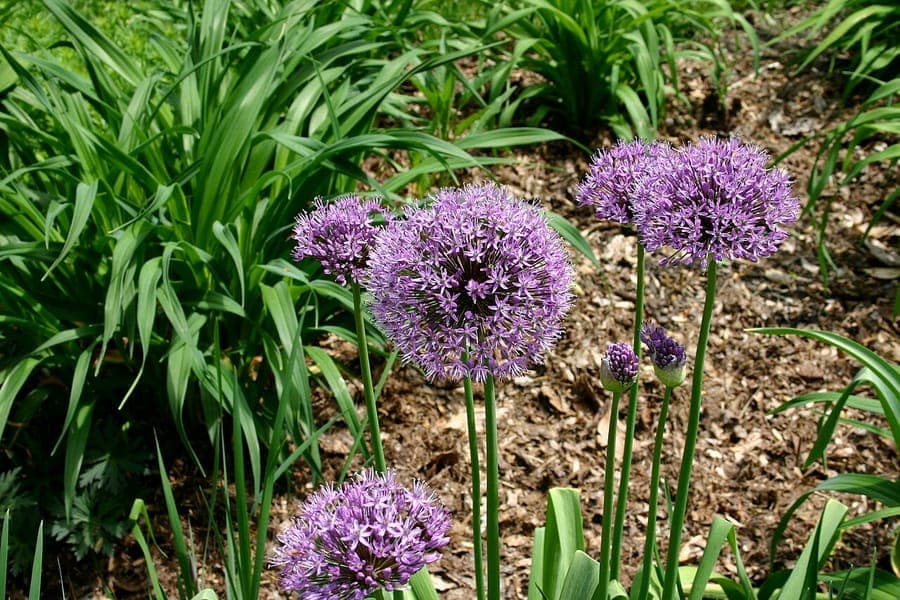
SB Johnny / CC BY-SA 3.0, via Wikimedia Commons
Aflatunense Onion (Allium aflatunense): complete guide
Allium aflatunense
Want to see Aflatunense Onion (Allium aflatunense): complete guide in your garden?
Full design in HD: €7.99
Look after your Aflatunense Onion with the GardenWorld app
Identify plants with your camera and get a care calendar with reminders for this plant.


Overview
Allium aflatunense, known as Aflatunense onion or ornamental onion, is a remarkable bulbous perennial prized for its spectacular globe-shaped flower heads. This plant produces dense spheres of tiny star-shaped purple flowers rising from slender, grey-green foliage from May to June. Native to the Tian-Shan mountains of Kazakhstan and Kyrgyzstan, it thrives in temperate climates and is increasingly popular with gardeners seeking architectural plants.
Appearance and Bloom
The Aflatunense onion reaches heights of 60 to 90 centimetres and forms dense, perfectly round flower balls measuring 8 to 10 centimetres across. Each tiny flower is star-shaped and deep purple to purple-white. Together they create a striking visual effect that persists for two to three weeks, making excellent cut or dried flowers. Foliage emerges early in spring and typically fades by late June.
Ideal Location
Position plants in full sun, receiving at least six to eight hours of direct sunlight daily. Afternoon heat is welcome, as Allium aflatunense is heat-loving. Light shade allows growth but reduces flowering. Shelter from strong winds, especially when plants are fully established, as the stems can bend in gales.
Soil
Excellent drainage is paramount. This onion despises wet feet and will rot in heavy clay or consistently moist soil. Amend your garden soil with coarse sand or perlite before planting bulbs. A pH of 6.0 to 7.5 is ideal. Add compost for structure and modest nutrients, but avoid overfeeding - these plants thrive in lean soils.
Watering
During the growing season (March to May), water regularly, especially in dry periods, but allow the soil to dry between waterings. After flowering, gradually reduce watering. During dormancy (June to October), water sparingly unless exceptionally dry. In wet winters, ensure excellent drainage around plants.
Free preview
Want to see Aflatunense Onion (Allium aflatunense): complete guide in your garden? Make a free preview of your design.
Pruning
Remove spent flower heads just below the globe to maintain appearance and prevent self-seeding, conserving bulb energy. Do not remove foliage until completely yellow, as it feeds the bulb. After bloom, foliage withdraws and vanishes by June.
Maintenance Calendar
March: Inspect bulbs for disease, prepare beds. April: Monitor growth, begin watering schedule. May-June: Enjoy blooms, remove faded flowers. July-September: Plant dormancy, minimal care. October-November: Check bulbs, verify drainage. December-February: Frost protection in extreme winters (below -15 degC).
Winter Hardiness
Aflatunense onion is exceptionally hardy, tolerating temperatures to -20 degC easily. In Netherlands, Belgium and Germany, bulbs overwinter without protection. In severe winters, additional mulch can help, especially in the first year. However, preventing wet conditions is far more critical than protecting from cold.
Companion Plants
Combine with spring bulbs like tulips and daffodils for layered bloom. Pair with low silver-foliage plants like lavender, sage and santolina. The stiff upright structure contrasts beautifully with rounded forms of other garden features. Extend seasonal interest with complementary perennials that bloom later in summer.
Closing
Allium aflatunense is for gardeners who appreciate sculptural forms and extended bloom periods. This is not showy flash, but architectural excellence. With proper drainage and minimal care, this Kyrgyz beauty flowers for years. Visit gardenworld.app for more plant guides and garden designs.
Frequently asked questions about Aflatunense Onion
Is Aflatunense Onion winter hardy?
Aflatunense onion is exceptionally hardy, tolerating temperatures to -20 degC easily. In Netherlands, Belgium and Germany, bulbs overwinter without protection.
When and how do you prune Aflatunense Onion?
Remove spent flower heads just below the globe to maintain appearance and prevent self-seeding, conserving bulb energy. Do not remove foliage until completely yellow, as it feeds the bulb.
How much water does Aflatunense Onion need?
During the growing season (March to May), water regularly, especially in dry periods, but allow the soil to dry between waterings. After flowering, gradually reduce watering.
Where does Aflatunense Onion grow best?
Position plants in full sun, receiving at least six to eight hours of direct sunlight daily. Afternoon heat is welcome, as Allium aflatunense is heat-loving.
What soil does Aflatunense Onion need?
Excellent drainage is paramount. This onion despises wet feet and will rot in heavy clay or consistently moist soil.

See it in your garden
See Aflatunense Onion in your garden
One photo of your garden and a few questions. You see the result in about a minute.
Try it with a photoIdentify this plant in your own garden. Identify a plant
Similar plants
Agapanthus campanulatus: the hardy bell agapanthus
Agapanthus campanulatus
Agapanthus campanulatus is a deciduous African lily with blue bell-shaped flowers in summer. Learn about position, watering, winter care and good companions.
Agapanthus inapertus: the drooping African lily
Agapanthus inapertus
Agapanthus inapertus is a tall African lily with drooping, barely open tubular flowers in deep blue and violet. A guide to position, watering and winter care.
Tree onion: complete guide
Allium × proliferum
Everything about the tree onion (Allium × proliferum): planting, harvesting bulbils, dividing and overwintering. A perennial onion, toxic to dogs and cats.
