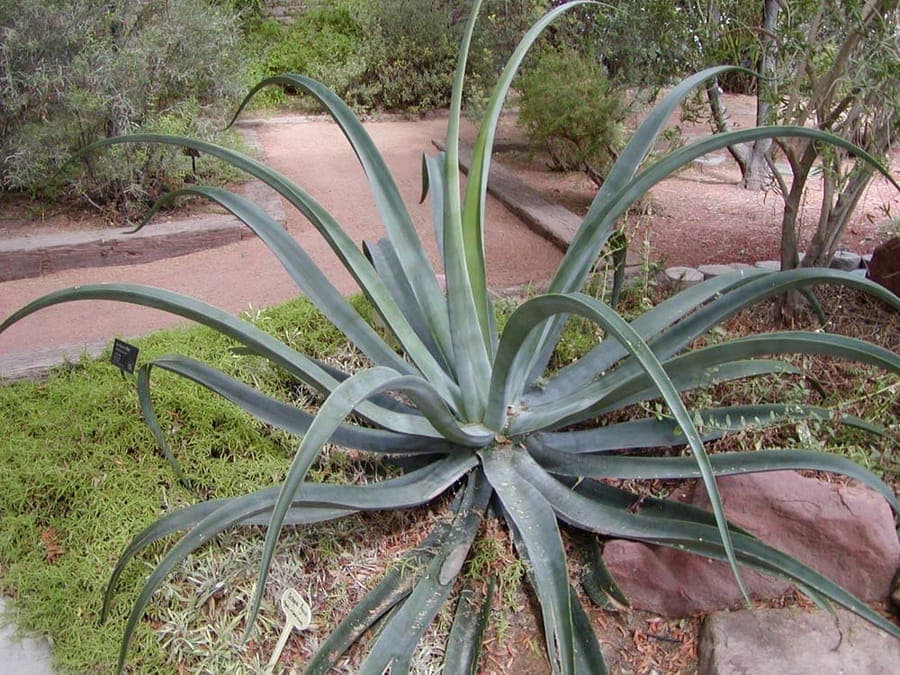
Stan Shebs / CC BY-SA 3.0, via Wikimedia Commons
Agave vilmoriniana: complete guide
Agave vilmoriniana
Want to see Agave vilmoriniana: complete guide in your garden?
Full design in HD: €7.99
Look after your Agave vilmoriniana with the GardenWorld app
Identify plants with your camera and get a care calendar with reminders for this plant.


Overview
Agave vilmoriniana, commonly known as Octopus Plant or Octopus Agave, is a remarkably spectacular succulent in the Asparagaceae family. This plant is native to northern and western Mexico, where it grows on dry mountain slopes and rocky terrain. The plant is renowned for its unique growth form with widely spreading, graceful, drooping leaves resembling octopus tentacles.
Appearance and Bloom
Agave vilmoriniana is a large statement plant reaching 1.5 to 2 meters in diameter at maturity. Unlike many agave species with spiky upright leaves, this species features long, elegant, gracefully drooping foliage arranged in a massive rosette formation. The leaves are bright green with yellow and green vertical striping. Leaves can exceed 1 meter in length and reach approximately 10 centimeters in width, giving the plant its distinctive tentacle-like appearance. After several years of growth, the plant produces a tall flowering stalk bearing numerous small, tubular yellow flowers. These flowers attract hummingbirds and butterflies. After blooming, the mother plant dies, though it usually leaves numerous pups around the base.
Ideal Location
Agave vilmoriniana thrives in full sun. The plant requires at least six hours of direct sunlight daily, with eight or more hours being ideal. In full sun, foliage colors remain most intense. The plant tolerates partial shade but results in a less compact form. Ensure ample space for growth as drooping leaves require substantial clearance.
Soil
Agave vilmoriniana demands exceptional drainage. This is crucial for preventing root rot. Plant in pure succulent potting mix or seed-starting mix combined with coarse sand or perlite. In gardens, it grows best in raised beds or amended lean, rocky soil. The plant grows acceptably in lean to moderately fertile soil. A soil pH of 6.0 to 8.0 is tolerated.
Free preview
Want to see Agave vilmoriniana: complete guide in your garden? Make a free preview of your design.
Watering
Agave vilmoriniana is exceptionally drought-tolerant once established and requires minimal water. During growing season (spring to fall), water deeply but infrequently only when soil is completely dry. In winter, water very sparingly or not at all. Overwatering is the leading cause of death for this plant. Ensure container plants have well-draining pots with drainage holes.
Pruning
Agave vilmoriniana requires no pruning in the traditional sense. Remove dead or damaged leaves or frayed leaf tips when noticed. Also remove basal pups if you prefer to prevent natural propagation.
Maintenance Calendar
Spring: Begin growth after winter dormancy. Summer: Minimal watering. Fall: Possible blooming. Winter: No water or very minimal water.
Winter Hardiness
Agave vilmoriniana is borderline frost-hardy depending on specific conditions. It grows best in USDA zones 9b-11. It can tolerate brief frosts to -7 Celsius in dry conditions but prolonged freezing will kill it. In cold climates, grow in containers and bring indoors for winter. Protect outdoor plantings with row covers when frost is expected.
Companion Plants
Agave vilmoriniana works well in dry-climate landscaping with other drought-tolerant plants. Combine with other succulents like Echeveria, Sedum, and Aloe. Add drought-tolerant ornamental grasses for texture contrast. In containers, pair with trailing succulents for visual interest.
Conclusion
Agave vilmoriniana is a truly spectacular plant combining architectural beauty with practical drought tolerance. Its unique weeping-leaf habit makes it a statement plant in any succulent collection. With proper watering, excellent drainage, and full sun, this plant will provide ten or more years of exotic, low-maintenance beauty. Whether grown as a container specimen on a patio or as a focal point in a desert landscape, the Octopus Plant will draw attention and admiring comments from visitors.
Frequently asked questions about Agave vilmoriniana
Is Agave vilmoriniana winter hardy?
Agave vilmoriniana is borderline frost-hardy depending on specific conditions. It grows best in USDA zones 9b-11.
When and how do you prune Agave vilmoriniana?
Agave vilmoriniana requires no pruning in the traditional sense. Remove dead or damaged leaves or frayed leaf tips when noticed.
How much water does Agave vilmoriniana need?
Agave vilmoriniana is exceptionally drought-tolerant once established and requires minimal water. During growing season (spring to fall), water deeply but infrequently only when soil is completely dry.
Where does Agave vilmoriniana grow best?
Agave vilmoriniana thrives in full sun. The plant requires at least six hours of direct sunlight daily, with eight or more hours being ideal.
What soil does Agave vilmoriniana need?
Agave vilmoriniana demands exceptional drainage. This is crucial for preventing root rot.

See it in your garden
See Agave vilmoriniana in your garden
One photo of your garden and a few questions. You see the result in about a minute.
Try it with a photoIdentify this plant in your own garden. Identify a plant
Similar plants
Great camas (Camassia leichtlinii): planting and care
Camassia leichtlinii
Everything about great camas (Camassia leichtlinii): planting the bulbs, heavy wet soil, naturalising in grass, hardiness and the best partners for a flowering meadow.
Pineapple lily (Eucomis bicolor): planting, care and overwintering
Eucomis bicolor
Everything about the pineapple lily (Eucomis bicolor): planting the bulbs, watering and feeding, overwintering in pots or the ground, and the best border partners.
Pineapple lily (Eucomis comosa): growing and overwintering
Eucomis comosa
Eucomis comosa is the tallest and best-known pineapple lily, with creamy spikes topped by a leafy tuft in late summer. Planting, overwintering and leaf cuttings.
