Miwasatoshi / CC BY-SA 4.0, via Wikimedia Commons
Agave chrysantha: complete guide
Agave chrysantha
Want to see Agave chrysantha: complete guide in your garden?
Full design in HD: €7.99
Look after your Agave chrysantha with the GardenWorld app
Identify plants with your camera and get a care calendar with reminders for this plant.


Overview
Agave chrysantha, commonly known as Golden-flower agave or Goldenflower century plant, is a spectacular desert plant in the Asparagaceae family (formerly Agavaceae). Native to Arizona and northern Mexico, this plant brings desert elegance and architectural impact to your front garden. With its blue-gray foliage and dramatic rosette form, it becomes an unforgettable focal point in any dry landscape design.
Golden-flower agave is renowned for exceptional drought tolerance and spectacular blooming that occurs years after planting.
Appearance and Bloom
Agave chrysantha grows into a massive rosette of blue-gray leaves reaching approximately 1-1.5 meters high and wide. The leaves are elongated, stiff, and terminate in sharp points. The rosette is dense and architectural, with perfect symmetry.
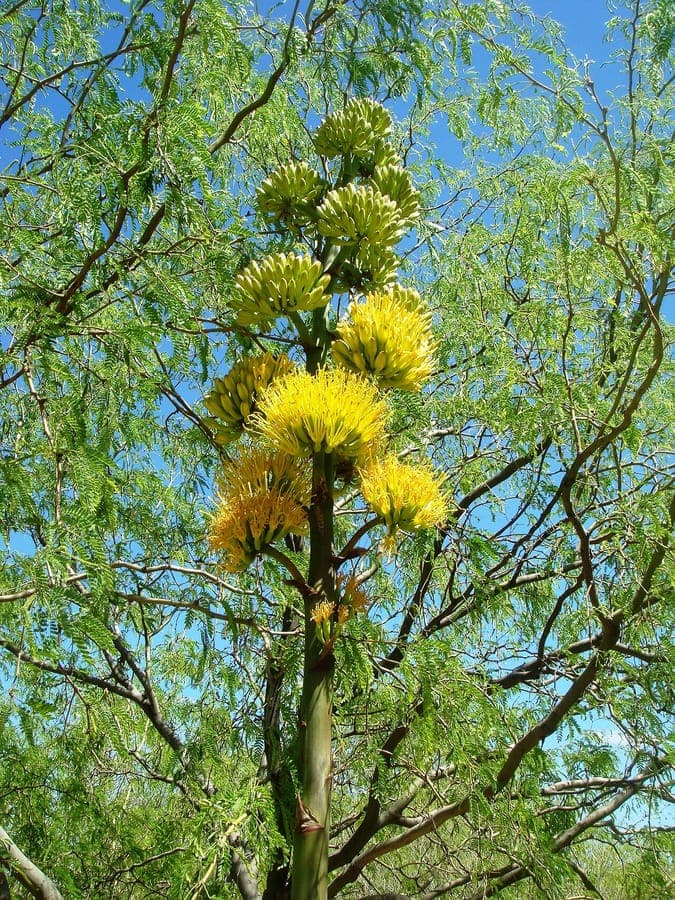
When mature (typically after 8-10 years), an impressive flower stalk forms that can reach 4-5 meters tall. This bears bright yellow tubular flowers in spectacular pyramidal arrangement. After blooming, the plant dies (it is monocarpic), but produces abundant seed for future generations.
Ideal Location
Choose the sunniest location in your garden - minimum eight hours of direct sunlight daily. This plant tolerates full sun without issue. Position it as a focal point or centerpiece where the dramatic form shines.
Wind is not a problem; this plant is extremely sturdy. Ensure adequate distance from pathways and seating due to sharp leaf points. It works perfectly as a specimen plant or grouped with other drought-tolerant plants.
Soil
Agave chrysantha thrives best in extremely well-drained, poor soils. Sand, gravel, and perlite mixtures are ideal. pH can vary widely (5.5-8.0). This plant can even grow in very poor soil.
Water retention must be minimal; this plant cannot tolerate waterlogging. In normal garden soil, we recommend adding sand-gravel mixtures and raised planting. Avoid heavy clay.
Free preview
Want to see Agave chrysantha: complete guide in your garden? Make a free preview of your design.
Watering
Once established (after about four weeks), this plant is virtually waterless. For the first months, regular watering aids root establishment. Subsequently, water only during extreme drought.
In very arid climates, do not water at all; natural rainfall suffices. In temperate zones, occasionally (maximum once monthly) water during dry summers. Overwatering is the primary cause of plant death.
Pruning
Agave chrysantha requires virtually no pruning. Wilted or damaged leaves can be carefully removed. Wear protective gloves due to sharp leaf points.
When the plant blooms, the flower stalk can be removed after blooming if aesthetically desired, but this is not essential.
Maintenance Calendar
Spring: Check for winter damage. Begin gentle watering for newly planted specimens.
Summer: Minimal care. Monitor for pests.
Autumn: Stop watering.
Winter: No care needed. Plant goes dormant.
Winter Hardiness
Agave chrysantha is hardy to approximately -9C, but frost tolerance is limited. In colder regions, greenhouse overwintering is necessary, or treat as a seasonal plant. In mild zones (10-11), it can remain outdoors permanently.
Heavy snow can break leaves; carefully remove snow. Ensure good drainage to prevent frost damage during freeze-thaw cycles.
Companion Plants
Combine Agave chrysantha with other drought-tolerant plants such as Aloe, Delosperma, Sedum, and gray-foliaged plants for a cohesive desert garden. It works well as dominant central plant with low-growing companions.
Conclusion
Golden-flower agave adds permanent architectural impact to your garden. With minimal care and proper drainage, this spectacular plant will last decades. Look for seedlings at garden centers stocking drought-tolerant plants.
Design your front garden now with gardenworld.app - upload your home photos and discover how Agave chrysantha fits perfectly into your minimalist, drought-resistant garden plan. With gardenworld.app, create a long-lasting, low-maintenance front garden.
Frequently asked questions about Agave chrysantha
Is Agave chrysantha winter hardy?
Agave chrysantha is hardy to approximately -9C, but frost tolerance is limited. In colder regions, greenhouse overwintering is necessary, or treat as a seasonal plant.
When and how do you prune Agave chrysantha?
Agave chrysantha requires virtually no pruning. Wilted or damaged leaves can be carefully removed.
How much water does Agave chrysantha need?
Once established (after about four weeks), this plant is virtually waterless. For the first months, regular watering aids root establishment.
Where does Agave chrysantha grow best?
Choose the sunniest location in your garden - minimum eight hours of direct sunlight daily. This plant tolerates full sun without issue.
What soil does Agave chrysantha need?
Agave chrysantha thrives best in extremely well-drained, poor soils. Sand, gravel, and perlite mixtures are ideal. pH can vary widely (5.5-8.0).

See it in your garden
See Agave chrysantha in your garden
One photo of your garden and a few questions. You see the result in about a minute.
Try it with a photoIdentify this plant in your own garden. Identify a plant
Similar plants
Great camas (Camassia leichtlinii): planting and care
Camassia leichtlinii
Everything about great camas (Camassia leichtlinii): planting the bulbs, heavy wet soil, naturalising in grass, hardiness and the best partners for a flowering meadow.
Pineapple lily (Eucomis bicolor): planting, care and overwintering
Eucomis bicolor
Everything about the pineapple lily (Eucomis bicolor): planting the bulbs, watering and feeding, overwintering in pots or the ground, and the best border partners.
Pineapple lily (Eucomis comosa): growing and overwintering
Eucomis comosa
Eucomis comosa is the tallest and best-known pineapple lily, with creamy spikes topped by a leafy tuft in late summer. Planting, overwintering and leaf cuttings.
