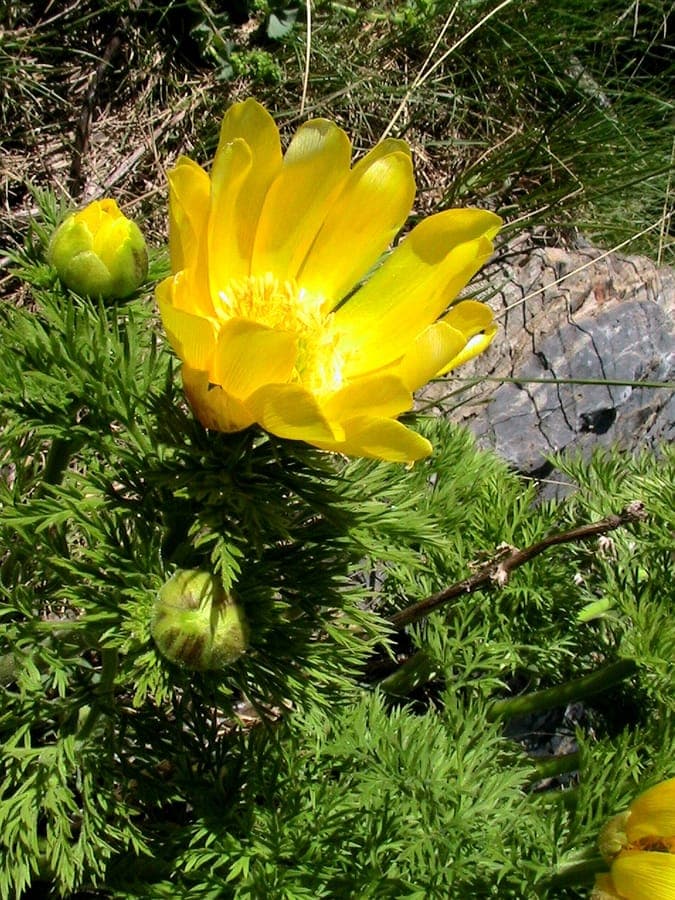
Isidre blanc / CC BY-SA 4.0, via Wikimedia Commons
Adonis pyrenaica: complete guide
Adonis pyrenaica
Want to see Adonis pyrenaica: complete guide in your garden?
Full design in HD: €7.99
Look after your Adonis pyrenaica with the GardenWorld app
Identify plants with your camera and get a care calendar with reminders for this plant.


Overview
Adonis pyrenaica, commonly known as Pyrenean Pheasant's-eye, is a delicate alpine flower in the Ranunculaceae family. Native to the mountain regions of the Pyrenees and southwestern France, this plant brings alpine elegance to your garden. With its bright yellow flowers that open early in the season, it adds vibrant spring color to any alpine garden.
This plant is renowned for preferring high-alpine conditions and sharp drainage. It is a favorite among rock garden enthusiasts and gardeners fascinated by wild alpine ecology.
Appearance and Bloom
Adonis pyrenaica grows as a low, compact plant reaching only 10-30 centimeters in height. The stems are slender and delicate, with highly refined, feathery foliage that appears almost fern-like. Growth is elegant and graceful, never appearing massive.
Flowers emerge early in spring (May to July, depending on elevation) and are glossy yellow with numerous petals forming an elegant shape. Each bloom lasts approximately three weeks, creating a prolonged flowering display.
Ideal Location
Choose a position with full sun to dappled shade, with at least four to six hours of gentle sunlight. This plant thrives best in elevated areas or raised beds where alpine conditions can be replicated. Good air circulation is essential.
In your garden, this plant works best in alpine rockeries, raised beds, or alpine container arrangements. It creates beautiful contrast against gray rocks or decorative stones.
Soil
Adonis pyrenaica requires well-drained, poor soils. Sandy, gritty mixtures with minimal organic material are ideal. pH should be acidic to neutral (pH 5.5-7.0).
Water retention must be minimal; this plant cannot tolerate heavy or wet soils. In gardens with heavy clay, we recommend creating raised beds with a drainage layer of broken crocks, followed by alpine mix (sand, fine gravel, perlite).
Free preview
Want to see Adonis pyrenaica: complete guide in your garden? Make a free preview of your design.
Watering
During growth (spring), water regularly until the plant is well-established. However, they absolutely cannot tolerate excess moisture. Allow soil to dry slightly between waterings.
In summer and autumn, minimize watering considerably. In winter, when the plant sleeps, water minimally - only enough to prevent complete desiccation.
Container planting: water carefully; ensure water does not stagnate around roots.
Pruning
Adonis pyrenaica requires minimal pruning. After blooming, dead flower stems and leaves can be gently removed. Otherwise, allow growth and return to decay naturally for soil enrichment.
Avoid aggressive pruning as this can damage the plant. A very light cleanup is all that is needed.
Maintenance Calendar
Spring: Water carefully as growth begins. Remove previous season's dead material.
Late spring-Early summer: Regular watering. Remove spent flower stems.
Summer: Minimal care. Ensure good drainage.
Autumn-Winter: Virtually no watering. Protection from extreme rain.
Winter Hardiness
Adonis pyrenaica is hardy to approximately -15C, but requires excellent drainage during winter. Excessive winter wetness is fatal. In regions with heavy winter rain, we recommend protection with dry material or greenhouse overwintering.
Snow itself is not harmful, but snow followed by thaw can cause water damage. Good drainage is key.
Companion Plants
Combine Adonis pyrenaica with other alpine flowers such as Dianthus, Saxifraga, Sempervivum, and other rock garden favorites. Gray-foliaged plants like Artemisia make good partners. Avoid harsh, dominant plants.
Conclusion
Pyrenean Pheasant's-eye adds alpine elegance and early-season color to your garden. With proper drainage and placement, this delicate flower will provide years of enjoyment. Look for seeds or plants at specialized alpine plant nurseries.
Design your front garden now with gardenworld.app - upload your home photos and discover how Adonis pyrenaica fits beautifully into your alpine or rock garden design. Create your dream garden step by step.
Frequently asked questions about Adonis pyrenaica
Is Adonis pyrenaica winter hardy?
Adonis pyrenaica is hardy to approximately -15C, but requires excellent drainage during winter. Excessive winter wetness is fatal.
When and how do you prune Adonis pyrenaica?
Adonis pyrenaica requires minimal pruning. After blooming, dead flower stems and leaves can be gently removed.
How much water does Adonis pyrenaica need?
During growth (spring), water regularly until the plant is well-established. However, they absolutely cannot tolerate excess moisture.
Where does Adonis pyrenaica grow best?
Choose a position with full sun to dappled shade, with at least four to six hours of gentle sunlight. This plant thrives best in elevated areas or raised beds where alpine conditions can be replicated.
What soil does Adonis pyrenaica need?
Adonis pyrenaica requires well-drained, poor soils. Sandy, gritty mixtures with minimal organic material are ideal. pH should be acidic to neutral (pH 5.5-7.0).

See it in your garden
See Adonis pyrenaica in your garden
One photo of your garden and a few questions. You see the result in about a minute.
Try it with a photoIdentify this plant in your own garden. Identify a plant
Similar plants
Chinese Aconite (Aconitum carmichaelii): complete guide
Aconitum carmichaelii
Everything about Chinese aconite (Aconitum carmichaelii): position, soil, pruning and care, plus clear advice on its severe toxicity to people and pets.
Bugbane (Actaea simplex): complete guide
Actaea simplex
Everything about bugbane (Actaea simplex): position, soil, pruning and hardiness of this shade-loving perennial with fragrant white spires in September and October.
Grecian windflower: complete guide
Anemone blanda
Everything about Grecian windflower (Anemone blanda): soaking and planting the tubers, position, soil, March to April flowering and naturalising. Tips for a blue carpet.
