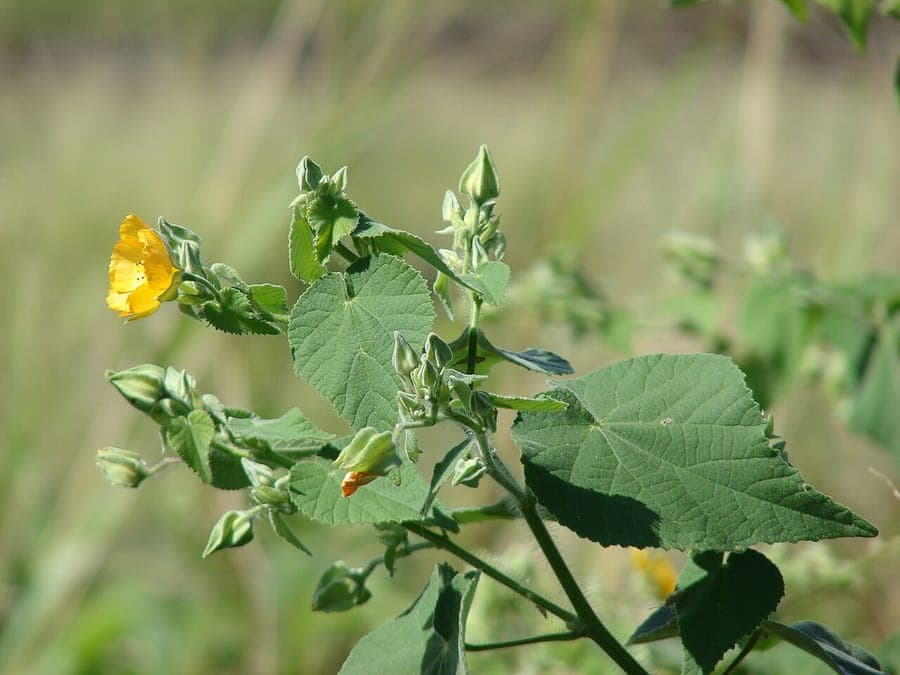
Forest & Kim Starr / CC BY 3.0, via Wikimedia Commons
Large-leaved Flowering Maple: complete guide
Abutilon grandifolium
Want to see Large-leaved Flowering Maple: complete guide in your garden?
Full design in HD: €7.99
Look after your Large-leaved Flowering Maple with the GardenWorld app
Identify plants with your camera and get a care calendar with reminders for this plant.


Overview
The Large-leaved Flowering Maple (Abutilon grandifolium) is a magnificent subtropical shrub native to Peru, Brazil, and northern Argentina. This plant is renowned for its large, velvety leaves and its extended season of orange, bell-shaped flowers. In temperate climates, it thrives best in a heated conservatory or protected container.
This Flowering Maple features significantly larger leaves than the common Chinese Lantern. The structure and growth are frost-sensitive, so in northern Europe it remains a container or conservatory plant. For Gardenworld.app users with a greenhouse passion, this is a fantastic tropical accent.
Appearance & bloom
The shrub reaches 1.5-2.5 metres tall in a conservatory, displaying large, heart-shaped leaves up to 15-20 cm wide. The leaves are green, composed of fine hairs giving them a velvety texture.
The flowers are the star: orange, bell-shaped (campanulate), approximately 3-4 cm wide, with red veining. They appear continuously from March to October in a heated conservatory, or May-September outdoors in sheltered locations.
The fruits are small, round capsular fruits with distinctive segments that open when ripe.
Ideal location
In northern Europe, Abutilon grandifolium grows best in:
- Heated conservatory (14-18 degrees Celsius minimum winter)
- Sheltered patio/terrace against south-facing wall (May-October)
- Bright window with indirect sunlight
As a container plant, move outdoors (May-September), but bring indoors before first frost in October. The plant cannot tolerate temperatures below 5 degrees Celsius.
Soil
Use well-draining potting compost, such as 50% peat-free compost and 50% perlite. pH: neutral to slightly acidic (6-7). Good drainage is essential - root rot threatens in waterlogged conditions.
Repot every 2 years in spring into a slightly larger pot (maximum 30-40 cm) using fresh compost.
Free preview
Want to see Large-leaved Flowering Maple: complete guide in your garden? Make a free preview of your design.
Watering
During the growing season (March-October), water regularly so the compost remains moist but not waterlogged. In winter (November-February), reduce watering to approximately every 10 days.
Misting helps combat dry air in conservatories, particularly in summer. Ideal humidity level: 40-60%.
Feeding
For continuous flowering, feed with diluted houseplant fertiliser (half-strength) every 2 weeks during the growing period (March-October). Stop feeding in winter.
Pruning
In March, cut back to one-third of growing length for a bushier form and more flowers. Without pruning, the plant becomes tall and spindly.
Remove spent flowers regularly for continuous bloom (deadheading).
Maintenance calendar
- January-February: minimal care, reduce watering, no feeding
- March: prune back, repot into fresh compost, resume feeding
- April-May: move outdoors after frost danger, mist against dry air
- June-September: regular watering and feeding, deadhead spent flowers
- October: bring indoors before first frost
- November-December: minimal care, keep conservatory cooler
Winter hardiness
Not frost-hardy outdoors in northern Europe. Minimum conservatory/indoor temperature: 5-10 degrees Celsius. Frost kills it. Container plant only.
Pests & diseases
- Aphids: spray with insecticide in conservatory
- Whitefly: increase humidity, improve ventilation
- Powdery mildew: improve ventilation, reduce misting
Companion plants
In a conservatory, pairs well with:
- Fuchsia species
- Felicia (blue daisy)
- Lantana camera
- Plumbago capensis
- Ferns
Contact Gardenworld.app for conservatory planting combinations.
Closing
The Large-leaved Flowering Maple brings tropical ambiance to your conservatory or heated space. With regular feeding and pruning, it flowers for many years. Perfect for those who love exotic, self-flowering plants.
Frequently asked questions about Large-leaved Flowering Maple
Is Large-leaved Flowering Maple winter hardy?
Not frost-hardy outdoors in northern Europe. Minimum conservatory/indoor temperature: 5-10 degrees Celsius.
When and how do you prune Large-leaved Flowering Maple?
In March, cut back to one-third of growing length for a bushier form and more flowers. Without pruning, the plant becomes tall and spindly.
How much water does Large-leaved Flowering Maple need?
During the growing season (March-October), water regularly so the compost remains moist but not waterlogged. In winter (November-February), reduce watering to approximately every 10 days.
What soil does Large-leaved Flowering Maple need?
Use well-draining potting compost, such as 50% peat-free compost and 50% perlite. pH: neutral to slightly acidic (6-7). Good drainage is essential - root rot threatens in waterlogged conditions.

See it in your garden
See Large-leaved Flowering Maple in your garden
One photo of your garden and a few questions. You see the result in about a minute.
Try it with a photoIdentify this plant in your own garden. Identify a plant
Similar plants
Trailing abutilon (Abutilon megapotamicum): care guide
Abutilon megapotamicum
Grow trailing abutilon (Abutilon megapotamicum) in a basket or against a wall: watering, feeding, pruning and overwintering for red and yellow lantern flowers.
Flowering maple (Abutilon): container shrub guide
Abutilon × hybridum
How to grow flowering maple (Abutilon × hybridum) in a pot: position, watering, feeding, March pruning and overwintering indoors for flowers from May to October.
Checkerbloom (Sidalcea malviflora): complete guide
Sidalcea malviflora
Everything about checkerbloom or prairie mallow (Sidalcea malviflora): satin-pink summer spires, position, soil, cutting back for a second flush and hardiness.
