Spring lawn care: first cut, scarifying, feeding
By the GardenWorld editorial team, updated on
Want to see this in your garden?
Full design in HD: €7.99
Spring lawn care follows a fixed order. Mow for the first time when the grass is about 7 cm tall and the ground is dry enough, usually in late March or early April, with the mower set to 4 to 5 cm. Feed in March or April, as soon as the grass is growing. Only then scarify, in April or early May, after two or three cuts and about 3 mm deep. Overseed bare patches straight after scarifying, once the soil is at least 10°C. Turn that order round and you weaken the grass just when it needs to recover.
The spring lawn, job by job
| Job | When exactly | How | Guide |
|---|---|---|---|
| First cut | Late March or early April, when the grass is about 7 cm | At 4 to 5 cm, on a dry day | Mowing the lawn for the first time |
| Feeding | March or April, when the grass is growing | Spring feed at the rate on the pack | Feeding the lawn in spring |
| Scarifying | April to mid-May, after two or three cuts | About 3 mm deep, in two directions | Scarifying the lawn |
| Overseeding | Straight after scarifying, soil at least 10°C | 25 g per m2, up to 50 g on bare patches | Overseeding bare patches |
| Aerating | April, on compacted areas | Spike holes 5 to 10 cm deep | Aerating the lawn |
| Dealing with moss | March and April | Remove the cause: shade, wet, acidic or poor soil | Moss in the lawn |
| Lime | Late winter, not together with the feed | Only after a pH test | Liming the lawn |
The order: mow and feed first, then scarify
Scarifying pulls moss and thatch out of the turf and always leaves bare streaks. A lawn that is still dormant or hungry does not fill them in, and weeds germinate and moss returns in the gaps. That is why you mow and feed first. When the grass is growing strongly two to three weeks later, it closes the gaps itself after scarifying, helped by the grass seed you sow straight away.
First cut: when exactly
Grass starts growing when the soil is about 6 to 8°C. Wait to mow until the blades are about 7 cm tall, the ground is no longer waterlogged and there is no frost on it. In Belgium, the Netherlands and much of England that is usually late March or early April. In the south-west of England and western France it can be mid-March; in inland Germany, eastern France and northern Britain it is often mid-April.
Mow high the first time, at 4 to 5 cm, and never take off more than a third of the length. Grass such as perennial ryegrass needs its leaves to rebuild reserves after winter. Sharpen the blade beforehand: a blunt blade shreds the tips, which then turn brown. The details are in mowing the lawn for the first time.
Free preview
Create your own garden design
Feeding: as soon as the grass is growing
Give the first feed in March or April, when the grass is visibly growing. A good natural sign is the forsythia coming into flower. Feeding earlier makes little sense, because cold grass does not take up the nutrients and rain washes them away. Choose a spring feed that is mainly nitrogen, preferably slow-release, and stick to the rate on the pack. Spread it on dry grass and water afterwards if it does not rain. Do not apply lime and feed in the same weeks; see feeding the lawn in spring.
Scarifying: April to mid-May
Scarify once the grass has been cut two or three times and is growing strongly, in most areas in April. Mow short first, to about 3 cm, and work on dry grass and slightly moist soil. Set the blades so they scratch about 3 mm into the soil: any deeper and you damage the roots. Go over the lawn lengthways first and then across, and rake off everything that comes loose.
Do not scarify in frost, drought or heat, nor on a lawn that was only laid last year. After mid-May it is often too dry; September is then the better time. Everything about the technique is in scarifying the lawn.
Overseeding and aerating
Grass seed germinates readily from a soil temperature of about 10°C, in most inland areas from mid-April. Sow 25 g per m2 over thin areas and up to 50 g on really bare patches, rake the seed in lightly and firm it down. Keep the soil moist for three weeks and do not mow the young grass until it is 8 to 10 cm. How much seed you need is in overseeding with grass seed.
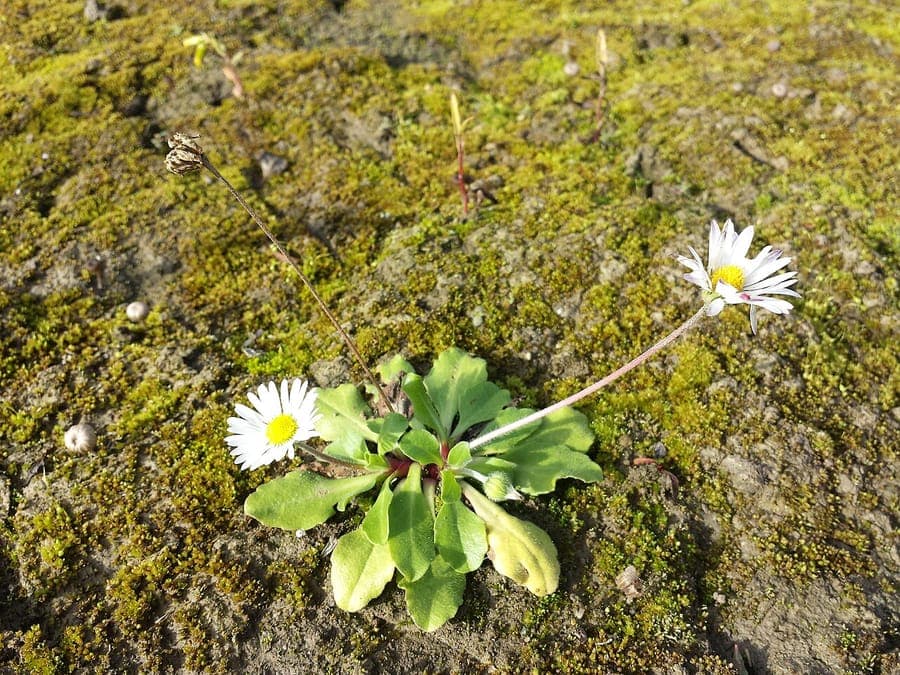
Where water stands or there is heavy foot traffic, the soil is compacted. Spike holes 5 to 10 cm deep there with a fork or an aerator and brush sharp sand into them. If mostly moss, daisies or clover are growing, that says something about the soil: too acidic, too wet or too poor. You can see exactly what is growing in your grass if you identify the plant from a photo.
If a patch of lawn stays bare in spite of everything, for example in deep shade under a tree, grass is the wrong choice there. With a garden design on your own photo you can see what a border or ground cover would do in that spot. The rest of the spring work is in getting your garden ready for spring, and how to close the lawn down in autumn is in winter lawn care.
Step by step
Step 1: Rake the lawn clean
In March, remove twigs, leaves and molehills so the grass gets light and air.
Step 2: Mow for the first time at 4 to 5 cm
Wait until the grass is about 7 cm tall and the ground dry enough, and take off no more than a third.
Step 3: Feed in March or April
Spread a spring feed at the rate on the pack as soon as the grass is growing, and water if it stays dry.
Step 4: Scarify after two or three cuts
Mow short, set the blades to a depth of about 3 mm and go over the lawn in two directions.
Step 5: Overseed straight away
Sow 25 to 50 g of grass seed per m2 on thin and bare patches, rake it in and firm it down.
Step 6: Keep it moist and mow high
Water for three weeks in dry weather and do not mow the young grass until it is 8 to 10 cm.
The last good moment
You can scarify and overseed until about mid-May. After that the young seedlings dry out too quickly and the grass recovers poorly from the damage. If you are too late, just keep mowing and feeding and move the scarifying to September.
Frequently asked questions
When do you mow the grass for the first time after winter?
When the grass is growing and about 7 cm tall, in Belgium, the Netherlands and most of England usually in late March or early April. The ground must not be waterlogged and there must be no frost on the grass. Mow at 4 to 5 cm the first time.
When do you scarify the lawn?
From April to mid-May, when the grass has already been cut two or three times and is growing well. The second option is September. Do not scarify in frost, drought or heat.
Feed first or scarify first?
Feed first. Grass that has been fed and is growing recovers from scarifying in a few weeks. Leave about two weeks between feeding and scarifying.
When do you feed the lawn in spring?
In March or April, as soon as the grass is visibly growing; forsythia in flower is a good sign. Do not spread feed on frozen ground or together with lime.
When can you overseed a lawn in spring?
From a soil temperature of about 10°C, usually from mid-April to mid-May. Sow straight after scarifying and keep the soil moist for three weeks. If that does not work out before summer, wait until late August or September.
Create your own garden design
Upload a photo, pick a style, and get a photorealistic design with plant list in under a minute.
Full design in HD: €7.99


Related articles
 Seasonal Tips
Getting your garden ready for spring: the checklist
Getting your garden ready for spring runs from February to April: pruning, cutting back borders in March, mowing and feeding the lawn, sowing in April.
 Planting
When to first mow your lawn: exact spring timing
Mowing too early damages grass, too late and it grows wild. Discover the perfect moment for your first spring cutting.
 Soil & Ground
When to aerate lawn: timing guide for vertical cutting
Lawn aeration removes thatch and improves soil health. Learn the optimal timing for aerating your grass for best results.