
Stefan.lefnaer / CC BY-SA 4.0, via Wikimedia Commons
Daisy: complete guide
Bellis perennis
Want to see Daisy: complete guide in your garden?
1 minute, no credit card
Overview
Bellis perennis, commonly known as the daisy, is a familiar sight in gardens across Europe and beyond. A member of the Asteraceae family, it's native to regions including the Baltic States, Belarus, and Cyprus. This herbaceous forb is perennial, hardy in USDA zones 4 to 8, and reaches a modest height of 5–10 cm. It spreads slowly but steadily, forming compact rosettes that pop up in lawns, between stepping stones, or along garden edges.
What makes the daisy special isn't grandeur - it's resilience and charm. It blooms from March through November, often flowering through mild winters. Bees and hoverflies visit the open-faced blooms early in the season, making it a valuable pollinator plant. Children love weaving its flowers into chains, and gardeners appreciate its minimal needs. If you're planning a cottage-style garden, use gardenworld.app to sketch a layout where daisies mingle naturally with creeping thyme and self-seeding poppies.
Appearance & bloom cycle
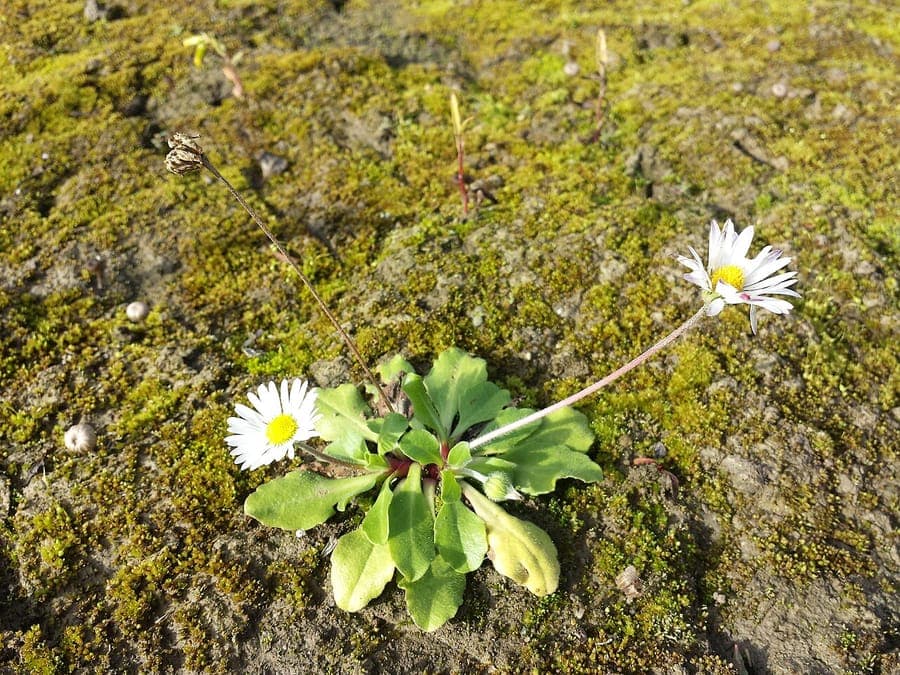
The daisy's flowers are unmistakable: a bright yellow central disc surrounded by white (or occasionally pale pink) ray florets. Each bloom measures 2–3 cm across and sits atop short, sturdy stems. The foliage forms a low, evergreen rosette of dark green, spoon-shaped leaves that stay present year-round.
Flowering begins in early spring, often coinciding with the last frost dates in April, and continues until the first hard freeze in late autumn. In sheltered spots, you might even see blooms in December. The plant reseeds lightly, so you'll often find new seedlings near mature clumps. For continuous visual interest, pair daisies with early tulips and late-blooming asters to bridge the seasons.
Ideal location
Daisies thrive in full sun to light shade, scoring a 7 on the light scale (1–10). They need at least 6–7 hours of direct sunlight daily for optimal flowering. A south- or east-facing border works best. Avoid deep shade under dense tree canopies like beech or spruce - the lack of light and root competition will stunt growth.
They're excellent choices for rock gardens, gravel paths, or as a soft edging plant. If you're planting in a lawn, raise your mower deck to at least 6 cm to avoid scalping the blooms. Use gardenworld.app to simulate sun exposure across your garden and find the perfect spot for daisy clusters.
Soil requirements
Bellis perennis prefers slightly acidic to neutral soils, with an ideal pH between 5.5 and 6.5. It tolerates a range of soil types but performs best in fertile, well-drained loam. Heavy clay or waterlogged sand should be amended with 3–5 cm of compost before planting.
The plant dislikes prolonged waterlogging, so avoid low-lying areas where runoff collects. If your soil is sandy, mulch with well-rotted manure or leaf mould to retain moisture. Avoid liming the soil unless pH drops below 5.0, as daisies don't thrive in alkaline conditions.
Free design
Want to see Daisy: complete guide in your garden? Make a free design now.
Watering
Water newly planted daisies twice a week for the first month - about 10 litres per square metre per session. Once established, they're drought-tolerant and rarely need supplemental watering. During extended dry spells in summer, a weekly soak can prolong blooming.
Water at the base in the morning to prevent fungal issues. Avoid overhead watering, especially in humid climates, as wet foliage encourages powdery mildew and leaf spot.
Pruning
Pruning isn't essential, but deadheading spent flowers encourages repeat blooming from May to September. Use clean, sharp snips and cut just above a leaf node. This also prevents excessive self-seeding if you want to keep growth contained.
In October, tidy up by removing any tattered or diseased leaves, but don't cut back the entire plant - the rosette remains active through winter. If daisies grow in a lawn, mow less frequently and at a higher setting to preserve blooms.
Maintenance calendar
- January: Check for winter damage; remove any dead foliage by hand.
- February: Prepare new planting areas; loosen compacted soil.
- March: New growth emerges; apply a light top-dressing of compost.
- April: First blooms appear; watch for slugs and snails.
- May–August: Deadhead regularly; water during droughts.
- September: Reduce watering; leave late blooms for pollinators.
- October: Light clean-up; sow seeds for next year if desired.
- November: Leave plants standing - they provide winter shelter.
- December: Minimal care needed; monitor growth in mild spells.
Winter hardiness
Daisies are fully hardy down to -25°C (USDA zone 4). The foliage stays green and resumes growth quickly in spring. In areas with heavy, wet winters, ensure good drainage to prevent root rot. Raised beds or sloped areas help avoid water accumulation.
Companion plants
Pair daisies with non-invasive companions like Aubrieta, Alchemilla mollis, or early crocus. Avoid aggressive groundcovers like ivy or pachysandra that can smother them. They also work well with self-seeding annuals like nigella or california poppies for a relaxed, cottage feel.
Closing
The common daisy proves that simplicity has lasting appeal. It asks for little and gives back months of cheerful blooms. Whether you're restoring a meadow corner or softening a paved path, it's a worthy addition. Buy seeds or plugs from local garden centres or trusted suppliers like OBI or Hornbach in Germany. And when planning your space, remember that gardenworld.app lets you preview how daisies will spread and interact with other plants over time - a smart tool for thoughtful gardeners.
Want to see Daisy: complete guide in your garden? Make a free design now.
Upload a photo, pick a style, and get a photorealistic design with plant list in under a minute.
No credit card required


Similar plants
Calendula stellata: complete guide
Calendula stellata
Complete guide to Calendula stellata, the star-flowered marigold from Sicily: location, soil, watering and companion planting tips.
Korean chrysanthemum: complete guide
Chrysanthemum x rubellum
Chrysanthemum x rubellum is a hardy autumn perennial with single pink to copper flowers from August to November. Care and combinations.
Helianthus divaricatus: complete guide
Helianthus divaricatus
Helianthus divaricatus is a North American woodland sunflower with yellow summer blooms, ideal for naturalistic borders and shady edges.