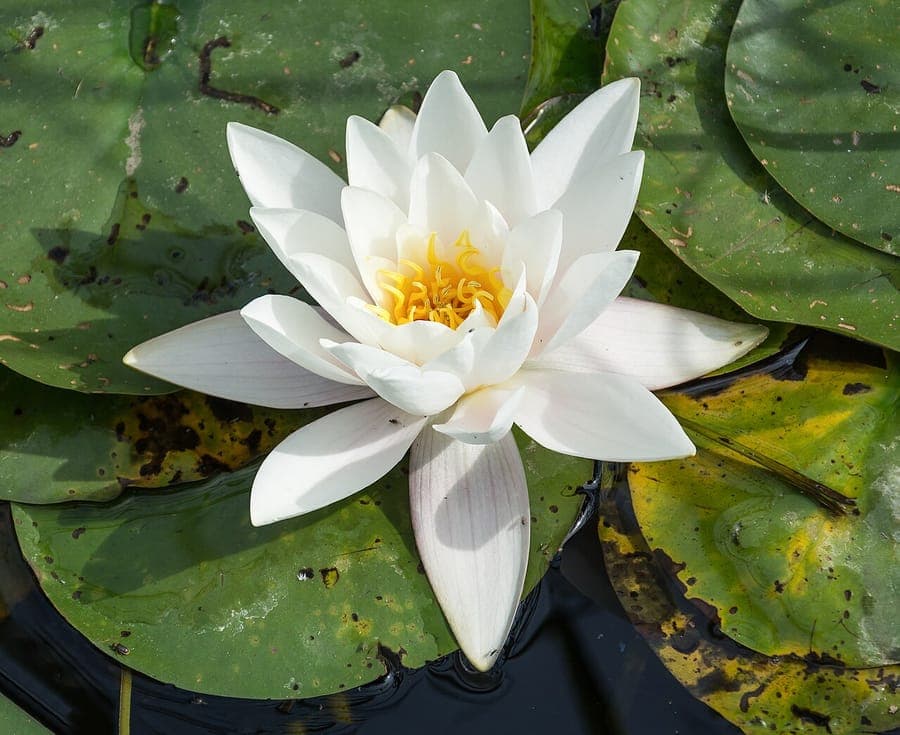
Preparing a pond for winter: pump, leaves, fish, ice
By the GardenWorld editorial team, updated on
Want to see this in your garden?
Full design in HD: €7.99
Preparing a pond for winter is a job for October and November. Stretch a net over the water before the leaves fall, skim off leaves and dead plant material, cut back on feeding once the water drops below 12°C and stop below 8°C. Lift the pump and filter before the first frost if they sit shallower than about 80 cm. In winter, make sure there is always a hole in the ice, and never smash one. Save the big clean-out for the end of winter.
Preparing a pond for winter, job by job
| Job | When | How | Read more |
|---|---|---|---|
| Keeping leaves out | September to November | Stretch a net, skim every week | When pond water smells |
| Cutting back plants | October or November | Remove dead foliage, leave hollow stems standing above the water | Water lilies and oxygenating plants |
| Stopping feeding | Cut back below 12°C, stop below 8°C | Small amounts of easily digested food, then nothing | A pond with koi |
| Pump and filter | Before the first frost | Out of the water if they sit shallower than 80 cm | Pond pump on and off |
| Checking the depth | Before winter | At least 80 cm at the deepest point for fish | Building a garden pond |
| Big clean-out | Late February or March | Not now: wildlife overwinters in the silt | Cleaning the pond in late winter |
Leaves and plants: as little rotting material as possible
Leaves that sink into the pond start to rot. That uses up oxygen and releases gases that cannot escape under a layer of ice. So stretch a net over the water in September and scoop out every week whatever falls through or past it. Remove the net before it freezes, so no animals get caught in it.
In October or November, cut off the dying leaves of the water lily and of marginal plants before they sink. Do leave the hollow stems of reeds, reedmace and iris standing 10 to 20 cm above the water: air can reach the water under the ice through those stems. Oxygenating plants stay, as they keep producing oxygen in winter for as long as there is light. Leave the silt on the bottom for now. Frogs and dragonfly larvae overwinter in it, and a big clean-out in cold water costs the fish too much energy.
Fish: cut back feeding and leave them in peace
Fish are cold-blooded. The colder the water, the slower their digestion. Below about 12°C, feed less and only easily digested food; below about 8°C, stop altogether. Food they can no longer digest stays in the gut or rots on the bottom. Only start again in spring, once the water has stayed above 10°C for several days.
In winter the fish lie still in the deepest part. The water there is about 4°C, because water at that temperature is the heaviest and sinks. For that the pond needs to be at least 80 cm deep at its deepest point. In areas with long spells of frost, such as inland Germany, eastern France and upland Britain, 100 to 120 cm is safer. If the pond is shallower, the fish are better off overwintering in a tank in a cool, frost-free place.
Free preview
Create your own garden design
Pump, filter and fountain: out, or left in place
A pump that keeps running in winter mixes the warmer water at the bottom with the cold water at the top. That cools exactly the layer in which the fish overwinter. So switch off the fountain, waterfall and stream before the first frost.
Whether the pump also has to come out depends on the depth. If it sits shallower than about 80 cm it can freeze in: lift it out, clean it and store it frost-free in a bucket of water, so the seals do not dry out. A pump that sits deeper can stay where it is, switched off. Filters, UV clarifiers and hoses above the water are always drained and stored frost-free: freezing water cracks the housing and the quartz sleeve. When everything can go back on is covered in pond pump on and off.
Ice: always keep a hole open
Under a solid sheet of ice, gases from decay build up and the oxygen runs out. One hole is enough to prevent that. An ice preventer, a floating ring with a polystyrene lid, keeps a gap open in light frost. In hard frost an air pump helps, with the air stone hanging 20 to 30 cm deep, not on the bottom.
If the pond has frozen over anyway, stand a pan of hot water on the ice and let it melt a hole. Never chop or smash: the shock waves harm the fish. Brush snow off part of the ice, so the oxygenating plants get light. On the coast, in western France and in the south of England it usually stays at a thin skin of ice; inland the pond can be frozen over for weeks.
If there is a water plant and you do not know whether it is hardy, identify the plant from a photo. If you want the pond deeper, bigger or in a different place, first use a garden design on your own photo to see how that looks in your garden. The other jobs are in getting your garden ready for winter.
Step by step
Step 1: Stretch a net and skim off leaves
Put a net over the pond in September and scoop leaves out of the water every week. Remove the net before the first frost.
Step 2: Cut back dead plants
Remove limp and brown foliage and leave hollow stems standing 10 to 20 cm above the water.
Step 3: Cut back on feeding
Feed less once the water temperature is below 12°C and stop below 8°C.
Step 4: Switch off pump and filter
Turn off the fountain and waterfall, lift out a pump that sits in shallow water and store it in a bucket of water in a frost-free place.
Step 5: Keep a hole open
Float an ice preventer on the pond and melt a frozen hole open with a pan of hot water.
The last good moment
Pump, filter and UV clarifier have to be out of the water or drained before the first night of frost; after that they may already have cracked. You can skim leaves until the water freezes over. Once the pond is frozen, limit yourself to keeping a hole open and leave the rest until late February.
Frequently asked questions
When do you prepare a pond for winter?
In October and November. The net goes on in September, the pump and filter must be out or drained before the first frost, and feeding stops when the water drops below 8°C.
Does the pond pump have to come out of the water in winter?
Yes, if it sits shallower than about 80 cm, because it can freeze in there. Store it clean and frost-free in a bucket of water. A pump that sits deeper can stay, but switch it off so it does not mix the warmer bottom water with the cold water at the top.
When do you stop feeding pond fish?
Cut back once the water is colder than about 12°C and stop below about 8°C. The fish's digestion almost comes to a halt by then. In spring, only start again when the water has stayed above 10°C for a few days.
How deep does a pond need to be for fish to overwinter?
At least 80 cm at the deepest point, so that a layer of water at about 4°C remains under the ice. In areas with long, hard winters 100 to 120 cm is safer. In a shallower pond, fish are better off overwintering in a tank in a frost-free place.
Can you break a hole in the ice?
No. The blows send shock waves through the water that can harm the fish. Melt a hole with a pan of hot water, or stop the pond freezing over with an ice preventer or an air pump.
Create your own garden design
Upload a photo, pick a style, and get a photorealistic design with plant list in under a minute.
Full design in HD: €7.99


Related articles
 Seasonal Tips
Getting your garden ready for winter: weekly checklist
Getting your garden ready for winter runs from mid-October to late November. Week by week: pots, lawn, pond, tap and frost protection, and what to leave.
 Planting
When to turn pond pump on and off: exact yearly schedule
Learn the perfect season to switch your pond pump on and off. Protect your fish and save energy.
 Planting
When to clean pond in late winter: exact moment
Learn the perfect timing and method to clean your pond in late winter. Preparation for the growing season.