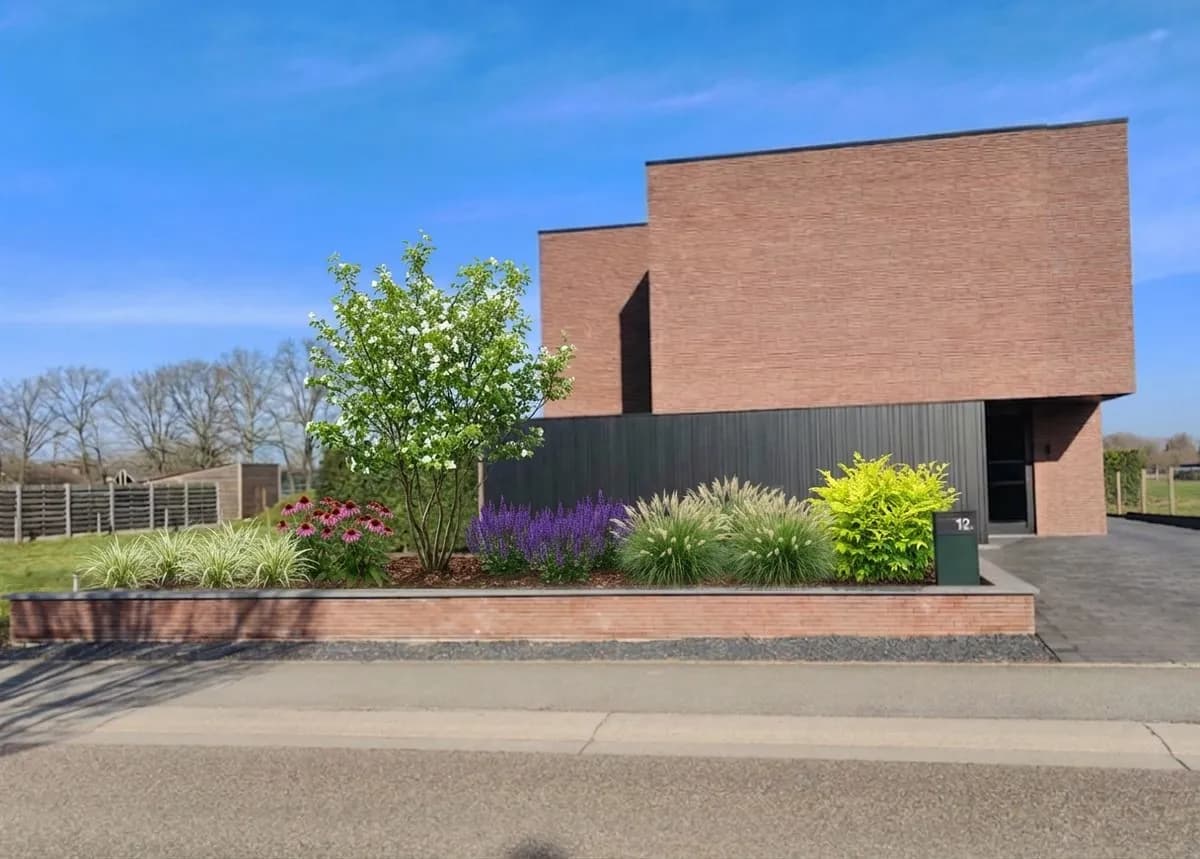
Mat-grass Fescue: complete guide
Vulpia unilateralis
Want to see Mat-grass Fescue: complete guide in your garden?
Full design in HD: €7.99
Overview
Mat-grass Fescue is a charming, fine grass species from the Poaceae family, native to the Mediterranean region. This grass grows wild in France, Spain, and other Mediterranean countries and has naturalized in parts of Europe. It is a small, graceful grass that works perfectly for supporting ornamental grass use in gardens.
Appearance and Bloom
This grass species reaches only 20 to 40 centimeters in height, forming fine, slender clumps of leaves. The foliage is extremely delicate and elegant, almost hair-like. From May to July, characteristic spikelets appear: narrow, one-sided panicles that appear aligned on a single line. The spikelets are initially golden-green, fading to silver-white as they mature.
Ideal Location
Choose a spot in full sun for best color and growth. Mat-grass Fescue tolerates even very sunny, warm locations. A dry, sunny slope, rock garden, or gravel bed is ideal. This grass species also grows well in containers and border edges.
Soil
This grass species grows in virtually any soil, provided it drains well. Poor, dry soil is actually preferred - rich soil can lead to excessive growth. Sand-grass composites are ideal. A neutral to acidic pH (6.5-7.5) is preferred.
Watering
Once established, Mat-grass Fescue is very drought-tolerant. Water regularly during the first growing season until root systems establish. Thereafter, rainfall usually suffices. Excessive water is actually harmful and can cause root rot.
Free preview
Want to see Mat-grass Fescue: complete guide in your garden? Make a free preview of your design.
Pruning
Pruning is minimal. Remove dead winter-damaged leaves in early spring for clean appearance. Many gardeners leave dead autumn foliage, as it provides winter interest.
Maintenance Calendar
Spring: Remove winter damage; spring growth will quickly renew the plant. Summer: Enjoy golden spikelets. Autumn: Collect seeds if desired. Winter: Dead grass adds winter interest; pruning only needed in spring.
Winter Hardiness
Mat-grass Fescue is completely hardy to approximately -15 degrees Celsius. In very cold regions, the plant may die in severe winters, but seed dispersal typically produces new plants in spring.
Companion Plants
Combine with other delicate grasses such as Stipa, Festuca, and other fine grass species. Sunny, drought-tolerant perennials such as Dianthus, lavender, and sage are excellent companions. These groupings form authentic rock gardens or Mediterranean planting schemes.
Closing
Mat-grass Fescue brings elegance and texture to dry, sunny gardens. With its delicate foliage and characteristic spikelets, it represents a valuable addition for gardeners seeking something refined. This grass species works well in both traditional rock gardens and modern, minimalist plantings. Find seeds at select garden centers. Visit gardenworld.app for more inspiration on incorporating ornamental grasses.
With minimal care, Mat-grass Fescue will provide fine texture and movement to your garden for many years.

See it in your garden
See Mat-grass Fescue in your garden
One photo of your garden and a few questions. You see the result in about a minute.
Try it with a photoIdentify this plant in your own garden. Identify a plant
Similar plants
Sporobolus pungens: complete guide
Sporobolus pungens
Sporobolus pungens is a stoloniferous Mediterranean coastal grass with outstanding salt and drought tolerance, perfect for seaside and dry gardens.
Mediterranean aegilops: complete guide
Aegilops biuncialis
Everything about Aegilops biuncialis, a Mediterranean annual grass with ornamental spikes and outstanding drought tolerance for dry gardens.
Silver bluestem: complete guide
Bothriochloa saccharoides
Full guide to Bothriochloa saccharoides (silver bluestem): site, soil, watering, winter hardiness, pruning, and garden companions.