
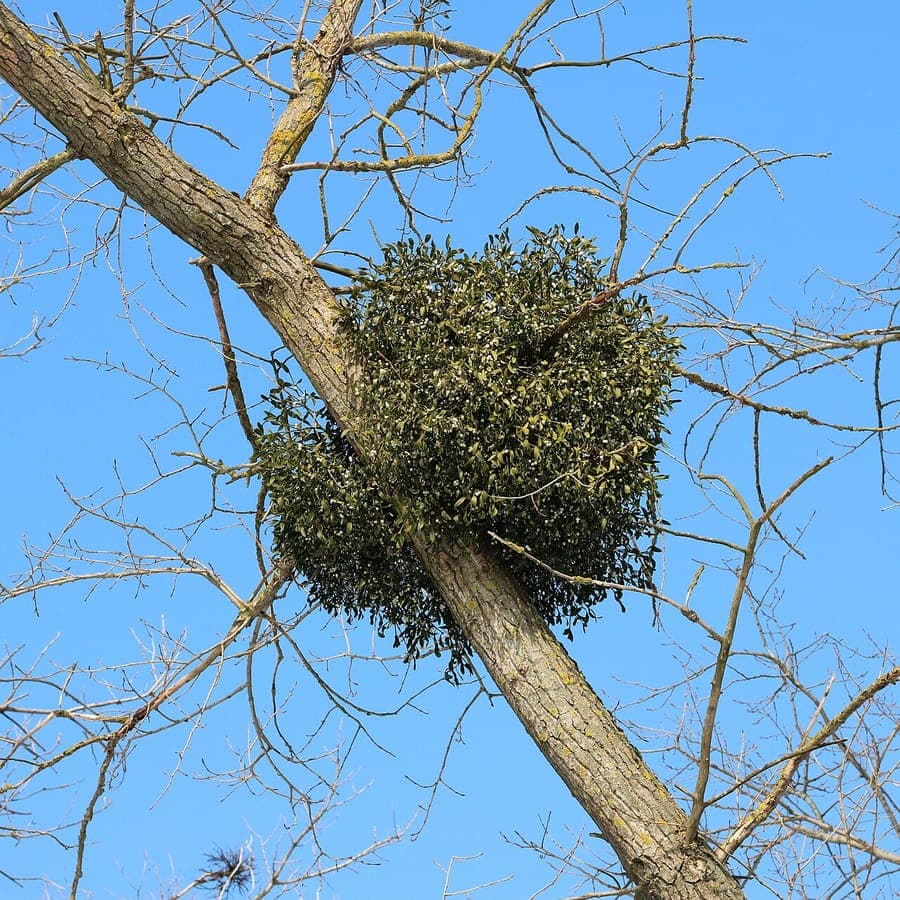
George Chernilevsky / CC BY 4.0, via Wikimedia Commons
Mistletoe: complete guide
Viscum album
Want to see Mistletoe: complete guide in your garden?
1 minute, no credit card
Mistletoe is one of Europe's most fascinating plants, a semi-parasitic species that dwells in the branches of native trees. With its distinctive yellow-green foliage and white berries, it forms a winter garden highlight. Beyond its botanical interest, mistletoe holds profound cultural significance during Christmas celebrations. This guide reveals the secrets of cultivating this mystical plant.
Overview
Viscum album grows naturally throughout Europe on branches of trees including oak, poplar, apple and elm. This semi-parasite extracts water and minerals through roots embedded in the host tree while producing its own food through photosynthesis. The white sticky berries attract birds essential for seed dispersal. Mistletoe's evergreen nature and winter berries make it uniquely valuable in seasonal landscapes.
Appearance and Bloom Cycle
The plant grows as a bushy cluster on tree branches with thick, oppositely paired yellowish-green leaves. Tiny greenish-yellow flowers appear in spring (March-April) often overlooked due to their insignificance. White berries mature in November-December providing winter color. The evergreen foliage remains visible year-round on host branches.
Ideal Location
Mistletoe grows only on tree branches, never in soil. Suitable hosts include apple, poplar, linden and elm trees. Oak trees also support mistletoe. Conifers like pine and fir do not tolerate this parasite. The host tree should have open canopy structure allowing adequate light penetration.
Soil and Nutrition
Mistletoe requires no soil as it grows entirely epiphytically on wood. It extracts water and minerals from the host tree while manufacturing its own food through photosynthesis. Fertilization is unnecessary and inappropriate.
Free design
Want to see Mistletoe: complete guide in your garden? Make a free design now.
Watering
Watering is unnecessary as the plant relies on host tree moisture. Mistletoe regulates its own water balance through the host vascular connection. No supplemental irrigation is ever required.
Pruning
Pruning may occur to maintain shape, though mistletoe needs minimal intervention. Excessive growth can stress the host tree. Light pruning maintains balance between parasite and host.
Maintenance Calendar
January-February: Plant prominence peaks, provides festive decoration. March-April: Flowering occurs with insignificant greenish blooms. May-October: Growth and berry development, plant thickens. November-December: Berries ripen to white, peak aesthetic value.
Winter Hardiness
Mistletoe is extremely hardy to minus 20 degrees Celsius and survives outdoor winter exposure. Evergreen foliage remains visible year-round. Extreme continental winters with prolonged hard freezing may damage young plants, but established specimens survive reliably.
Companion Plants
Mistletoe naturally associates with its host tree. In apple trees combine with the tree's own spring blossoms and summer fruit. For winter interest pair with holly (Ilex) and other evergreen natives creating festive seasonal combinations.
Closing Thoughts
Mistletoe represents ancient Christmas traditions and Druidic mysticism. Growing mistletoe requires patience as seed dispersal depends on birds. Establish mistletoe on suitable host trees by allowing birds to deposit seeds naturally. Alternatively source mistletoe seeds online and carefully inoculate suitable host branches. The multi-year establishment period rewards patient gardeners with invaluable winter interest. Discover more festive Christmas plant combinations on gardenworld.app where seasonal decoration guidance abounds.
Explore winter garden design and festive plant combinations on gardenworld.app, your complete resource for seasonal garden interest and botanical cultivation.
Want to see Mistletoe: complete guide in your garden? Make a free design now.
Upload a photo, pick a style, and get a photorealistic design with plant list in under a minute.
No credit card required


Similar plants
Ivy: complete guide
Hedera helix
Everything about Common Ivy (Hedera helix): planting, pruning, climbing and ground cover. Practical tips for green walls and weed-free underplanting.
Holly: complete guide
Ilex aquifolium
Discover holly (Ilex aquifolium), the iconic evergreen with red berries. Growing, care tips, and decorative uses for your garden.
English Yew: complete guide
Taxus baccata
Everything about English Yew (Taxus baccata): planting, clipping, topiary and care. Expert tips for a dense hedge or elegant sculptural form.