
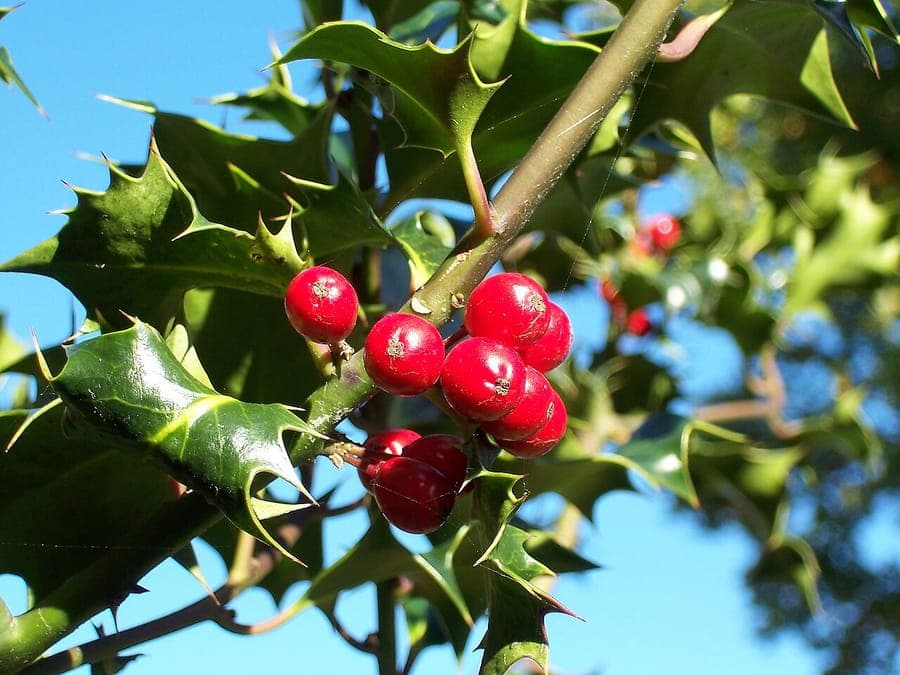
Jürgen Howaldt / CC BY-SA 2.0 de, via Wikimedia Commons
Holly: complete guide
Ilex aquifolium
Want to see Holly: complete guide in your garden?
1 minute, no credit card
Overview
Holly (Ilex aquifolium) is one of Europe's most distinctive evergreen shrubs. With its glossy, spiky leaves and bright red berries, it is a true standout in the winter garden. Beyond its aesthetic appeal, this plant offers practical benefits - birds love the berries, and it requires relatively minimal maintenance.
Holly has been a beloved part of gardens and Christmas decorations for centuries. The combination of dark green foliage and brilliant red fruit creates a natural festive element. Whether you prefer a formal garden style or informal landscape design, holly always finds a perfect place.
Appearance and bloom
Holly grows as a compact shrub reaching 2-4 meters on average, though some cultivars can grow taller. The leaves are distinctive: dark green, glossy, and often edged with sharp spines. Older leaves may be smooth, providing visual variation.
Flowers appear in spring and are small, whitish-red, and subtle. They're not showy, but possess a delicate beauty. Important note: holly plants are dioecious, meaning you need both male and female plants for berry production. Only female plants bear the characteristic red berries.
Fruit appears from autumn onward and often persists through winter, making the plant invaluable for bird feeding. The berries are approximately 8 millimeters in size and have a glossy red appearance.
Ideal location
Holly grows best in locations with at least half-shade to full light. While the plant tolerates shade, you'll get more flowers and berries in lighter settings. Protected locations are recommended, especially in windy areas where foliage can be damaged.
The plant works well in these situations: as hedging, as a specimen plant, in mixed plantings, or as under-planting beneath larger trees. In urban environments, it tolerates pollution well, making it a practical choice for city gardeners.
Soil
Holly is not particularly fussy about soil type. It thrives in both sandy and clay soils as long as drainage is good. The plant tolerates acidic to neutral soils and can also grow in slightly alkaline soils.
The ideal pH range is 6.5 to 7.5. Add organic matter before planting, such as compost or leaf mold. This helps the soil with water retention and nutrients. Regular mulching helps keep soil moist and cool.
Watering
Holly has moderate water requirements. Ensure the soil is moist but not waterlogged. Water extra during dry summer periods, especially for young plants. Once established, the plant is fairly drought-tolerant.
Young plants in their first year after planting need regular watering to promote root establishment. Use mild water when possible. Excessive moisture can lead to disease, so ensure good drainage.
Free design
Want to see Holly: complete guide in your garden? Make a free design now.
Pruning
Holly responds well to pruning and can be easily shaped. Prune in late spring, after frost has passed. For hedging, you can prune several times per year.
For decorative shaping, selectively remove branches. This also promotes branching and forms denser plants. Avoid pruning in autumn and early winter, as this can stimulate tender growth vulnerable to frost.
Maintenance calendar
January - February: Check for diseases and pests. This is also a good time for major pruning.
March - April: Fertilize as growth begins. Sow seed or take cuttings if you want to propagate your own plants.
May - June: Monitor for diseases. Ensure sufficient water if it's dry.
July - August: Water regularly, especially young plants.
September - October: Prepare for winter by pruning back branches.
November - December: Harvest berries for decoration. Protect in very cold climates.
Winter hardiness
Holly is extremely hardy and tolerates temperatures down to -15 degrees Celsius without issues. In central and northern Europe, it grows without special winter protection. The plant tolerates sea wind well thanks to its tough foliage.
In very harsh winters, young plants benefit from wind protection. Snow load can break heavy branches, so gently remove accumulated snow.
Companion plants
Holly combines well with other evergreens like yew, boxwood, and euonymus. For contrast, plant it with Japanese pieris, heuchera, or carex for texture variation. In larger gardens, it fits nicely in mixed screening hedges.
Underplanting with ivy, Soleirolia soleirolii, or low perennials creates interesting layering. In wildlife-friendly gardens, holly pairs beautifully with cardinal flower and other bird-attracting plants.
Conclusion
Holly is a versatile and enchanting evergreen that provides decorative value year-round. With minimal maintenance and excellent hardiness, it's a smart choice for sustainable garden design. Whether you're aiming for a classic English look or simply want to add winter cheer to your garden, holly never disappoints.
Visit your local garden center for a healthy holly with good root development. Ask for female cultivars for optimal berry production. You'll enjoy this beautiful plant for years, especially in dark winter months when every green leaf and red fruit is precious.
Want to learn more about winter-hardy evergreens? Check our guide on gardenworld.app for seasonal garden planning!
Want to see Holly: complete guide in your garden? Make a free design now.
Upload a photo, pick a style, and get a photorealistic design with plant list in under a minute.
10,000+ gardens designed already
No credit card required


Similar plants
Clustered holly: complete guide
Ilex aggregata
Clustered holly (Ilex aggregata) is a rare Andean holly with glossy foliage and bright red berry clusters, perfect for a sheltered, partly shaded corner.
Farges's holly: complete guide
Ilex fargesii
Farges's holly (Ilex fargesii) is an evergreen Chinese holly with glossy, spine-free foliage and bright red winter berries, ideal as a specimen or hedge.
Japanese Winterberry: complete guide
Ilex serrata
Discover Japanese winterberry: a deciduous holly with bright red berries that bring color to the garden deep into winter.