
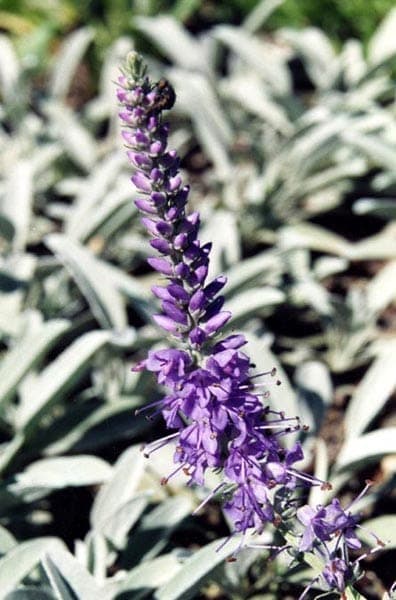
Ghislain118 (AD) http://www.fleurs-des-montagnes.net / CC BY-SA 3.0, via Wikimedia Commons
Silver speedwell: complete guide
Veronica incana
Want to see Silver speedwell: complete guide in your garden?
1 minute, no credit card
Overview
Veronica incana, commonly known as silver speedwell or spiked speedwell, is a compact perennial that catches the eye with its striking combination of silvery-grey foliage and vivid blue flower spikes. A member of the Plantaginaceae family, it originates from the dry steppes of Eastern Europe, stretching east to the Russian Far East and northern China. Its unusual leaf colour provides a year-round focal point in the garden, even well outside flowering season. Plants typically reach 20 to 40 cm in height, slowly spreading via a compact rootstock. Silver speedwell is particularly well suited to rock gardens, gravel beds, and dry perennial borders. At gardenworld.app you will find garden design inspiration where silver speedwell is used as a structural accent in drought-tolerant planting schemes. The plant is undemanding, attracts beneficial pollinators, and fits effortlessly into a low-maintenance garden design.
Appearance and bloom cycle
The most striking feature of Veronica incana is its densely white-hairy foliage. The narrow to lance-shaped leaves are covered in fine white hairs that give the plant a frosted, almost luminous appearance that persists through the seasons. In June and July, slender flower stems rise above the foliage, each ending in a long, upright spike packed with tiny, intensely blue flowers with white stamens. Individual flowers measure only a few millimetres across, but together they form impressive plumes 15 to 25 cm in length. The flowering period lasts four to six weeks. After blooming, the plant remains attractive as the seed capsules gradually turn brown. The combination of silver leaves and cobalt-blue spikes is rare in the garden world, making this speedwell a true standout plant.
Ideal location
Silver speedwell thrives in a sunny to lightly shaded position. At least five hours of direct sun per day is ideal for the most compact growth habit and the most abundant flowering. In partial shade, growth is slightly looser and flowering somewhat reduced. The plant's steppe origins explain its excellent drought tolerance: it dislikes wet feet and tolerates short periods of dryness without damage. Avoid positions with waterlogged soil or heavy clay. It is also an excellent candidate for sloped gardens, where it can act as a low groundcover and reduce erosion. A south-facing border or a stony slope are its ideal homes.
Soil
The ideal soil for Veronica incana is free-draining, lean, and neutral to slightly alkaline (pH 6.5 to 8). It grows well in sandy or stony ground but can also manage in ordinary garden soil provided drainage is good. Rich, heavy clay or poorly drained soils lead to root rot and shorten the plant's lifespan considerably. When planting in heavy soil, it helps to work a 20 cm layer of grit or coarse sand into the planting area. Fertilising is generally unnecessary and can even be counterproductive: too many nutrients produce lush but floppy growth and reduce the intensity of the silver leaf colour. A gravel mulch around the base keeps roots cool in summer and reduces the risk of crown rot during wet winters.
Watering
Once established, silver speedwell is extremely drought tolerant. Young plants during their first season need regular watering to develop a strong root system, but mature specimens manage well on rainfall alone in a typical year. During prolonged dry spells, water deeply once every two weeks, allowing the soil to dry out completely between sessions. Overwatering is the most common mistake gardeners make with this plant: consistently wet soil promotes fungal diseases and root rot. Always water at the base of the plant rather than overhead, as moisture sitting on the hairy foliage can cause spotting. In wet winters, well-drained but thoroughly moist soil provides the best conditions for the plant to come through safely.
Free design
Want to see Silver speedwell: complete guide in your garden? Make a free design now.
Pruning
Pruning Veronica incana is simple and minimal. After the flowers fade in July or August, cut the spent flower stems back to just above the leaf rosette. This encourages a second, lighter flush of bloom in late August or September and keeps the plant tidy and compact. In early spring, once the risk of frost has passed, remove any winter-damaged foliage back to the developing shoots. A hard cut-back to a few centimetres above the ground every three years helps rejuvenate the plant and keeps it vigorous. Avoid cutting back in late autumn, as the dried flower stems offer some protection to the crown during frosty nights. The plant naturally stays compact and rarely needs restricting to fit a border.
Maintenance calendar
January to February: No action needed. Leave old stems in place for frost protection. March: Remove dead material and check for new shoots emerging at the base. April: Divide or add new plants if desired. Apply a gravel mulch around the crown. May: Check for aphids or powdery mildew during warm, humid spells. June: Flowering begins; enjoy the blue spikes. A light feed with a potassium-rich fertiliser may be applied. July: Peak flowering. Cut back first flush of stems after blooming to encourage a second wave. August: Possible second flush of bloom. Keep soil dry and free of weeds. September: Seeds ripen; collect for sowing. October: Plants begin to die back to the base; do not remove foliage. November and December: No maintenance required. The plant survives frost well provided its feet stay dry.
Winter hardiness
Veronica incana is fully winter-hardy and handles European winters with ease. It falls within USDA hardiness zone 3, meaning it can survive temperatures down to -40 degrees Celsius. Across most of northern Europe, harsh winters are never a concern for this plant as long as it is growing in well-drained soil. Wet cold is far more dangerous than dry cold: standing water around the crown in winter is the main cause of plant loss. During wet autumns, a layer of coarse grit around the base is a simple and effective precaution. On the continental steppes where it originates, the plant survives winters of -30 degrees or colder, which means that a mild British or northwest European winter holds no threat whatsoever.
Companion plants
The silver-grey leaves of Veronica incana provide beautiful contrast with warm-toned neighbours in the border. Combine it with the orange-brown plumes of Stipa tenuissima or the copper-bronze of Carex testacea for a warm, dry-garden look. The purple flowers of lavender (Lavandula angustifolia) reinforce a Mediterranean feel. Salvia nemorosa with its blue spikes works in pleasing colour harmony, while the silver-white of Stachys byzantina (lamb's ears) echoes the silver leaf tone of the speedwell. Low-growing red-flowering sedums such as Sedum spurium create an attractive carpet at the base. Silver speedwell also pairs well with ornamental alliums, whose spherical purple heads provide vertical contrast in spring and early summer. On gardenworld.app you can find inspiration for dry borders featuring a coherent palette of silver, blue, and warm terracotta.
Closing
Silver speedwell is an essential plant for any modern, drought-tolerant garden. Its silvery foliage provides year-round structure, its blue flowers are a magnet for bees and butterflies in summer, and its maintenance demands are minimal. Whether you are designing a rock garden, a gravel garden, or a classic perennial border, Veronica incana fits wherever its feet can stay dry. Look for it in the perennial section at specialist garden centres, or order bare-root divisions from dedicated nurseries. Given a sunny spot and a handful of grit, this silver-white gem will reward you for many years to come.
Want to see Silver speedwell: complete guide in your garden? Make a free design now.
Upload a photo, pick a style, and get a photorealistic design with plant list in under a minute.
No credit card required


Similar plants
Spiked Speedwell: complete guide
Veronica spicata
Discover Spiked Speedwell (Veronica spicata): growing tips, ideal location, soil requirements, and winter hardiness. Your complete gardening reference for this striking perennial.
Lamb's-ear: complete guide
Stachys byzantina
Stachys byzantina, known as lamb's-ear or lamb's-tongue, is a hardy perennial from the mint family. This popular plant is especially valued for its soft, silvery-white hairy foliage and purple flowers.
Sage: complete guide
Salvia officinalis
Everything you need to grow and care for Salvia officinalis: ideal spot, soil needs, pruning, and winter hardiness for gardens in temperate climates.