
Kurt Stüber [1] / CC BY-SA 3.0, via Wikimedia Commons
Sage: complete guide
Salvia officinalis
Want to see Sage: complete guide in your garden?
1 minute, no credit card
Overview
Sage (Salvia officinalis) is a staple in any herb garden, prized for its aromatic leaves and rugged charm. Native to southern Europe-Albania, Greece, Italy, and parts of France and Spain-this subshrub thrives in sunny, dry conditions. In temperate climates like the UK and northern Europe, it performs best in well-drained soil and full sun. It grows 40–60 cm tall and spreads up to 50 cm wide, forming a woody base over time. As a member of the Lamiaceae family, it shares traits with mint, basil, and thyme: square stems, opposite leaves, and a strong scent. Its bloom cycle runs from June to August, producing upright spikes of blue flowers that attract bees and pollinators. With proper care, a single plant can last 5–8 years.
Appearance & bloom cycle
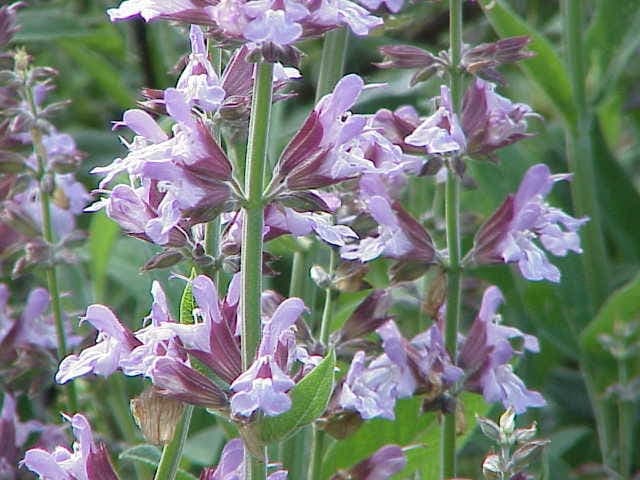
The leaves are lance-shaped, 4–8 cm long, with a grey-green, slightly fuzzy surface. When crushed, they release a warm, camphorous aroma perfect for cooking and teas. In early summer, flower stalks rise above the foliage, bearing whorls of vivid blue to purplish blooms. Each inflorescence lasts 4–6 weeks, depending on conditions. After flowering, the stalks become woody-this is normal, but it means you'll need to prune to prevent legginess. Young growth is soft and green; older stems turn brown and rigid.
Ideal location
Sage needs at least 6–7 hours of direct sunlight daily-rate it a solid 7 on the light scale. A south- or southwest-facing spot is ideal. It loves reflected heat, so planting near a stone wall or paved area helps. Avoid shaded or damp corners; in low light, the plant stretches, loses flavor, and becomes prone to mildew. If you're designing a new herb bed, use gardenworld.app to map out sun patterns and find the best microclimate for sage in your yard.
Soil requirements
Sage demands sharp drainage. It prefers alkaline soil with a pH of 7.5–8. If your soil is acidic, amend it with lime or crushed oyster shells. Heavy clay is a problem unless you raise the bed and mix in sand, gravel, or perlite. In containers, use a cactus mix or blend equal parts potting soil, sand, and grit. Always ensure pots have drainage holes-soggy roots lead to rot fast. Raised beds or rock gardens are excellent settings.
Watering
Once established, sage is drought-tolerant. Water deeply but infrequently: once a week during dry spells, only when the top 3 cm of soil is dry. Overhead watering increases mildew risk, so water at the base. In winter, cut back completely-especially in wet climates. Potted plants need extra care; bring them under cover or wrap containers in burlap if hard frosts are expected.
Free design
Want to see Sage: complete guide in your garden? Make a free design now.
Pruning
Prune in early spring (February–March) to stimulate bushy growth. Cut back about one-third of the previous year's growth, focusing on green stems. Remove any dead or woody branches. After flowering (late August), trim spent flower stalks to redirect energy. Never cut into old wood-sage doesn't regenerate well from bare stems. Use prunings for drying or fresh use. A light trim in midsummer can keep plants tidy.
Maintenance calendar
- Jan: Inspect for dieback; check potted plants for moisture
- Feb: Begin spring pruning; remove dead material
- Mar: Complete pruning; apply a thin compost layer
- Apr: Watch for aphids; plant new sage if needed
- May: Reduce watering if spring is wet; improve drainage
- Jun-Aug: Peak bloom; monitor for pests and pollinators
- Sep: Trim flower stalks; avoid late fertilizing
- Oct: Leave late growth for winter protection
- Nov: Protect container plants; mulch in-ground ones lightly
- Dec: Dormant period; avoid watering
Winter hardiness
Sage is hardy in USDA zones 5–8 (down to -20°C). In zone 7 and above, it usually survives outdoors with minimal protection. In colder or wetter areas, mulch lightly with straw or gravel-avoid organic mulches that hold moisture. Potted sage is more vulnerable; wrap pots or move them to a cold frame. Good air circulation prevents fungal issues. Use gardenworld.app to run a winter readiness check for your herbs, including sage.
Companion plants
Sage pairs well with other Mediterranean herbs: rosemary, thyme, oregano, and lavender. They share sun and soil needs and repel similar pests. Avoid planting near cucumbers or rue-heavy feeders that don't like sage's root exudates. In the veg patch, it benefits cabbage, carrots, and strawberries by deterring cabbage moths and carrot flies. Don't plant too close to alliums, though-they compete for space and nutrients.
Closing
Sage is a workhorse herb: hardy, useful, and attractive. With minimal care, it delivers flavor, fragrance, and garden structure for years. Plant it in a sunny, dry spot, keep the soil lean and well-drained, and prune annually. You'll find young plants at garden centres in spring, often sold in multiples with other culinary herbs. With the right start, your sage will thrive-just give it space to breathe and time to mature.
Want to see Sage: complete guide in your garden? Make a free design now.
Upload a photo, pick a style, and get a photorealistic design with plant list in under a minute.
No credit card required


Similar plants
Apple mint (Mentha x villosa): complete guide
Mentha x villosa
Meet apple mint (Mentha x villosa): a fruity-scented kitchen herb with woolly leaves, perfect for tea and mojitos.
Salvia peyronii: complete guide
Salvia peyronii
Discover Salvia peyronii, a rare Lebanese mountain sage. Growing tips, hardiness, and companion planting for a Mediterranean gravel garden.
Bigleaf mint (Mentha x rotundifolia): complete guide
Mentha x rotundifolia
Discover bigleaf mint: cultivation, care tips, and garden uses. Learn how to grow this aromatic herb with soft, hairy leaves.