
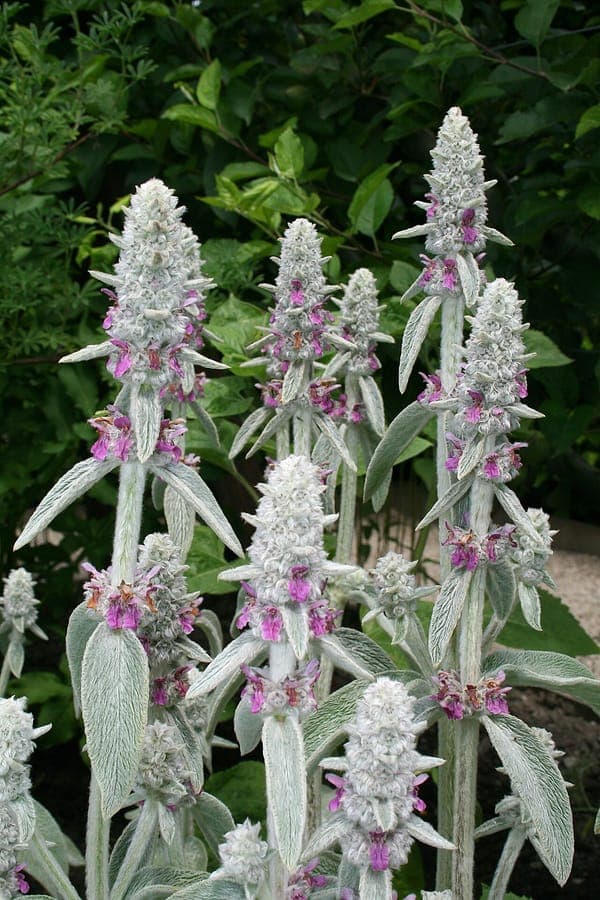
Jean-Pol GRANDMONT / CC BY-SA 3.0, via Wikimedia Commons
Lamb's-ear: complete guide
Stachys byzantina
Want to see Lamb's-ear: complete guide in your garden?
1 minute, no credit card
Overview
Lamb's-ear (Stachys byzantina), also called lamb's-tongue or Byzantine woundwort, is a popular perennial from Eastern mountain regions. This plant is especially valued for its distinctively soft, silvery-white hairy foliage that naturally creates moisture-resistant surfaces. The plant originates from the Caucasus region and Turkish mountains.
Lamb's-ear is an excellent choice for gardeners wanting to add texture and contrast to their garden design. It grows vigorously in nearly all garden types and fits well in borders, rock gardens, and as ground cover. The soft, fluffy leaves feel pleasant to touch.
Appearance and blooms
Lamb's-ear reaches heights of 30 to 45 centimeters and forms a dense, fluffy mound of foliage. The name 'lamb's-ear' refers to the soft, velvet-like texture of the leaves resembling a lamb's ear. This soft hair layer protects the plant against evaporation and heat.
The flowers are small, purple or pink, and appear in flower spikes above the foliage. The spikes are highly striking due to their contrasting color against silvery-white leaves. They bloom from June to August and attract butterflies and bees.
Ideal location
Lamb's-ear thrives best in fully sunny locations receiving at least 6 to 8 hours of direct sunlight daily. The soft leaf hairs reflect sunlight, so full sun helps the plant gleam. In very warm regions, some afternoon shade may be beneficial.
The plant performs well in open, windy locations and is highly tolerant of adverse conditions. Plant lamb's-ear in borders as background planting, as an accent in rock gardens, or as ground cover along walkways.
Soil
Lamb's-ear is very tolerant of soil conditions and grows in dry to moderately moist soils. The ideal pH range is 8 to 9. The plant thrives in poor to moderately fertile soils. Excessive feeding can lead to weak growth.
Good drainage is essential. Plant this in well-draining soil and avoid waterlogged conditions in winter. Add some grit or sand at planting time if soil is very clayey to improve drainage.
Free design
Want to see Lamb's-ear: complete guide in your garden? Make a free design now.
Watering
Lamb's-ear has low moisture requirements once established. The soft leaf hairs help reduce moisture retention and evaporation rates. Water regularly during the growing period for young plants, but water cautiously after establishment.
Avoid excessive watering, especially in winter when the plant dormant. During dry periods, watering is optional as the plant is drought-resistant. Ensure water drains well and the plant is not perpetually wet.
Pruning
Lamb's-ear grows vigorously and becomes rounded without much pruning needed. Pinch off faded flower spikes after blooming to encourage foliage formation. This also helps maintain compact form.
In spring, remove dead or damaged leaves from the previous year. Avoid excessive pruning as this can lead to poorly formed growth. This plant heals slowly from pruning wounds.
Maintenance calendar
Spring: Growth begins again. Water regularly. Remove dead foliage from previous season. Add low-nitrogen fertilizer.
Summer: Continue watering if dry. Remove spent flowers. Monitor for pests.
Fall: Growth slows. Reduce watering. Remove affected leaves.
Winter: Plant is dormant. Minimal watering. Ensure good drainage to prevent rotting.
Winter hardiness
Lamb's-ear is very winter-hardy and tolerates temperatures down to -18 degrees Celsius. The plant is persistent and returns each year. In very wet winter conditions with poor drainage, the plant may suffer. Ensure a well-draining location.
In mild climates, foliage remains green throughout winter, while in colder regions it may discolor or partially die. This is normal and the plant recovers in spring.
Companion plants
Lamb's-ear combines well with lavender, sage, rosemary, and other Mediterranean herbs. Plant it also with sedum, echeveria, and other drought-loving perennials. The contrasting silvery-white foliage stands out against dark-leaved plants.
In rock gardens, this plant complements alpine plant species. Plant it also at the base of roses for interesting foliage contrast.
Conclusion
Lamb's-ear offers a unique combination of texture, color, and hardy character. With minimal care, this plant grows a profusion of silvery-white foliage and charming blooms. It is indispensable for modern garden design.
Visit gardenworld.app/en for more plant tips and garden inspiration. Discover more about plants and garden design at gardenworld.app/en.
Want to see Lamb's-ear: complete guide in your garden? Make a free design now.
Upload a photo, pick a style, and get a photorealistic design with plant list in under a minute.
10,000+ gardens designed already
No credit card required


Similar plants
Apple mint (Mentha x villosa): complete guide
Mentha x villosa
Meet apple mint (Mentha x villosa): a fruity-scented kitchen herb with woolly leaves, perfect for tea and mojitos.
Salvia peyronii: complete guide
Salvia peyronii
Discover Salvia peyronii, a rare Lebanese mountain sage. Growing tips, hardiness, and companion planting for a Mediterranean gravel garden.
Bigleaf mint (Mentha x rotundifolia): complete guide
Mentha x rotundifolia
Discover bigleaf mint: cultivation, care tips, and garden uses. Learn how to grow this aromatic herb with soft, hairy leaves.