
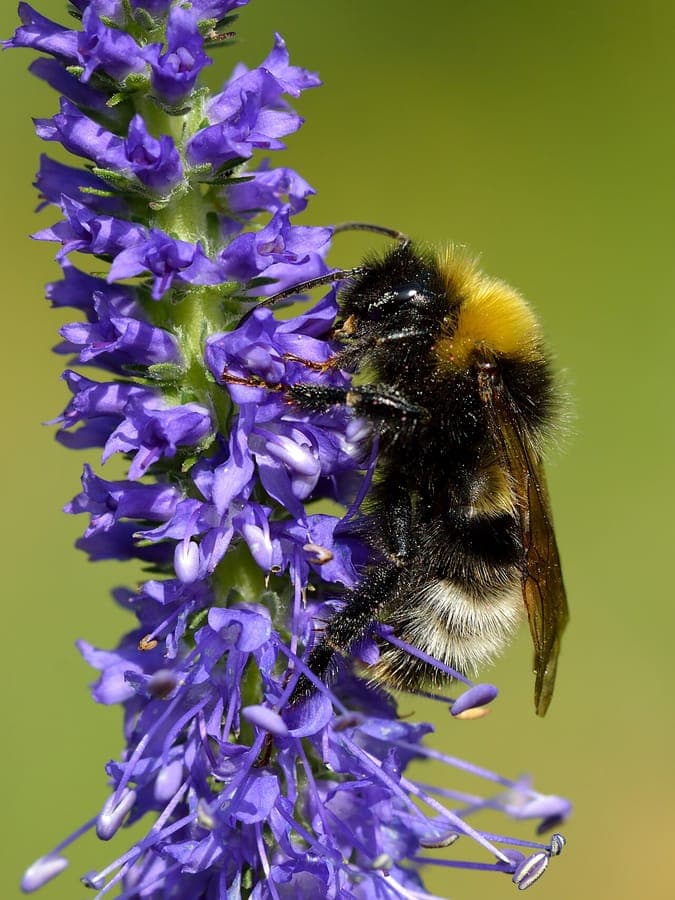
Ivar Leidus / CC BY-SA 4.0, via Wikimedia Commons
Spiked Speedwell: complete guide
Veronica spicata
Want to see Spiked Speedwell: complete guide in your garden?
1 minute, no credit card
Overview
Spiked Speedwell (Veronica spicata) is a striking herbaceous plant from the Veronica genus, native to Europe through Central Siberia. This garden plant is renowned for its slender, upright flower spikes in shades of blue, purple, and pink. The plant forms a dense shrub-like mound and is perfect for borders, rock gardens, and wildflower meadows. With a flowering period from June to September, Spiked Speedwell brings extended color to your garden.
Appearance and Bloom
Spiked Speedwell reaches approximately 30-60 centimeters in height and forms a compact, bushy plant. The leaves are linear to lance-shaped, green, and finely textured. The characteristic flower spikes stand upright and are densely packed with small flowers in shades of blue, white, or lilac. Each flower has four or five petals and distinct structure. Blooming begins in June and extends into late September, making it extremely valuable for insects and butterflies seeking nectar.
Ideal Location
Spiked Speedwell performs best in a sunny spot, receiving at least six hours of direct sunlight. The plant tolerates partial shade but flowers more abundantly in full sun. A sunny position also promotes flowering and dense growth patterns. In too-dark conditions, growth becomes weak and spindly.
Soil
This plant is undemanding regarding soil type and thrives in virtually all soil conditions. However, well-draining soil is essential to prevent root rot. Heavy, waterlogged soils should be improved with sand and peat. The plant grows best in soil with a pH between 6.0 and 7.0. Add well-rotted compost at planting time for better structure and moisture retention.
Free design
Want to see Spiked Speedwell: complete guide in your garden? Make a free design now.
Watering
During the first growing season, water the plant regularly until well established. Adult plants are fairly drought-tolerant and require water only during dry periods. Excessive watering should be avoided, especially in winter, as this can lead to root rot. Water at the base of the plant and avoid wetting the foliage, which can promote fungal diseases.
Pruning
Spiked Speedwell requires minimal maintenance pruning. After flowering (September/October), remove spent flowers to prevent seed formation. This may also encourage secondary flowering. In spring (March/April), remove dead twigs and prune to a compact shape. Avoid heavy pruning in autumn or winter; wait until spring.
Maintenance Calendar
Spring: Remove dead plant material and prune to desired shape. Add compost around the base. Summer: Ensure regular watering during dry periods. Remove spent flowers for continuous blooming. Autumn: Reduce watering as the season progresses. Winter: Protect with mulch in colder climates. No additional feeding needed.
Winter Hardiness
Spiked Speedwell is extremely hardy and tolerates temperatures to -20 degrees Celsius without protection. In very cold climates (below -25 degrees), provide protection with a layer of mulch or pine needles around the base. The plant dies back above ground in winter and returns in spring.
Companion Plants
Spiked Speedwell grows excellently alongside other alpine plants, such as daylilies, salvias, and ornamental grasses. In wildflower borders, combine with yarrow, daisy, and self-heal. Particularly effective is planting multiple individuals closely together for maximum impact.
Closing Remarks
Spiked Speedwell is a versatile garden plant offering benefits to gardeners of all levels. The extended flowering period, easy cultivation, and attractive flower color make it ideal for borders and rock gardens. Available at garden centers and online at gardenworld.app/en and gardenworld.app/nl.
Want to see Spiked Speedwell: complete guide in your garden? Make a free design now.
Upload a photo, pick a style, and get a photorealistic design with plant list in under a minute.
No credit card required


Similar plants
White Beardtongue: complete guide
Penstemon albidus
Discover white beardtongue (Penstemon albidus) - elegant perennial with white to cream flowers. Drought-resistant, perfect for prairie and dry gardens.
Longsepal Beardtongue: complete guide
Penstemon calycosus
Discover longsepal beardtongue (Penstemon calycosus) - beautiful perennial with lilac-blue flowers. For partial shade and moist soil. Ideal for naturalized.
Penstemon cusickii: complete guide
Penstemon cusickii
Discover Cusick's beardtongue, a compact alpine flowering plant with violet-pink blooms. Perfect choice for rock gardens and water-wise landscaping.