
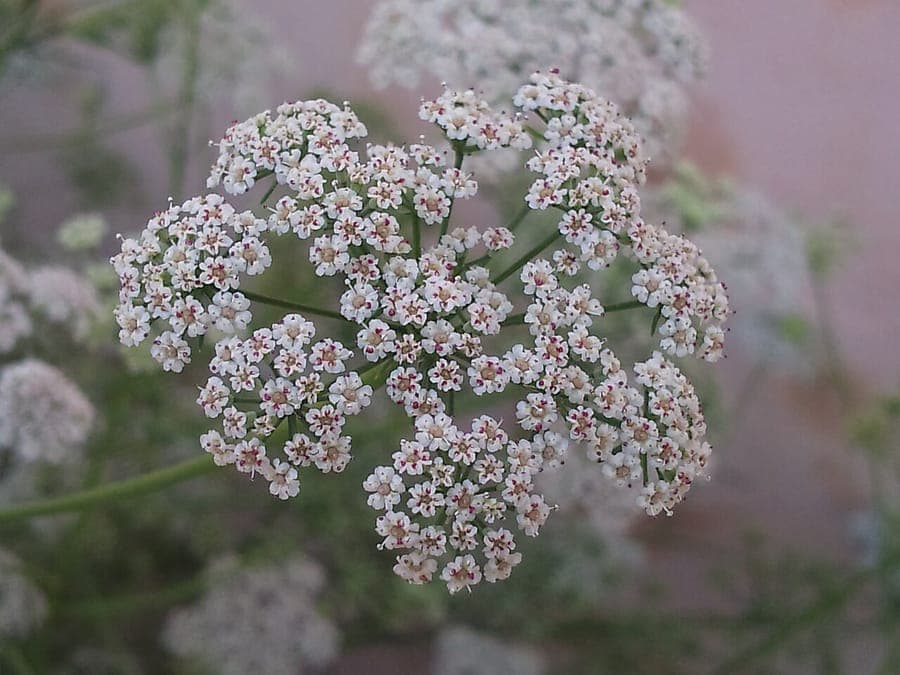
Bames24 / CC BY-SA 3.0, via Wikimedia Commons
Ajowan: complete guide
Trachyspermum ammi
Want to see Ajowan: complete guide in your garden?
1 minute, no credit card
Overview
Ajowan (Trachyspermum ammi), also known as bishop's weed or carom seeds, is an aromatic herb belonging to the carrot family (Apiaceae). The plant originates naturally from Iraq, Iran, Central Asia and North India. Today it is cultivated primarily in India, Iran and a few other South Asian locations.
The plant is especially renowned for its characteristic, aromatic seeds widely used in Indian cuisine. Ajowan is not only useful in the kitchen but grows easily in temperate climates and can be cultivated both in open ground and in containers.
Appearance and bloom cycle
Ajowan is a compact, annual plant reaching approximately 30-60 cm in height. The plant has thin, leafy branches with very fine, almost thread-like foliage. It resembles dill and other fine herbs.
The flowers are extremely small, white to pale pink, and grow in small, loose umbels at branch tips. These flowers typically appear in July-August. The real value of the plant lies in the seeds that develop after flowering.
The seeds are very small, approximately 2-3 mm, grey-brown in color, and have a strong, warm, aromatic odor. This fragrance is characteristic and unmistakable.
Ideal location
Ajowan grows best in very sunny positions. The plant requires abundant sunlight for optimal growth and seed production. In partial shade it grows slowly and produces fewer seeds.
This is an ideal plant for warmer garden sections, against south-facing walls, and highly suitable for container culture on balconies or patios. In temperate climates, ajowan is typically grown as an annual and seed must be sown fresh each year.
Soil requirements
Ajowan makes moderate soil demands. The plant grows on well-drained, moderately fertile soil with pH between 6.5 and 7.5. It tolerates both slightly acidic and slightly alkaline soils.
The plant also tolerates drier soils reasonably well, making it suitable for warm, dry summer locations. In case of poor drainage or very rich soil the plant grows well but produces fewer seeds because energy goes toward foliage.
Free design
Want to see Ajowan: complete guide in your garden? Make a free design now.
Watering
Ajowan has moderate water needs. Once well-established, the plant tolerates dry periods well, though regular watering stimulates growth. Ensure the plant does not drown in waterlogged conditions, especially during wet periods.
In containers, more frequent watering is needed. Ensure adequate drainage holes. Young plants should receive regular water until good root systems develop.
Pruning
Ajowan requires minimal pruning. The plant naturally grows in a compact form. You can optionally pinch young plant tops to stimulate branching, which may result in more seed production.
At season's end, after seeds are harvested, the plant can be removed.
Maintenance calendar
March-April: Direct sow seed in open ground after frost danger passes, or start in pots for later transplanting. May-June: Growth period; water regularly. Transplant at 30 cm spacing. July-August: Flowering period. Fertilizing stimulates growth. August-September: Seed set; seed head color turns brown. September-October: Seed collection. Cut seed heads when dry. Dry and store for next season. October-November: Plants die off. Clean up garden beds.
Winter hardiness
Ajowan is not winter-hardy in temperate Europe. The plant is an annual and cannot tolerate frost. It dies back at first frosts.
The plant must be resown each year. However, because seed is easily collected, you can save seed from your own harvest to resow next season.
Companion plants
Ajowan combines well with other aromatic herbs such as basil, oregano, marjoram and thyme. It also pairs well with other fine umbellifers like chervil or dill.
In warm borders it grows well with other heat-loving herbs.
Closing thoughts
Ajowan is a useful and aromatic plant for sunny gardens. With its easy cultivation, compact form and useful seeds for kitchen and medicinal use, it is a valuable addition. Seeds are available from most garden centers. Visit gardenworld.app/en for more information about culinary herbs. Design your own garden plan via gardenworld.app.
Want to see Ajowan: complete guide in your garden? Make a free design now.
Upload a photo, pick a style, and get a photorealistic design with plant list in under a minute.
No credit card required


Similar plants
Whorled carrot: complete guide
Daucus involucratus
Daucus involucratus is a Mediterranean umbellifer with white flower heads framed by lacy bracts. Growing this gravel garden gem.
Daucus muricatus: complete guide
Daucus muricatus
Daucus muricatus, the spiny wild carrot, grows wild on Mediterranean coasts. Discover sowing, June-July bloom, and wildflower meadow use.
Daucus pumilus: complete guide
Daucus pumilus
Daucus pumilus is a dwarf wild carrot relative with white lacy umbels, thriving on dunes and coastal rock in poor, fast-draining soil.