
Crusier / CC BY-SA 3.0, via Wikimedia Commons
Korean arborvitae: complete guide
Thuja koraiensis
Want to see Korean arborvitae: complete guide in your garden?
1 minute, no credit card
Overview
Thuja koraiensis, commonly known as Korean arborvitae or Korean thuja, is a characteristic conifer from the Cupressaceae family. This plant is native to Korea and Manchuria, where it naturally grows in forests. It is an elegant, relatively compact conifer that provides valuable additions to landscapes.
Korean arborvitae offers year-round interest with its fine, fragrant foliage. The plant is known for its characteristic, pleasant fragrance when foliage is crushed. It is an excellent choice for gardeners seeking year-round interest and structure.
Appearance and growth
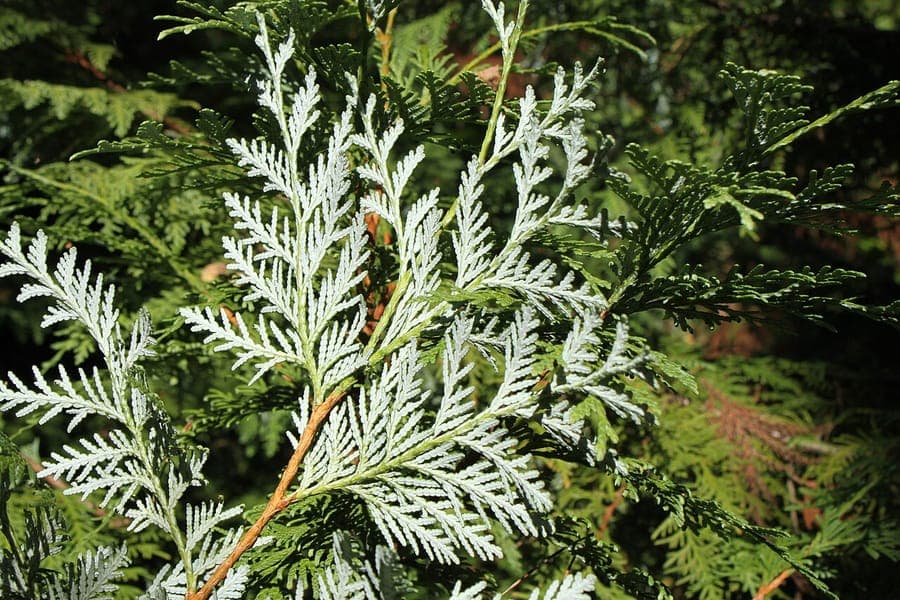
Thuja koraiensis grows to approximately 5-10 meters tall, depending on conditions. The plant usually forms a narrow to columnar form. The foliage is finely scaled, green with silvery tones in certain light conditions.
In spring the plants produce small, inconspicuous male and female cones. Female cones ripen to small, woody fructifications in autumn. The plant retains its color year-round, although in very cold winters it may discolor slightly.
The foliage gives off a pleasant, sweet fragrance when crushed or in warm weather.
Ideal location
Korean arborvitae thrives best in full sunlight, although it also tolerates high shade. At least 4-6 hours of direct sun daily is desired. The plant feels at home in open to half-shady places.
This plant is perfect for formal plantings, screens, or specimen plantings. Its narrow form makes it ideal for small spaces where width is limited.
Soil
Korean arborvitae grows best in well-draining soil. Heavy clay soils can be improved by adding gravel or grit. The plant has a pH preference between 6.0 and 7.5.
Ensure good drainage to prevent root rot, especially in winter. Improve soil with organic matter to encourage healthy growth.
Free design
Want to see Korean arborvitae: complete guide in your garden? Make a free design now.
Watering
Once established, Thuja koraiensis has moderate water needs. Water regularly during the growing season, especially in dry periods. Young plants require more frequent watering until well established.
Avoid waterlogging. The plant is fairly drought-tolerant once well established, but performs better with regular watering.
Pruning
Korean arborvitae requires minimal pruning when correctly planted. The plant grows naturally in an attractive form. Occasionally dead branches can be removed, or light shaping pruning can be done to maintain form.
Hard pruning should be avoided because the plant does not regrow well from old wood.
Maintenance calendar
Spring: Inspect for winter damage. Light shaping pruning can be done. Summer: Provide regular water in dry periods. Autumn: Minimal maintenance. Inspect for harmful insects. Winter: Protect young plants from heavy snow. No pruning needed.
Winter hardiness
Thuja koraiensis is hardy in USDA zones 4-8. The plant tolerates European winters reasonably well, although very frosty periods can sometimes cause damage. Protection from wind damage can be beneficial in harsher areas.
Companion plants
This elegant conifer combines well with:
- Hakonehloa macra
- Helleborus niger
- Skimmia
- Prunus species
- Azalea/Rhododendron
- Hosta
- Ilex crenata
For quality conifer material, visit your local garden center. More information is available at gardenworld.app/en.
Closing
Thuja koraiensis offers gardeners an elegant, compact conifer for year-round interest. With minimal maintenance and good growing conditions, this plant will provide structure and beauty for many years. The pleasant fragrance and characteristic form make it a valued choice for refined garden plans.
For further design tips and plant recommendations, visit gardenworld.app/en.
Want to see Korean arborvitae: complete guide in your garden? Make a free design now.
Upload a photo, pick a style, and get a photorealistic design with plant list in under a minute.
No credit card required


Similar plants
Cupressus macnabiana: complete guide
Cupressus macnabiana
The Fragrant Cypress offers elegant growth with fine, aromatic foliage. Perfect for temperate climates and as specimen trees in contemporary gardens.
Cupressus guadalupensis: complete guide
Cupressus guadalupensis
The Guadalupe cypress: an elegant conifer for gardens. Complete cultivation guide for this Mexican cypress. Information about care, location, form and maintenance.
Austrocedrus chilensis: complete guide
Austrocedrus chilensis
Discover Austrocedrus chilensis, the Chilean Cedar ornamental conifer. Elegant specimen with fine foliage and columnar form for permanent structure.