
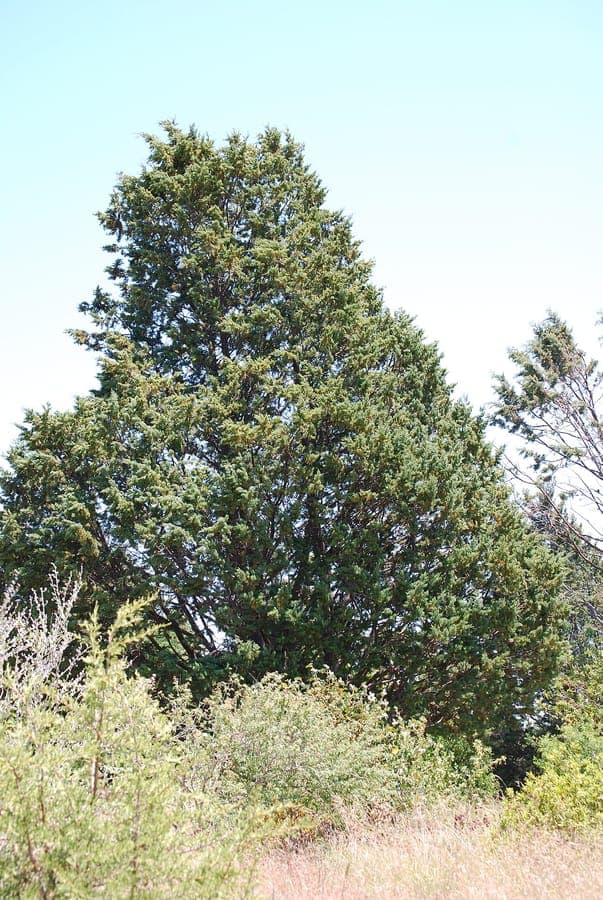
Cs california / CC BY-SA 3.0, via Wikimedia Commons
Cupressus guadalupensis: complete guide
Cupressus guadalupensis
Want to see Cupressus guadalupensis: complete guide in your garden?
1 minute, no credit card
Overview
Cupressus guadalupensis, commonly known as Guadalupe cypress or Forbes cypress, is an impressive evergreen conifer from the Cupressaceae family. This plant is originally found on islands off the coast of Baja California in Mexico, where it grows in natural habitats. The plant is cultivated in many Mediterranean and warmer climates worldwide as an ornamental conifer.
This elegant cypress is an excellent choice for gardeners seeking a vertical accent plant. With its characteristic gray-green foliage and columnar form, this plant adds architectural weight to any front garden or landscape design.
Appearance and growth
Cupressus guadalupensis grows as a slender, columnar tree that can reach 10 to 20 meters tall under ideal conditions. The plant has fine, scale-like foliage that is gray-green to blue-green. The bark is thin and becomes reddish-brown on older portions.
The tree has a very dense, regular shape, making it ideal as a vertical garden accent plant. In autumn and winter, the tree bears small, round cones approximately 2 centimeters in diameter. These cones are green and turn brown when mature.
The plant grows at a moderate pace and reaches its final height in 15 to 20 years. Growth is very regular and naturally elegant without requiring much pruning.
Ideal location
Cupressus guadalupensis thrives best in full sun. The plant requires at least six hours of direct sunlight daily. This helps maintain the compact form and intense gray-green color of the foliage.
Select a location with good air circulation. The plant can tolerate wind, so protect against severe storms. In the Netherlands, Belgium, and France, a position on the south side of the house is ideal.
Avoid locations with stagnant, humid air, as this can lead to fungal infection. The plant prefers dry conditions.
Soil
The Guadalupe cypress prefers well-draining soil. This plant grows best in sandy, light soil compositions with neutral to slightly alkaline pH (7.0 to 8.0). Heavy clay should be avoided, as this can lead to root rot.
Add mineral additives such as sand or gravel to heavier soils to improve drainage. The plant can adapt to poor soils and doesn't require much nutrition. Overly rich soil can actually lead to softer growth.
Free design
Want to see Cupressus guadalupensis: complete guide in your garden? Make a free design now.
Watering
Cupressus guadalupensis is fairly drought-tolerant once established. Water regularly during the first year after planting, especially during dry periods. Once the plant is settled (after approximately two years), you can significantly reduce watering.
In temperate climates, the plant may still need regular summer watering. Winter and rainfall usually provide sufficient water. Avoid wet feet - this can cause damage.
Water at the base rather than from above. This reduces the chance of needle diseases.
Pruning
Cupressus guadalupensis requires little pruning if planted correctly. The plant grows very regularly and compactly by nature. Remove only dead or damaged branches.
If you want to adjust the form, you can do light pruning during the growing season. However, avoid heavy pruning, as this can damage the plant. Always work from the outside inward and follow the tree's natural shape.
Maintenance calendar
Spring: Water regularly as new growth begins. Check for winter frost damage.
Summer: Water during dry periods. Monitor for insect pests. Apply fertilizer if needed.
Autumn: Gradually reduce watering. Prepare for winter.
Winter: Minimal care. Protection against severe frost may be needed in very cold regions.
Winter hardiness
Cupressus guadalupensis is sensitive to extreme frost. In the Netherlands and Northern Europe, winter protection is essential, especially in the first years after planting. Protect young trees against frost and harsh winter winds.
In warmer climates (Southern France, Southern Germany), the plant can overwinter outdoors. In very cold winters, however, significant damage can occur.
Companion plants
The Guadalupe cypress is a beautiful vertical accent plant. Combine with:
- Low growers such as lavender or hollyhocks
- Other shrubs with contrasting forms
- Stone or gravel to enhance the Mediterranean look
- Mediterranean plants such as rosemary or myrtle
Closing
Cupressus guadalupensis offers elegance and architectural character to any front garden. With its gray-green foliage and slender form, this cypress can create a beautiful vertical accent. Especially in warmer climates, this is an excellent plant.
Cultivateu this plant from gardenworld.app and create a complete Mediterranean garden. Start today by adding this elegant cypress!
Want to see Cupressus guadalupensis: complete guide in your garden? Make a free design now.
Upload a photo, pick a style, and get a photorealistic design with plant list in under a minute.
No credit card required


Similar plants
Cupressus macnabiana: complete guide
Cupressus macnabiana
The Fragrant Cypress offers elegant growth with fine, aromatic foliage. Perfect for temperate climates and as specimen trees in contemporary gardens.
Austrocedrus chilensis: complete guide
Austrocedrus chilensis
Discover Austrocedrus chilensis, the Chilean Cedar ornamental conifer. Elegant specimen with fine foliage and columnar form for permanent structure.
Juniperus ashei: complete gids
Juniperus ashei
Ontdek de prachtige Ashe-jeneverbes, een robuuste naaldboom uit Texas. Lees alles over teelt, onderhoud en tips voor een gezonde groei in deze uitgebreide gids.