
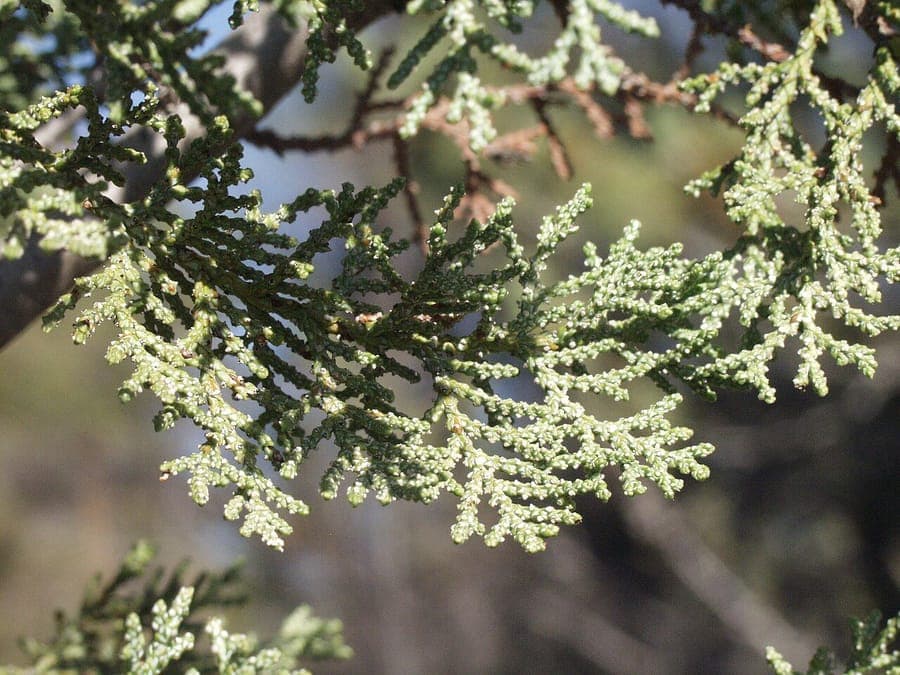
Themodoccypress / CC BY-SA 3.0, via Wikimedia Commons
Cupressus macnabiana: complete guide
Cupressus macnabiana
Want to see Cupressus macnabiana: complete guide in your garden?
1 minute, no credit card
Overview
Cupressus macnabiana, commonly known as the Fragrant Cypress or McNab Cypress, is an elegant conifer originating from California. This refined plant belongs to the Cupressaceae family and grows naturally on the mountain slopes of northern California, where it develops a characteristic growth habit.
This plant offers gardeners a refined conifer with fine, aromatic foliage that releases a pleasant aroma when lightly touched. With its elegant, slender growth habit and characteristic fragrant foliage, the Fragrant Cypress is an excellent choice for gardens where temperate climate permits.
Appearance and foliage
The Fragrant Cypress grows as an elegant, compact conifer, usually 5 to 8 meters tall in gardens, though it grows larger in its native habitat. The growth habit is columnar to pyramidal, with densely-clothed branches giving the plant fine texture.
The foliage is very fine and scale-like, typical of cypress species. It is grey-green to blue-green in color and remains evergreen year-round. The foliage contains aromatic oil and releases a pleasant, spicy aroma when touched.
The conifer produces characteristic small brown cones that persist on the tree for months. These cones are approximately 1 to 1.5 centimeters in diameter and serve as bird food.
The bark is reddish-brown and relatively smooth, providing ornamental value even in winter.
Ideal location
Fragrant Cypress grows best in fully sunny locations. At least six hours of direct sun daily is ideal. The plant tolerates light partial shade but grows and looks better in full sun.
The plant can tolerate wind and is also suitable for coastal areas. The plant grows well in warm, dry locations. Heavy or constant mist can be problematic, as it is susceptible to fungal infections in very humid conditions.
Use Fragrant Cypress as a specimen plant, in groups of three or five, or as a windbreak. The slender form also suits narrow spaces or vertical accents. The plant is ideal for contemporary gardens with minimalist design.
Soil
Cupressus macnabiana grows best in well-drained, dry soils. The plant accepts acidic to neutral soils and does not grow well in alkaline soils. Excellent drainage is essential.
Heavy clay soils must be significantly improved with sand and organic material. The plant grows best in poor to moderately fertile soils. Excessive nutrition can be harmful.
When planting, a mixture of garden soil and sand is recommended. After planting, a thin layer of mulch can be applied, but ensure mulch does not touch the stem directly.
Free design
Want to see Cupressus macnabiana: complete guide in your garden? Make a free design now.
Watering
Fragrant Cypress should be watered regularly during its first growing season to establish a good root system. Once established, the plant is highly drought-tolerant.
Under normal conditions, little supplemental water is needed. The plant grows in dry climates and tolerates drought excellently. Over-watering can be harmful and may cause root rot.
In containers, water should be applied more regularly, but ensure water drains well. The plant prefers dry to normally moist soils.
Pruning
Fragrant Cypress requires minimal pruning. The plant grows naturally in a beautiful, elegant form. Only dead branches in spring can be removed.
Heavy pruning may damage the elegant form and is not recommended. The plant generally tolerates pruning less well than other conifers. Apply pruning only when necessary.
The plant recovers slowly after pruning. Avoid pruning in autumn or winter, as this may cause frost damage.
Maintenance calendar
March-April: Inspect for winter damage. Carefully remove dead branches. Water well. May-June: Plant grows. Water regularly during dry periods. Monitor for fungal problems. July-August: Plant in growth. Minimal maintenance. Water only in extreme drought. September-October: Plant slows growth. Prepare for winter. November-December: Winter period. No maintenance needed. January-February: Winter period. Protect against heavy frost and wet snow.
Winter hardiness
Cupressus macnabiana is moderately winter hardy and can tolerate temperatures down to approximately -10 degrees Celsius. The plant grows best in temperate climates without extreme cold.
In colder British regions, the plant may suffer frost damage during very cold winters. Protective measures can help during extreme conditions.
The plant is susceptible to snow damage due to spreading branches. Heavy wet snow can break branches. After heavy snowfall, snow can be carefully brushed from the plant.
Companion plants
Combine Fragrant Cypress well with other warmth-loving plants. Good companions include Pinus species, Juniperus, and other drought-tolerant conifers.
In borders, it pairs well with low-growing shrubs like Lavandula, Rosemarinus, and other Mediterranean plants. The grey-green color creates nice contrast with dark green shade trees.
In contemporary gardens, it combines well with grasses and succulent plantings. The slender form also suits Japanese gardens.
Conclusion
Cupressus macnabiana offers years of ornamental value with its elegant growth habit and fragrant foliage. This plant is ideal for gardeners seeking a refined, aromatic specimen.
Whether you wish to enhance a warm, dry section of your garden or seek an elegant vertical accent, Fragrant Cypress is an excellent choice. Plant material is available from specialized nurseries.
Want to see Cupressus macnabiana: complete guide in your garden? Make a free design now.
Upload a photo, pick a style, and get a photorealistic design with plant list in under a minute.
No credit card required


Similar plants
Cupressus guadalupensis: complete guide
Cupressus guadalupensis
The Guadalupe cypress: an elegant conifer for gardens. Complete cultivation guide for this Mexican cypress. Information about care, location, form and maintenance.
Austrocedrus chilensis: complete guide
Austrocedrus chilensis
Discover Austrocedrus chilensis, the Chilean Cedar ornamental conifer. Elegant specimen with fine foliage and columnar form for permanent structure.
Juniperus ashei: complete gids
Juniperus ashei
Ontdek de prachtige Ashe-jeneverbes, een robuuste naaldboom uit Texas. Lees alles over teelt, onderhoud en tips voor een gezonde groei in deze uitgebreide gids.