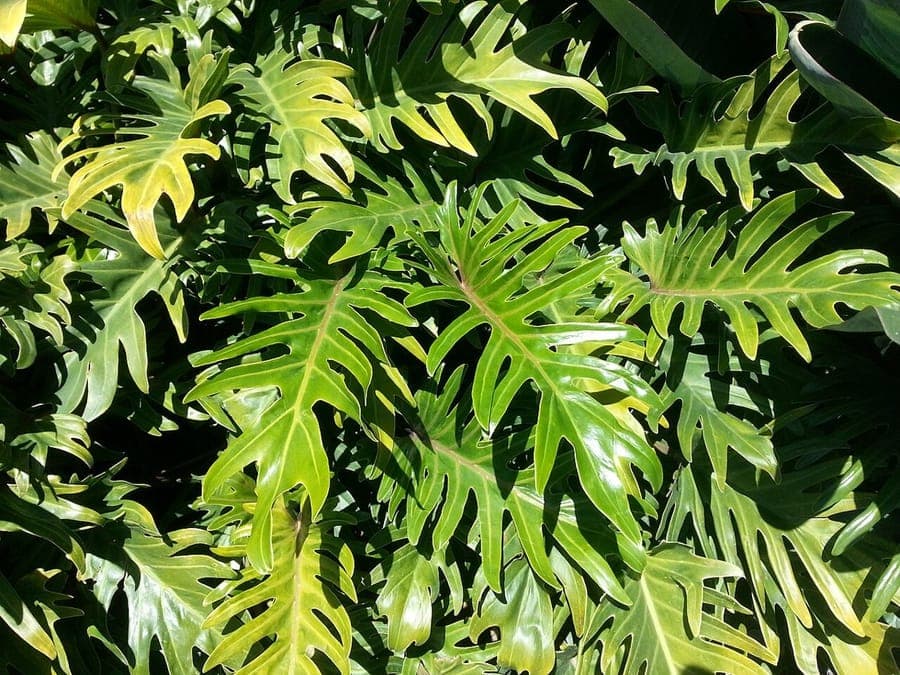
Piwaiwaka / CC BY-SA 4.0, via Wikimedia Commons
Xanadu philodendron (Thaumatophyllum xanadu): care guide
Thaumatophyllum xanadu
Want to see Xanadu philodendron (Thaumatophyllum xanadu): care guide in your garden?
Full design in HD: €7.99
Look after your Xanadu philodendron with the GardenWorld app
Identify plants with your camera and get a care calendar with reminders for this plant.


Overview
If you love the deeply cut leaves of a big philodendron but do not want a plant that takes over half the room within a few years, Thaumatophyllum xanadu is the obvious choice. It is almost always sold as Xanadu philodendron or simply 'Xanadu'. That name began life as a trade name: the plant was brought to market in Australia in the 1980s and only formally described in 2002, as Philodendron xanadu. Since 2018 it has sat in the genus Thaumatophyllum, alongside a handful of relatives in the arum family (Araceae).
Its wild origins are still somewhat uncertain. The species is attributed to southern Brazil and the surrounding region, but practically every plant in the trade comes from cultivation, and today they are produced in huge numbers by tissue culture.
What sets Xanadu apart is the way it grows. It does not form a trunk and does not climb. Instead it makes a dense, rounded clump of leaves that all rise from the centre of the plant, which keeps it compact compared with its larger relatives and easy to place.
Appearance and growth
A mature plant indoors usually reaches 60 to 100 cm in height and often spreads further, to 1.2 m or more. The leaves are 25 to 40 cm long, firm and glossy mid-green, and deeply cut into narrow, slightly wavy lobes. They sit on long, rounded leaf stalks that arch gracefully outwards. Young leaves are simpler in outline and only become properly lobed as the plant matures.
Growth is steady through the season rather than rapid. Over time the plant develops several growing points side by side, so the clump becomes fuller. Thick aerial roots appear at the base and creep into the compost; leave them be. Xanadu rarely flowers indoors. In warm climates it occasionally produces a spadix within a reddish spathe, but that is not why anyone grows it.
Position in the home
Xanadu needs room to spread its leaves. A spot on the floor beside a sofa, in a corner by a large window or on a low plant stand works well. Avoid a narrow walkway: the stalks are sturdy but will snap if you keep brushing past them.
The ideal temperature range is 18 to 26 °C. It will put up with a cooler night now and then, but growth stalls below 12 °C and leaves are damaged below 5 °C. Keep it out of draughts and away from radiators, as hot, dry air causes brown edges.
Light
Compared with many other philodendrons, this species tolerates a fair amount of light. Bright, indirect light suits it best, and a few hours of morning or evening sun are perfectly fine. Fierce midday sun through glass, however, will scorch the leaves. In shade it survives, but the stalks grow long and floppy, the clump falls open and the leaves are less deeply cut. A compact, full plant is largely a matter of giving it enough light.
Turn the pot every few weeks so every side gets its share and the plant stays nicely rounded.
Watering and humidity
Water when the top 3 to 4 cm of compost is dry. In summer that works out at roughly once a week; in winter, once every two to three weeks. Water thoroughly until it drains from the hole, and never leave the pot standing in a full saucer. Yellowing lower leaves and a sour, wet smell from the compost are signs of overwatering.
Average humidity is enough. Above 40 % the leaf edges stay neat; in very dry winter air it helps to group the plant with others. Wipe the large leaves with a damp cloth now and then so they can make the most of the light.
Compost and repotting
Choose a rich but open mix: peat-free houseplant compost with a third bark and some perlite. Xanadu forms a solid root ball and is happy to be slightly pot-bound. Repot every two to three years in April or May into a pot about 5 cm wider. A heavy terracotta or ceramic pot stops the broad plant from tipping over.
From April to September feed every three weeks with a liquid foliage-plant fertiliser. Pale, smaller new leaves are often a sign that it is hungry.
Free preview
Want to see Xanadu philodendron (Thaumatophyllum xanadu): care guide in your garden? Make a free preview of your design.
Division and propagation
Stem cuttings are hardly an option with Xanadu, because it has no real stem. The easiest way to propagate it is by division. In spring, take a mature plant out of its pot, find where several growing points have formed and cut through the root ball with a sharp knife so that each piece has a growing point and plenty of roots. Pot the divisions separately in fresh compost, water sparingly and keep them in slightly more shade for a few weeks until they start growing again.
Care calendar
March and April: repot or divide. Start feeding.
May to September: growing season. Water regularly and feed every three weeks. From late May the plant can go outside.
October: bring it in before nights drop below 10 °C. Check the leaves and leaf joints for pests.
November to February: water less, stop feeding and choose a bright spot.
You can set a reminder in the plant calendar on gardenworld.app so you remember to bring the plant indoors in time.
Summer outdoors
One of Xanadu's most appealing traits is that it can spend late May to late September on a patio or balcony. Choose a sheltered spot in light shade, for example under a canopy or on the east side of the house. Let it acclimatise in full shade for a week first, otherwise the leaves will scorch. Outdoors it often grows more compact and sturdier than inside. In mild coastal areas around the Mediterranean it is planted out as ground cover in shade, but in Britain it is not hardy anywhere and must come indoors for winter.
Common problems
A single yellow lower leaf now and then is normal; the plant is simply shedding its oldest leaf. If several turn yellow at once, the compost is too wet. Brown, crisp edges point to dry air or a spot that is too warm. Long, limp stalks hanging over the rim of the pot mean too little light. In winter, look under the leaves and into the leaf joints from time to time: spider mite and mealybug appear in dry, centrally heated air. Wipe them off with a cloth and a little water with mild soap.
Toxicity to pets
Like all aroids, Thaumatophyllum xanadu contains needle-shaped calcium oxalate crystals in its leaves and stalks. If a cat or dog chews it, the result is a burning sensation in the mouth and throat, drooling, vomiting and difficulty swallowing. Symptoms usually pass on their own, but call your vet if the animal drools heavily, has a swollen mouth or struggles to breathe. The sap can also irritate skin, so wear gloves when dividing.
Companion plants
Xanadu looks good with plants that offer a different leaf shape. A Swiss cheese plant (Monstera deliciosa) adds large, cut leaves at a higher level, and a ZZ plant (Zamioculcas zamiifolia) brings neat, upright stems. A peace lily (Spathiphyllum wallisii) adds white spathes to an otherwise green corner, while the shade-loving cast iron plant (Aspidistra elatior) fills a darker spot nearby. An umbrella tree (Schefflera arboricola) gives height. On the patio it pairs well with other shade plants in pots.
If you would like to see how your patio or garden could link up with it, you can have a garden design made on gardenworld.app.
Final thoughts
Thaumatophyllum xanadu is one of the most practical philodendrons for anyone who wants the tropical foliage of a large species in a size that fits an ordinary living room. Give it plenty of indirect light, let the compost dry a little between waterings and repot only when the pot is genuinely full. Put it on the patio in summer, keep it away from pets and divide it in spring if it grows too large.

See it in your garden
See Xanadu philodendron in your garden
One photo of your garden and a few questions. You see the result in about a minute.
Try it with a photoIdentify this plant in your own garden. Identify a plant
Similar plants
Monstera deliciosa: complete guide
Monstera deliciosa
Discover the fruit-salad plant (Monstera deliciosa) - a popular houseplant with characteristic holes in leaves. Professional care and growing tips for success.
ZZ plant: complete guide
Zamioculcas zamiifolia
Discover Zamioculcas zamiifolia, the easy-care money plant from Africa. Growing and care tips for indoors.
Peace lily: complete guide
Spathiphyllum wallisii
How to grow a peace lily (Spathiphyllum wallisii): light, watering, repotting, getting it to flower again, and why it is toxic to cats and dogs.
