
Daderot / CC0, via Wikimedia Commons
Himalayan yew: complete guide
Taxus wallichiana
Want to see Himalayan yew: complete guide in your garden?
1 minute, no credit card
Overview
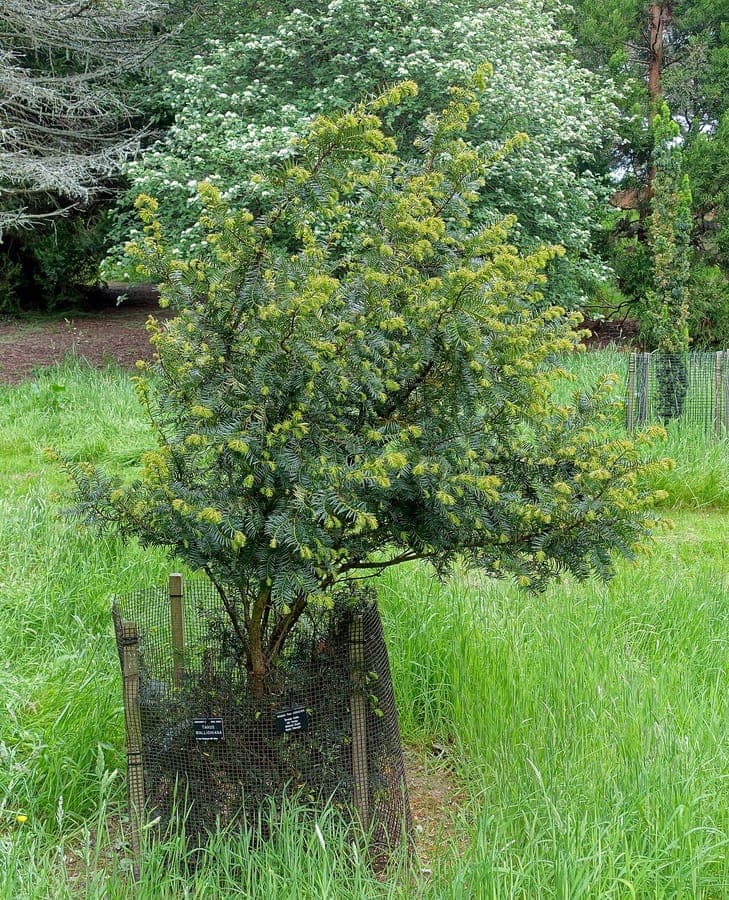
Himalayan yew (Taxus wallichiana), also called Chinese yew and Taiwan yew, is a fascinating conifer from the Himalayan range to China, Vietnam, and Sumatra. This extremely rare species is seldom found in Europe and represents a true treasure for botanical collectors. The plant grows slowly and develops an impressive, dark green needle-bearing form.
As a member of the Taxaceae family, Himalayan yew shares characteristics with European yew but possesses unique structural features. The plant is toxic (especially seeds) and requires careful handling in households with children or pets. In appropriate locations, it becomes a valued foliage design element.
Appearance and Bloom
Himalayan yew is a slow-growing conifer that can eventually reach 15 to 20 meters tall, though this requires decades. In cultivation, growth is much slower. The needles are long and narrow, dark green, and persist year-round. This creates an elegant, restrained appearance.
It is a dioecious species with male and female flowers on separate plants. Female flowers develop into characteristic red berry-like seeds (arils) in autumn. These seeds are extremely toxic. The plant produces no showy flowers but possesses subtle botanical beauty.
Ideal Location
Himalayan yew grows well in half-shade to full shade. Unlike many conifers, this species appreciates protection from direct sunlight. The plant tolerates full sun but benefits from afternoon shade protection, especially in warm climates.
A sheltered position against fierce winds is beneficial, though the plant is reasonably wind-tolerant. Good air circulation helps prevent disease.
Soil
Himalayan yew grows well in well-drained, slightly acidic to neutral soils. The plant prefers pH between 6.0 and 7.0. Compact clay soils with poor drainage are problematic. Adding organic matter significantly improves growth.
The plant tolerates nutrient-poor soils, though moderately fertile soil promotes growth. Mulching aids moisture retention and soil temperature regulation.
Free design
Want to see Himalayan yew: complete guide in your garden? Make a free design now.
Watering
Water regularly after planting until well-established. Himalayan yew has moderate water needs. The plant prefers consistently moist soil without waterlogged conditions. Deep rooting aids drought tolerance once established.
During extreme dry periods, provide supplemental water. Morning watering is preferred. Excessive wetness causes root rot and fungal diseases.
Pruning
Himalayan yew requires minimal pruning. The plant grows in a naturally beautiful manner without intervention. Remove only damaged, diseased, or dead branches. Pruning is best done in spring.
The plant grows slowly and doesn't require regular cutting back. Shaping is rarely needed thanks to its natural elegance.
Maintenance Calendar
APRIL-MAY: Preparation; assess growth; light structural pruning. JUNE-AUGUST: Regular watering; fertilization unnecessary. SEPTEMBER-OCTOBER: Seed ripening; preferably don't harvest. NOVEMBER-MARCH: Dormancy; minimal care; protection in extreme frosts.
Winter Hardiness
Himalayan yew is less winter-hardy than European yew. The plant tolerates temperatures to approximately -10 to -15 degrees Celsius, depending on origin and acclimation. In severe frosts and when young, protection may be needed.
Mulching around the base aids root protection in harsh winters. The plant grows slowly and does better in less extreme climates. In northern Europe, protection against wind desiccation and frost is necessary.
Companion Plants
Himalayan yew combines beautifully with other shade-tolerant conifers like Taxus baccata and Ilex species. Shade-loving shrubs like Euonymus and Skimmia work well. Dark-leaved plants like Mahonia add textural interest.
Note: Due to toxicity, position carefully away from play areas and children's spaces. Companion plant selection must account for toxicity concerns.
Closing
Himalayan yew is a very special, rare plant for the advanced gardener. With careful placement and minimal care, it becomes an elegant, long-lived foliage beauty. Handle toxicity concerns carefully, especially around children.
Find more at gardenworld.app/nl and gardenworld.app/en.
Want to see Himalayan yew: complete guide in your garden? Make a free design now.
Upload a photo, pick a style, and get a photorealistic design with plant list in under a minute.
No credit card required


Similar plants
Taxus chinensis: complete guide
Taxus chinensis
The Chinese yew is an elegant evergreen conifer with dense dark foliage. Discover cultivation tips, hardiness, and how it differs from other yew species for your garden.
Florida Torreya: Complete Guide to This Endangered Evergreen
Torreya taxifolia
Discover the Florida torreya (Torreya taxifolia), an endangered, elegant evergreen. Learn about care, habitat, and conservation importance.
Chinese Nutmeg Tree: complete guide
Torreya grandis
Learn everything about Torreya grandis, the Chinese nutmeg tree. Discover cultivation methods, care, and special characteristics of this rare tree.