
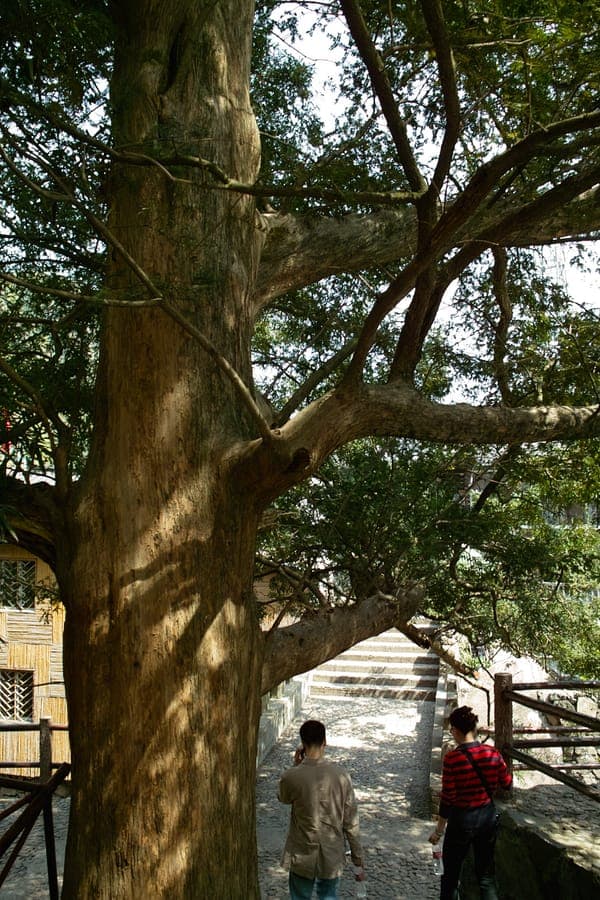
Farm / CC BY 3.0, via Wikimedia Commons
Chinese Nutmeg Tree: complete guide
Torreya grandis
Want to see Chinese Nutmeg Tree: complete guide in your garden?
1 minute, no credit card
Introduction: Discovering Chinese Nutmeg Tree
Torreya grandis, known as Chinese nutmeg tree or Chinese torreya, is a fascinating and rare tree originating from central and southern China. This is a conifer from the Taxaceae family (the same family as yew trees). It is a true rarity in gardens outside Asia, making it a spectacular choice for collectors and lovers of unusual trees.
Appearance and Characteristics
This evergreen tree can grow up to 20 meters tall, although cultivated specimens often remain smaller. The needle-like leaves grow in opposite rows and have a pleasant aroma when crushed. The leaves are glossy dark green and approximately 2-4 cm long. The tree produces small flowers in spring, followed by olive-green to purple pods containing large seed nuts.
The nuts of this tree are highly sought after in China and have an oil used both culinary and medicinally.
Ideal Location
Torreya grandis grows best in a temperate climate with adequate humidity. It thrives in full sun to partial shade. This tree is suitable for areas with winters down to about -10 degrees. In the Netherlands and Belgium, it can grow outdoors in southern regions, but better growth is achieved when protected from severe frost periods.
Soil
The tree prefers well-draining, fertile soil. It is preferably in acidic to neutral soil, with a pH between 5.5 and 7.0. In heavy clay soil, add organic compost and provide extra drainage. The tree tolerates normal garden soil well if well-drained.
Watering
Newly planted trees need regular water until well-established. Mature trees are fairly drought-tolerant but grow better with moderate water during dry periods. Water deeply but infrequently, encouraging deeper root systems.
Pruning
Torreya grandis requires minimal pruning. Remove only dead branches and formative pruning if necessary. The natural form is usually beautiful without much intervention.
Maintenance Calendar
Spring: Begin feeding in early spring as new growth starts. Check for pests. Summer: Ensure adequate water. Autumn: Reduce feeding. Autumn cleanup. Winter: Minimal intervention. Monitor winter damage.
Frost Hardiness
Torreya grandis is frost-hardy to about -10 to -12 degrees Celsius. It can grow outdoors in mild winter regions, but must be protected in much of the UK and Scandinavia.
Companion Plants
Combine with other Asian trees and shrubs, such as acers, magnolias, and other conifers. The airy form makes it suitable for group planting.
Closing Thoughts
Torreya grandis is a beautiful tree for lovers of rarities and unusual tree species. Its slow growth and interesting character make it a valuable addition to any garden. Check gardenworld.app and specialized tree nurseries for plant material.
Specialized garden centers and tree nurseries may stock this. Check gardenworld.app for advice and availability.
Want to see Chinese Nutmeg Tree: complete guide in your garden? Make a free design now.
Upload a photo, pick a style, and get a photorealistic design with plant list in under a minute.
No credit card required


Similar plants
Taxus chinensis: complete guide
Taxus chinensis
The Chinese yew is an elegant evergreen conifer with dense dark foliage. Discover cultivation tips, hardiness, and how it differs from other yew species for your garden.
Florida Torreya: Complete Guide to This Endangered Evergreen
Torreya taxifolia
Discover the Florida torreya (Torreya taxifolia), an endangered, elegant evergreen. Learn about care, habitat, and conservation importance.
Japanese nutmeg tree: complete guide
Torreya nucifera
Discover the Japanese nutmeg tree (Torreya nucifera). A rare conifer with elegant growth and interesting fruits. Perfect garden addition.