
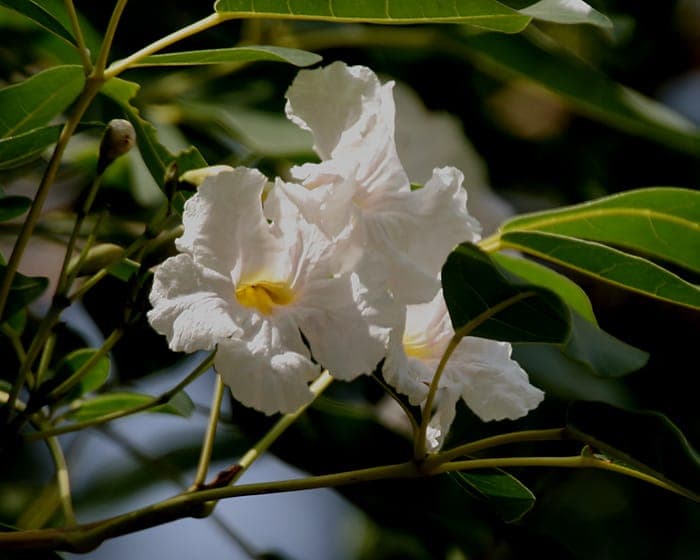
J.M.Garg / CC BY-SA 3.0, via Wikimedia Commons
Tabebuia pallida: complete guide
Tabebuia pallida
Want to see Tabebuia pallida: complete guide in your garden?
1 minute, no credit card
Overview
Tabebuia pallida, commonly known as the Cuban pink trumpet tree, white cedar, or whitewood, is a fast-growing tropical tree in the family Bignoniaceae. It is native to the Lesser Antilles, specifically the Leeward and Windward Islands of the Caribbean, and has been widely introduced to other tropical regions including Bermuda, Hawaii, the Marianas, the Marshall Islands, and the Seychelles. The species was formally described by Miers in 1863 and has several synonyms including Bignonia pallida and Tabebuia dominicensis. Tabebuia pallida belongs to the genus Tabebuia, a group of mostly tropical American trees celebrated worldwide for their spectacular flowering displays. The species has a wide pH tolerance of 4.5 to 8, grows rapidly, and in warm climates can reach 10 to 20 metres in height. In cooler European gardens it is grown as a container specimen that spends summers outdoors and winters under glass. For design ideas featuring exotic flowering trees as centrepieces in conservatory and terrace plantings, visit gardenworld.app.
Appearance and bloom
Tabebuia pallida is a medium to large tree with a rounded, open crown of compound, palmate foliage composed of 3 to 5 leaflets arranged in a hand-like pattern. The texture of the foliage is medium-fine and the tree is semi-deciduous to fully deciduous depending on rainfall levels and temperature. In the dry season or during cold stress it may drop its foliage temporarily, which makes the flowering display all the more dramatic. The flowers are the outstanding feature of this tree: large, funnel-shaped, trumpet-like blooms in shades of pale pink to bright lilac-pink, produced in dense panicles at the branch tips. The flowering display typically occurs when the branches are nearly bare, before or simultaneously with the emergence of new foliage, creating a breathtaking visual impact. Flower colour ranges from pure pale pink to warm bright pink and occasionally near-white. In tropical regions the flowers are a reliable nectar source for hummingbirds and butterflies. After flowering, long, pod-like capsules develop containing winged seeds dispersed by wind.
Ideal location
Tabebuia pallida requires full sun and thrives only in a warm, tropical to subtropical climate. In its native Antillean habitat it grows in full sun in a seasonally dry tropical climate along coastlines, in dry deciduous forest, and as a popular street and garden tree in urban areas. In northern European gardens it is suitable only as a seasonal outdoor specimen from May to September, placed in a sheltered, very warm and sunny position free from late frosts. Outside the summer months it must be moved to a frost-free, bright space such as a heated glasshouse or conservatory with a minimum temperature of 10 degrees Celsius. The tree tolerates drought considerably better than excessive moisture and grows rapidly, making it popular as a garden tree across tropical countries. In a large tub or planter it can be grown as a moveable patio specimen that migrates indoors each autumn and returns outdoors each spring after the last frost date.
Soil
Tabebuia pallida adapts to a remarkably wide range of soils with pH tolerances from 4.5 to 8, making it highly adaptable. It grows best in free-draining, moderately fertile soil. Waterlogging is harmful and must always be avoided since the roots of this tropical tree are very sensitive to prolonged wet conditions. In its native islands it grows naturally on well-draining coastal soils and calcareous rocky ground as well as on deeper, humus-rich forest soils. When growing in a container, use a free-draining potting mix incorporating perlite or coarse sand in a ratio of roughly 2 parts compost to 1 part drainage material. Ensure adequate drainage holes and a layer of hydrogranules at the base of the pot. Repot every two to three years into a progressively larger container to accommodate the vigorous root system.
Watering
During the growing season in spring and summer, water regularly, allowing the upper centimetres of potting mix to dry slightly between waterings. Water generously each time until it drains freely from the base, then wait before watering again. Standing water must always be avoided and leads quickly to root rot in container-grown specimens. During winter dormancy in cool glasshouse conditions, reduce watering significantly, giving just enough to prevent the roots from desiccating completely. In its tropical homeland, Tabebuia pallida experiences a pronounced dry season during which it naturally drops its foliage; this is entirely normal behaviour and not a sign of disease or poor health. Use rainwater or room-temperature tap water where possible as very cold water can shock the roots of tropical trees.
Free design
Want to see Tabebuia pallida: complete guide in your garden? Make a free design now.
Pruning
Tabebuia pallida can be pruned after flowering to shape the crown and control overall size. In container culture, light annual pruning is necessary to keep the plant manageable and to encourage a compact, well-branched crown that suits the tub format. Prune most effectively in early spring before new growth begins, allowing the plant to respond quickly with fresh, well-structured new shoots. Remove dead or damaged branches immediately whenever they are discovered, regardless of season. For container specimens, root pruning at repotting time is also valuable: trim back the outer root layer and replace exhausted potting mix to maintain soil fertility and prevent the tree from becoming pot-bound. This keeps growth manageable without compromising flowering potential.
Maintenance calendar
January to March: tree is indoors in a frost-free glasshouse or conservatory. Water minimally, apply no fertiliser. Check regularly for fungal issues at the base if humidity is high. April: begin increasing water gradually as temperatures rise and day length extends; check whether the root ball has enough space in the current container. May: move outside to a sheltered sunny position after the last frost date; resume feeding with a balanced liquid fertiliser. June to August: the most vigorous growth period; water regularly and generously, feed monthly, shape lightly if desired to maintain a pleasing crown form. September: gradually reduce watering to prepare the tree for dormancy; return to a frost-free bright indoor space before the first autumn frost arrives. October to December: winter rest. Minimal water, no fertiliser; check weekly for pests sheltering in the bark or soil surface.
Winter hardiness
Tabebuia pallida is not frost hardy and cannot tolerate freezing temperatures under any circumstances. It must always be overwintered frost-free, with a minimum temperature of 5 to 10 degrees Celsius. Sustained temperatures below freezing cause serious damage or outright death of the tree. In a cold, draughty conservatory the tree may drop its foliage but will survive if temperatures remain above freezing. In Mediterranean and subtropical climates such as southern Spain, southern Portugal, or the Canary Islands, it can remain outdoors throughout the year. In northern European climates, a heated glasshouse or conservatory is an absolute requirement. For inspiration on how to use spectacular tropical flowering trees as focal points in terrace and winter garden plantings, visit gardenworld.app.
Companion plants
Tabebuia pallida pairs beautifully with other tropical and subtropical plants that share the same overwintering requirements and create a cohesive exotic atmosphere. Tibouchina urvilleana offers rich purple flowers in summer and autumn. Bougainvillea adds spectacular curtains of pink, orange, or purple bracts across the same warm season. Plumbago auriculata and Mandevilla extend the floral display with elegant sky-blue and pink trumpet blooms respectively. Callistemon species add striking bottlebrush flowers in red or yellow. Subtropical Salvia varieties complete the planting with lighter, airy flower spikes. In a full tropical glasshouse setting, heliconias, ginger relatives, and ornamental palms can be combined for a completely immersive tropical tableau that transforms any conservatory into a bold statement.
Closing thoughts
Tabebuia pallida is a breathtaking tropical trumpet tree that delivers one of the most spectacular flowering displays achievable from any single tree species. The sight of bare branches suddenly draped in hundreds of pink trumpet-shaped blooms is an experience that very few other plants can match for sheer visual drama. In northern European gardens it excels as a container specimen on a warm sunny terrace or as a showpiece in a heated conservatory. Its rapid growth, broad soil adaptability, salt tolerance in coastal conditions, and the absolute magnificence of its bloom make it a fascinating and highly rewarding exotic acquisition for the gardener with glasshouse space and a passion for the exceptional. Explore how to incorporate striking tropical plants into a professionally designed garden plan at gardenworld.app.
Want to see Tabebuia pallida: complete guide in your garden? Make a free design now.
Upload a photo, pick a style, and get a photorealistic design with plant list in under a minute.
10,000+ gardens designed already
No credit card required


Similar plants
Northern catalpa: complete guide
Catalpa speciosa
Everything about northern catalpa (Catalpa speciosa): bold white flowers, fast growth, and how to grow this striking tree in your garden.
Desert willow: complete guide to Chilopsis linearis
Chilopsis linearis
Complete growing guide for desert willow (Chilopsis linearis): sun, soil, flowering, pruning, and winter care for this spectacular flowering small tree.
Higuero de sierra: complete guide
Crescentia portoricensis
Full growing guide for Crescentia portoricensis, the rare Puerto Rican mountain calabash: location, soil, watering, pruning and winter care.