
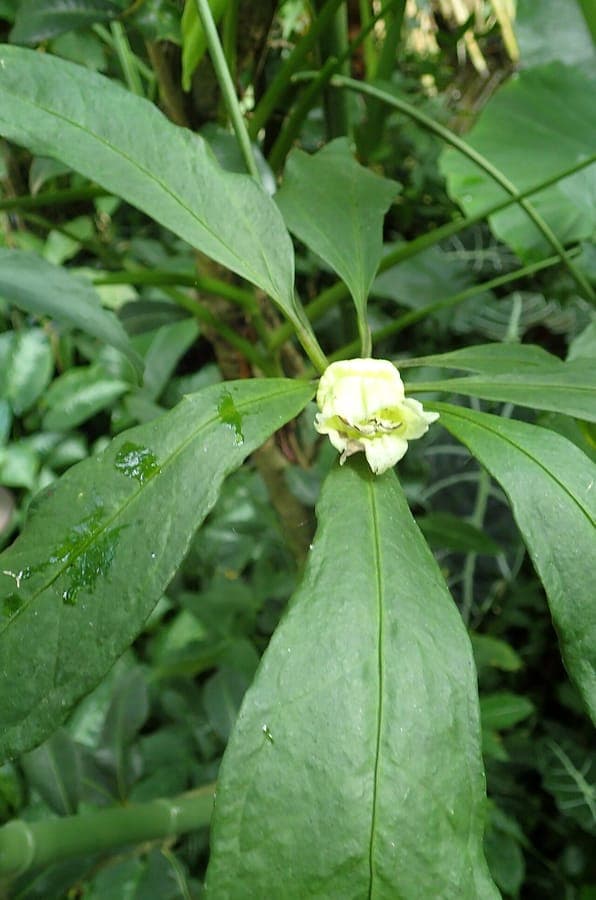
Krzysztof Ziarnek, Kenraiz / CC BY-SA 4.0, via Wikimedia Commons
Higuero de sierra: complete guide
Crescentia portoricensis
Want to see Higuero de sierra: complete guide in your garden?
1 minute, no credit card
Overview
Crescentia portoricensis, commonly known as 'higuero de sierra' (Spanish for 'mountain calabash tree'), is one of the rarest tropical trees in the Caribbean, native exclusively to the southwestern mountain ranges of Puerto Rico. Described by botanist Britton in 1916, this member of the Bignoniaceae family has a remarkably restricted range compared to its better-known relative Crescentia cujete, the common calabash. The genus Crescentia is renowned across tropical America for producing large, hard-shelled fruits that indigenous peoples have used for centuries as drinking vessels, percussion instruments, bowls and decorative art. Visit gardenworld.app for extensive inspiration on growing rare exotic trees in your garden.
The species name 'portoricensis' directly references its Puerto Rican origin, while the common name specifies its preference for hillside and mountain habitats rather than the river margins and lowlands favoured by C. cujete. This habitat preference makes the higuero de sierra somewhat more drought-tolerant than many other Crescentia species, an adaptation to the drier conditions found on exposed mountain slopes.
Appearance and bloom cycle
Crescentia portoricensis develops into a medium-sized tree or large shrub with a single main trunk. The foliage is coarse-textured, deep green, and provides a dense canopy that contrasts beautifully with the plant's yellow flowers. Like all members of the genus, this species displays the remarkable trait of cauliflory - its flowers emerge directly from the trunk and major branches rather than from the tips of young shoots. This adaptation is common in tropical trees and is thought to make flowers more accessible to pollinating bats and insects that navigate near the ground.
The flowers are yellow and conspicuous, opening at night when they emit a faint scent to attract nocturnal pollinators. After successful pollination, large green fruits develop directly on the woody branches and trunk. These fruits are rounded, hard-shelled when mature, and can persist on the tree for an extended period, adding striking year-round interest. In its native Puerto Rico, the tree produces flowers and fruit throughout much of the year, with productivity influenced by rainfall patterns.
Ideal location
As a true tropical species, Crescentia portoricensis needs warm, sunny conditions. In its Puerto Rican homeland it grows on mountain slopes where it receives strong sun and benefits from good air circulation. In temperate gardens across northern Europe, this tree is best grown as a container plant that spends summers outdoors and winters in a frost-free environment.
Select the sunniest, most sheltered spot available - ideally against a south- or west-facing wall that radiates heat on summer evenings. The tree grows vigorously outdoors from late May through September. Move it inside before night temperatures drop below 10 degrees Celsius. A bright conservatory, heated greenhouse, or a light-filled indoor space with temperatures above 10 degrees Celsius is suitable for overwintering. Avoid dark corners where the plant will shed leaves and weaken rapidly.
Soil
In the wild, this species grows on soils with a pH between 5.0 and 6.0, in moderately fertile, free-draining conditions typical of mountain slopes. In cultivation, use a quality potting compost blended with perlite or coarse sand at a ratio of roughly 2:1 compost to drainage material. This mimics the well-aerated, fast-draining soils of its natural habitat while retaining enough moisture and nutrients to support vigorous growth.
Avoid heavy, clay-based mixes that stay wet for long periods. Soggy roots are the most common cause of failure with tropical container plants. Repot every two to three years in spring, moving up one pot size each time to maintain healthy root development. Adding a layer of gravel or broken pot shards to the bottom of the container improves drainage further. Garden centres in the UK and Ireland stock suitable tropical potting mixes; alternatively, blend your own from peat-free compost and horticultural grit.
Watering
Water regularly during the growing season (May through September), allowing the top few centimetres of soil to dry slightly between sessions. Crescentia portoricensis tolerates short dry spells but grows faster and produces more foliage with consistent moisture during warm periods. In midsummer, containers may need watering every two to three days depending on pot size, temperature, and wind exposure.
From October through April, when the plant is indoors in reduced light and lower temperatures, water very sparingly. Allow the soil to dry down more completely before adding water. Overwatering during the dormant period is the primary cause of root rot, which can kill the plant within weeks. Use rainwater or room-temperature water when possible. Hard tap water can gradually raise the soil pH and cause nutrient deficiencies; if you notice yellowing leaves, check the pH and consider acidifying with a small amount of citric acid.
Free design
Want to see Higuero de sierra: complete guide in your garden? Make a free design now.
Pruning
Crescentia portoricensis requires minimal pruning under normal circumstances. The tree naturally forms an attractive shape and its cauliflory means that fruit and flowers emerge directly from the woody framework - heavy pruning can therefore reduce fruiting. In early spring, before moving the plant outside, remove any dead, damaged, or crossing branches with clean, sharp tools. Sterilise your cutting tools with rubbing alcohol between plants to prevent the spread of disease.
If the plant outgrows its allotted space, a more significant cut-back can be performed after the last frost risk has passed. Crescentia generally responds well to pruning and pushes new growth from dormant buds. Large cuts should be sealed with pruning wound compound to prevent drying out and infection. Avoid heavy pruning in autumn or winter when the plant is in its resting phase and less able to seal wounds efficiently.
Maintenance calendar
January through February: minimal watering, maintain temperatures above 10 degrees Celsius indoors, no fertiliser.
March: begin increasing watering frequency, inspect for pests such as spider mites and mealybugs, repot if needed in fresh compost.
April through May: resume monthly fertilising with a balanced liquid feed, harden off the plant by placing it in a sheltered outdoor spot on warm days before full outdoor placement.
June through August: active growing season outdoors in full sun, water regularly, apply liquid fertiliser monthly, watch for aphids and scale insects.
September: reduce watering, stop fertilising, prepare for indoor relocation before night temperatures fall below 10 degrees Celsius.
October through November: bring indoors to frost-free overwintering position, place in the brightest available spot.
December: minimal care, water only when soil is completely dry, check periodically for pests.
Winter hardiness
Crescentia portoricensis has no frost tolerance and is rated for USDA hardiness zones 11-12, equivalent to permanently frost-free tropical climates such as southern Florida, Hawaii, the Canary Islands, or similar subtropical and tropical environments. In the UK, Ireland, and most of continental Europe, it must be overwintered indoors.
The minimum safe temperature is around 10 degrees Celsius. Brief exposures to slightly lower temperatures are unlikely to kill the plant immediately but will cause leaf drop and weaken the tree. Prolonged chilling below 7 degrees Celsius can cause lasting damage to the vascular system. Plan your overwintering arrangements before autumn to avoid scrambling to find space when temperatures drop unexpectedly. At gardenworld.app you can plan your container garden layout and discover which tropical companions make the best group display.
Companion plants
The exotic character of Crescentia portoricensis pairs beautifully with other large-leaved tropical container plants. Banana plants (Musa basjoo or ornamental Musa species), bird of paradise (Strelitzia reginae), tropical hibiscus (Hibiscus rosa-sinensis), and cannas all complement the tree's bold silhouette. For a dramatic focal point grouping, place the calabash tree centre stage with shorter flowering tropicals around its base.
In a conservatory or heated greenhouse setting, climbers such as Mandevilla or Stephanotis can be trained nearby to add vertical interest. For ground-level interest at the pot's edge, trailing plants like Tradescantia or Plectranthus fill gaps attractively. When planning the overwintering space, group all tropical container plants together, as they share the same temperature and light requirements.
Closing
The higuero de sierra is a genuine collector's plant - a living piece of Caribbean botanical heritage with an extremely restricted natural range. Growing it in northern European conditions demands attention and adequate indoor space for the winter months, but the rewards are considerable: a striking tropical tree with unusual cauliflorous yellow flowers, bold green fruits, and a compelling story connecting your garden to the mountain forests of Puerto Rico. With proper care and a frost-free winter home, Crescentia portoricensis can thrive for many years as an exceptional centrepiece of any tropical container collection.
Want to see Higuero de sierra: complete guide in your garden? Make a free design now.
Upload a photo, pick a style, and get a photorealistic design with plant list in under a minute.
10,000+ gardens designed already
No credit card required


Similar plants
Tabebuia pallida: complete guide
Tabebuia pallida
Full growing guide for Tabebuia pallida: location, soil, watering, pruning, hardiness and companion plants for this tropical trumpet tree.
Northern catalpa: complete guide
Catalpa speciosa
Everything about northern catalpa (Catalpa speciosa): bold white flowers, fast growth, and how to grow this striking tree in your garden.
Desert willow: complete guide to Chilopsis linearis
Chilopsis linearis
Complete growing guide for desert willow (Chilopsis linearis): sun, soil, flowering, pruning, and winter care for this spectacular flowering small tree.