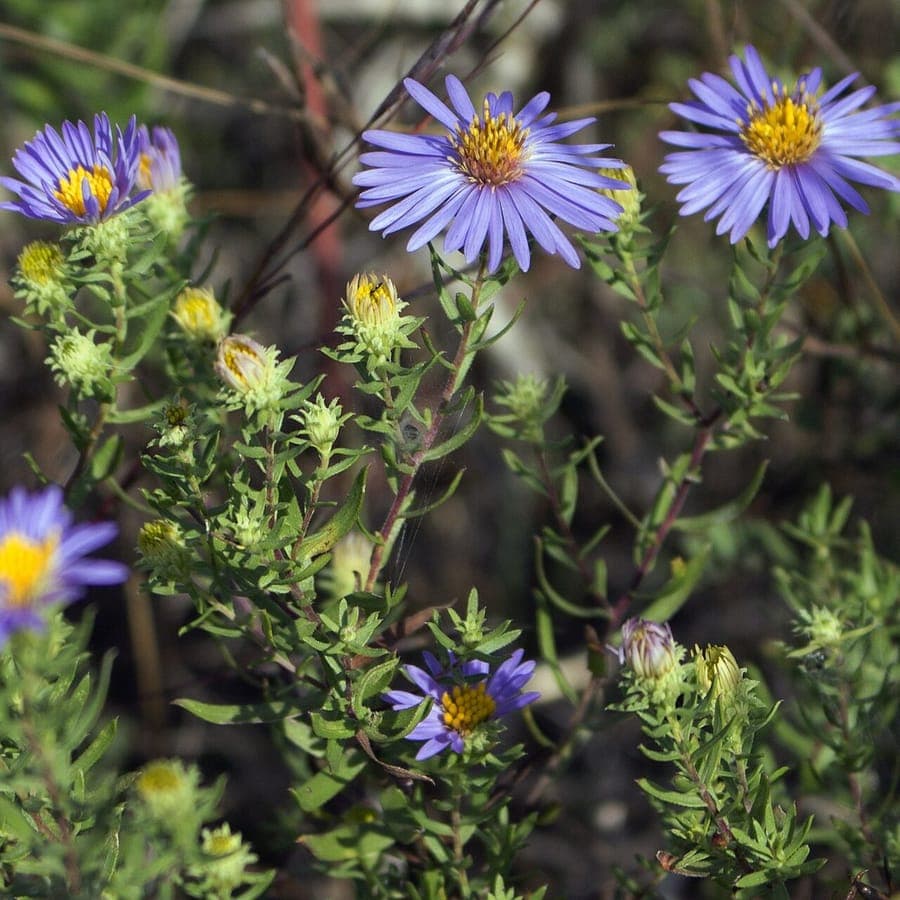
aarongunnar / CC BY 4.0, via Wikimedia Commons
Aromatic aster (Symphyotrichum oblongifolium): complete guide
Symphyotrichum oblongifolium
Want to see Aromatic aster (Symphyotrichum oblongifolium): complete guide in your garden?
Full design in HD: €7.99
Look after your Aromatic aster with the GardenWorld app
Identify plants with your camera and get a care calendar with reminders for this plant.


Overview
Aromatic aster (Symphyotrichum oblongifolium) is a compact North American aster that saves its best for the very end of the season, when most perennials are already fading. The common name comes from the resinous, faintly herbal scent released when you brush against the leaves. Many nurseries still sell it under its former name, Aster oblongifolius, and you will often find it simply labelled with its best-known cultivar, 'October Skies'.
In the wild it grows on dry limestone slopes, rocky glades and prairies across the central and eastern United States. That background explains its strengths: it copes with drought, loves sun, needs little feeding and usually stays clean where other asters struggle with powdery mildew. In a British or north-west European garden that makes it one of the most rewarding late performers, perfect for a sunny border, a gravel garden or the edge of a patio. On gardenworld.app you can have a garden design made that places this aster alongside ornamental grasses and other late bloomers, so your borders still have colour well into October.
The plant forms a broad, rounded mound 40 to 90 cm tall depending on cultivar and conditions. 'October Skies' is the most compact at roughly 45 to 60 cm, while 'Raydon's Favorite' grows taller and looser and flowers a little later. Both are excellent for bees, hoverflies and butterflies at a time when nectar is in short supply.
Appearance and bloom cycle
The stems are sturdy, freely branching and slightly bristly. The leaves are oblong, 2 to 8 cm long, clasp the stem at the base and feel rough and a little sticky to the touch. Those tiny glandular hairs are what give the plant its scent. Towards autumn the lowest leaves may drop, but the dense branching usually hides this well.
Flowering starts in late August or September and continues well into October, sometimes into early November in a mild year. Each flower head is 2 to 3 cm across, with narrow rays in lavender-blue to violet surrounding a golden-yellow centre that ages to reddish brown. The flowers open in their hundreds and almost smother the mound, creating a soft blue-violet haze. The photo shows how the yellow-green buds, fine foliage and open daisies mingle on the branching stems.
After flowering, small fluffy seeds develop. The spent plant stays fairly tidy and adds some winter structure, especially when touched by frost.
Ideal location
Give this aster full sun. Six hours of direct light a day is the minimum; in partial shade it becomes floppy, flowers less and tends to splay open. A south- or west-facing border, a bank, a raised bed or a gravel garden all suit it well. It is also happy against a warm wall or along a drive, as it tolerates heat and reflected light.
Space plants 50 to 60 cm apart. It spreads slowly by short rhizomes but is never invasive in the border. In larger schemes, plant in groups of three to five so they knit together into one continuous drift. It also works in a large container, provided the compost drains freely and the pot never sits in a saucer of water.
Soil requirements
Symphyotrichum oblongifolium is easy-going about soil as long as drainage is good. Sand, loam, light clay and chalky soils are all fine. On heavy, wet clay it can rot over winter, so work coarse grit or sharp sand into the top 25 cm, or plant on a slight mound.
Poor to moderately fertile ground produces the best, most compact plants. Too much manure or compost leads to long, soft stems that collapse in heavy rain. A neutral to slightly alkaline pH is ideal; in the wild the species often grows on limestone. A thin layer of compost at planting time is plenty, and after that you rarely need to feed it at all.
Free preview
Want to see Aromatic aster (Symphyotrichum oblongifolium): complete guide in your garden? Make a free preview of your design.
Watering
During the first year, water once a week in dry spells with a generous can, about 5 litres per plant, so the roots grow deep. After that the plant is remarkably drought tolerant. Only during a long, hot dry summer does an extra soak help to keep bud formation on track.
Always water at the base rather than over the foliage, ideally in the morning. Too much water does more harm than too little: in waterlogged soil the stems turn soft and the roots are prone to rot. In containers, check every few days in summer and let the top few centimetres dry out before watering again.
Pruning
Pruning is simple. Leave the faded stems standing after flowering, as they give winter structure and the seeds feed birds. In March, cut everything back to a hand's width above the ground, just before new growth appears.
For an even more compact plant or a slightly later display, you can shorten the shoots by about a third in late May or early June. This early trim encourages more side branches and therefore more flowers, and it helps taller cultivars such as 'Raydon's Favorite' stay upright. Do not do it after mid-June, or flowering will be pushed too far into autumn.
Every three to four years, lift and divide the clump in spring. Replant the young outer sections and discard the woody centre. This keeps the plant vigorous and free-flowering.
Maintenance calendar
March: Cut old stems back to 10 cm. Clear dead leaves from around the base.
April: The best time to plant or divide older clumps. Add a thin mulch of compost if your soil is very poor.
May to mid-June: Optionally shorten the shoots by a third for a bushier habit.
July to August: Water only during prolonged drought. Keep tall weeds away from the base.
September to October: Peak flowering. Enjoy the bees, hoverflies and late butterflies such as red admirals.
November to February: Leave the plant standing for structure and for overwintering insects. Do not feed.
If you tend to forget these jobs, the plant calendar on gardenworld.app keeps track of what needs doing in your garden each month.
Winter hardiness
This aster is fully hardy and survives frost down to about -30 °C (USDA zones 4 to 8). In the UK and the Low Countries it never needs winter protection. The only real risk is wet ground in winter: cold, saturated clay is more dangerous for the roots than a hard frost. In a well-drained spot the plant returns reliably every spring.
The species is not known to be toxic to people, dogs or cats. It is not on the EU list of invasive species and seeds itself only sparingly in gardens, unlike some other North American asters.
Companion plants
Symphyotrichum oblongifolium belongs in a naturalistic, sunny border with other late bloomers and grasses. Switchgrass (Panicum virgatum) and prairie dropseed (Sporobolus heterolepis) add airy plumes that contrast nicely with the compact cloud of flowers. Fountain grass (Pennisetum alopecuroides) is another good partner.
For colour contrast, pair it with the yellow sprays of rough goldenrod (Solidago rugosa) or the warm tones of sneezeweed (Helenium autumnale). The rosy flat heads of ice plant (Hylotelephium spectabile) and the dark seed cones of purple coneflower (Echinacea purpurea) combine with the blue-violet asters into a rich autumn scene. Low plants such as thyme or sedum suit the front of the border.
Final thoughts
Symphyotrichum oblongifolium is the aster for anyone short of time who still wants a colourful autumn. It asks for sun, free-draining soil and one cut a year, and in return it gives weeks of blue-violet flowers buzzing with insects. Plant a small group on the sunny side of your garden this spring, and your October borders will never look bare again.
Frequently asked questions about Aromatic aster
Is Aromatic aster winter hardy?
This aster is fully hardy and survives frost down to about -30 °C (USDA zones 4 to 8). In the UK and the Low Countries it never needs winter protection.
When and how do you prune Aromatic aster?
Pruning is simple. Leave the faded stems standing after flowering, as they give winter structure and the seeds feed birds.
How much water does Aromatic aster need?
During the first year, water once a week in dry spells with a generous can, about 5 litres per plant, so the roots grow deep. After that the plant is remarkably drought tolerant.
Where does Aromatic aster grow best?
Give this aster full sun. Six hours of direct light a day is the minimum; in partial shade it becomes floppy, flowers less and tends to splay open.
What soil does Aromatic aster need?
Symphyotrichum oblongifolium is easy-going about soil as long as drainage is good. Sand, loam, light clay and chalky soils are all fine.

See it in your garden
See Aromatic aster in your garden
One photo of your garden and a few questions. You see the result in about a minute.
Try it with a photoIdentify this plant in your own garden. Identify a plant
Similar plants
Switchgrass: complete guide
Panicum virgatum
Discover Panicum virgatum, an American ornamental grass with delicate foliage and stunning autumn color change. Perfect for modern gardens and prairie designs.
Prairie Dropseed: complete guide
Sporobolus heterolepis
Everything about Sporobolus heterolepis, the elegant prairie dropseed from North America. Location, soil, care and garden design inspiration.
Purple coneflower: complete guide
Echinacea purpurea
Everything about Purple Coneflower (Echinacea purpurea): planting, care, pruning and combinations. Expert tips for a thriving prairie-style garden.
