
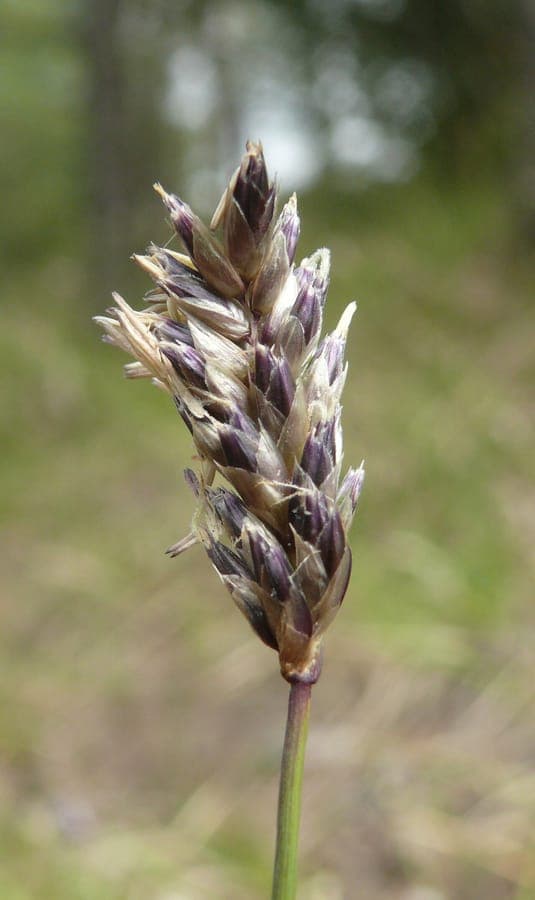
Bernd Haynold / CC BY-SA 3.0, via Wikimedia Commons
Blue Moor Grass (Sesleria albicans): complete guide
Sesleria albicans
Want to see Blue Moor Grass (Sesleria albicans): complete guide in your garden?
1 minute, no credit card
Overview
Blue Moor Grass (Sesleria albicans), also called Balkans moor grass, is an elegant ornamental grass native to mountainous regions of Europe. This compact, hardy grass is popular in alpine gardens, gravel borders, and rock gardens due to its beautiful blue-grey color and tidy form. Standing only 15 to 30 centimeters tall, Sesleria albicans is an excellent choice for small spaces and sophisticated garden designs.
Appearance & blooming
Blue Moor Grass is characterized by narrow, blue-grey leaves forming compact tufts. The leaf color is distinctive: fresh green in spring, developing that signature blue-grey tone as growth progresses. During the bloom period from April to May, slender, greyish-white flower spikes emerge. These flowers are not showy but add elegance to plantings.
The plant forms increasingly compact, attractive mounds year after year. The flower spikes sway gently in the breeze, adding movement to garden corners.
Ideal location
Blue Moor Grass thrives in sunny to lightly shaded locations. At least 4 to 5 hours of direct sunlight daily yields the best results and color intensity. In shadier spots, the color becomes less vibrant. The plant tolerates wind well and can be placed on windy exposures without issue. Suitable for dry, sunny hillside gardens throughout northern Europe.
Soil
The soil must be well-draining. This grass naturally grows on calcareous mountain slopes, so slightly alkaline soil with pH 6.5 to 7.5 is ideal. Add gravel or sharp sand to heavy clay soils for better drainage. Avoid waterlogged spots; the plant cannot tolerate excess moisture. Moderately fertile soil suffices.
Watering
Once established, Blue Moor Grass is extremely drought-tolerant. During dry summers, occasional watering helps, but the plant requires little. Avoid overwatering; it prefers drier conditions. In the first two weeks after planting, water regularly until the plant is well-rooted.
Free design
Want to see Blue Moor Grass (Sesleria albicans): complete guide in your garden? Make a free design now.
Pruning
Blue Moor Grass requires minimal maintenance. In spring (March/April), carefully remove dead material with a comb or fork. Avoid hard pruning, which damages the plant. Old foliage naturally dies back and can be gently combed out.
Maintenance calendar
Spring (March to May): Inspect for winter damage. Comb out dead material. No fertilization needed.
Summer (June to August): Regular inspection for drought stress. Water during extreme dry periods. Flower spikes can be trimmed for neater appearance.
Fall (September to October): Plant strengthens itself. No special care required.
Winter (November to February): This hardy plant needs no protection. Excessive moisture is the only concern.
Winter hardiness
Blue Moor Grass is extremely hardy to USDA zone 4 (temperatures to minus 35 degrees Celsius). In northern Europe, it thrives excellently without any protection. The plant tolerates snow and frost perfectly. It actually prefers cooler regions and performs poorly in very warm southern locations.
Companion plants
Blue Moor Grass combines beautifully with other alpine plants: Sempervivum (Hens and chicks), Sedum (Stonecrop), and Armeria maritima (Sea pink) form lovely combinations. Pair with small groundcovers like Thymus vulgaris (Thyme). In rock or scree gardens, it works especially well alongside Festuca glauca (Blue Fescue).
Conclusion
Blue Moor Grass is essential for dry, sunny borders and alpine gardens. Its blue color and compact form make it perfect for small spaces. Available at specialized plant nurseries and widely found at major garden centers. This easy, low-maintenance plant demands little yet offers much character and year-round interest. Essential for any alpine or contemporary gravel garden design.
Want to see Blue Moor Grass (Sesleria albicans): complete guide in your garden? Make a free design now.
Upload a photo, pick a style, and get a photorealistic design with plant list in under a minute.
No credit card required


Similar plants
Sporobolus pungens: complete guide
Sporobolus pungens
Sporobolus pungens is a stoloniferous Mediterranean coastal grass with outstanding salt and drought tolerance, perfect for seaside and dry gardens.
Mediterranean aegilops: complete guide
Aegilops biuncialis
Everything about Aegilops biuncialis, a Mediterranean annual grass with ornamental spikes and outstanding drought tolerance for dry gardens.
Silver bluestem: complete guide
Bothriochloa saccharoides
Full guide to Bothriochloa saccharoides (silver bluestem): site, soil, watering, winter hardiness, pruning, and garden companions.