
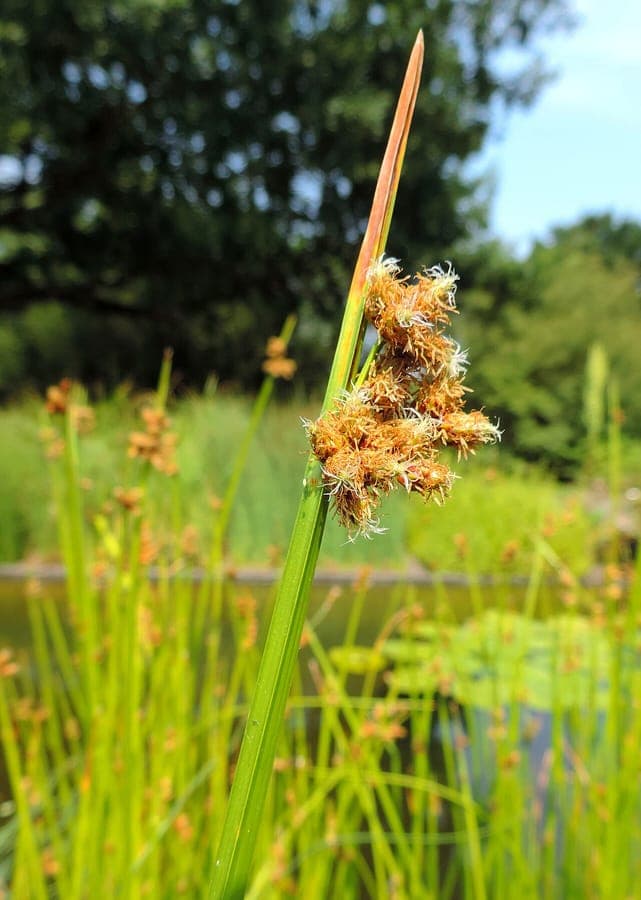
Krzysztof Ziarnek, Kenraiz / CC BY-SA 4.0, via Wikimedia Commons
Triangular club-rush: complete guide
Schoenoplectus triqueter
Want to see Triangular club-rush: complete guide in your garden?
1 minute, no credit card
Overview
The triangular club-rush (Schoenoplectus triqueter) is an elegant water plant belonging to the sedge family (Cyperaceae). This plant is characterized by its distinctive three-sided stems and naturally occurs in temperate regions from Europe to India. It is ideal for water gardens, wetlands, and shoreline planting where the focus is on aquatic aesthetics.
Appearance and bloom
The triangular club-rush grows as a graminoid plant with slender, three-cornered stems that reach elegantly upward. The plant achieves significant height and produces compact, brownish flowers that bloom from July to September. The foliage is fine and playful, adding a light texture to water gardens.
Ideal location
This aquatic plant thrives best in wetland and shoreline situations where it has adequate water contact. The triangular club-rush tolerates full sun to lightly shaded environments. Plant this species along water edges where the base remains constantly moist.
Soil
The plant grows optimally in neutral to slightly alkaline soil (pH 7.0-7.5). Ensure a soil structure that retains water but also allows some drainage, especially for container cultivation.
Watering
As a water plant, the triangular club-rush requires regular water. Maintain a constantly moist to wet environment. In wetland or pond situations, supplemental water is rarely needed. In container cultivation, water must be replenished regularly.
Free design
Want to see Triangular club-rush: complete guide in your garden? Make a free design now.
Pruning
Pruning is minimal for the triangular club-rush. Remove dead or damaged stems in spring. Leave the natural growth pattern intact for optimal decorative effect.
Maintenance calendar
Spring: Prepare growing substrate and plant positioning Summer: Support growth by maintaining optimal water level Fall: Seed heads can provide natural dispersal Winter: Protect in severe climates or grow submerged in water Year-round: Monitor water quality and plant health
Winter hardiness
The triangular club-rush is winter hardy in temperate climates but can suffer frost damage in extreme cold. In harsh winters, the plant can overwinter completely submerged in deeper ponds (at least 50cm deep).
Companion plants
Combine the triangular club-rush with other aquatic plants such as reed-like grasses, other sedge species, and water violets. This combination creates visual depth and liveliness in water gardens.
Closing
The triangular club-rush is a refined choice for water gardens and wetland landscapes. With its elegant stems and low maintenance needs, this plant forms a valuable element in aquatic ecosystems. Visit gardenworld.app/en for more garden design inspiration and plant recommendations.
Want to see Triangular club-rush: complete guide in your garden? Make a free design now.
Upload a photo, pick a style, and get a photorealistic design with plant list in under a minute.
No credit card required


Similar plants
Flat-stemmed club-rush: complete guide
Bolboschoenus planiculmis
Everything about Bolboschoenus planiculmis: growing conditions, watering, care, and use as a pond margin or wetland plant in garden design.
Great Plains flatsedge: complete guide
Cyperus lupulinus
Everything about Great Plains flatsedge (Cyperus lupulinus): growing conditions, care, garden uses, and ecological value. Tips for pond margins and dry sandy soils.
Golden beak sedge: complete guide
Rhynchospora corymbosa
Everything about golden beak sedge (Rhynchospora corymbosa): a dramatic tropical marginal for pond edges, bog gardens, and wet habitats.