
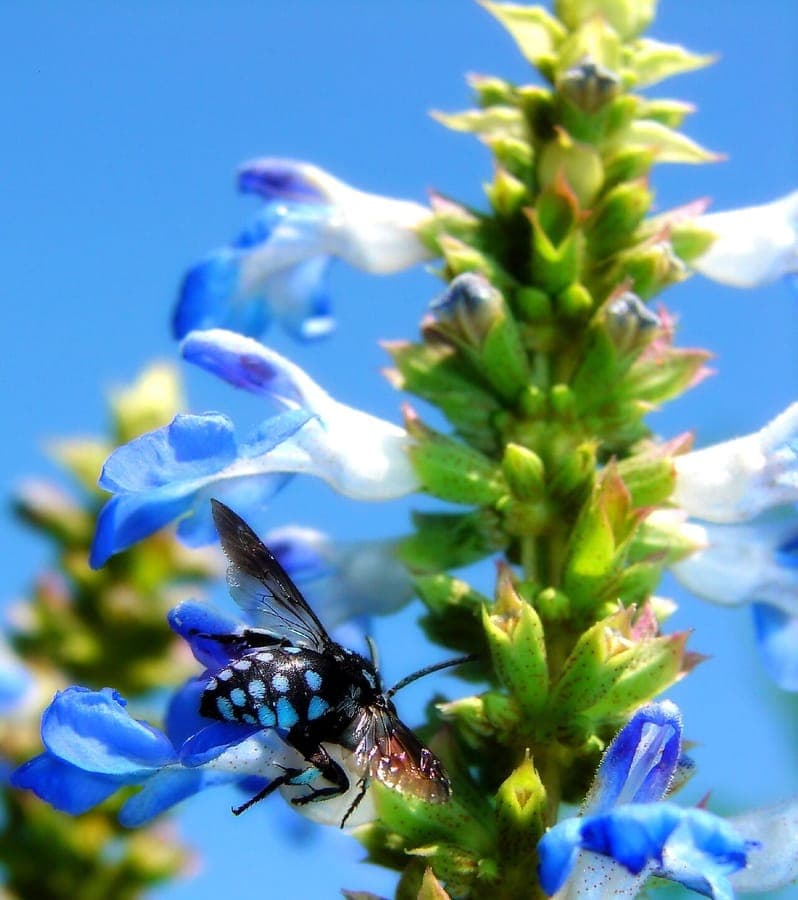
Louise Docker from sydney, Australia / CC BY 2.0, via Wikimedia Commons
Bog Sage: complete guide
Salvia uliginosa
Want to see Bog Sage: complete guide in your garden?
1 minute, no credit card
Overview
Bog Sage (Salvia uliginosa), also called Sumpf-Salbei or Bogzalf, is a South American perennial from the Lip-flower family (Lamiaceae). This plant grows naturally in marshes and wet areas from Brazil to northern Argentina. In Europe it's particularly beloved in temperate climates, where it flowers from mid-summer to autumn with beautiful sky-blue blooms. This is a plant for gardeners who want colour and height in their borders.
Appearance & bloom
Bog Sage grows to around 60 to 100 centimetres tall and forms a loose, upright plant. The leaves are narrow, lance-shaped and aromatic - smelling like a mixture of sage and blueberry. From July to October numerous sky-blue flowers appear in long spikes (up to 30 centimetres long). These flowers attract bees, butterflies and hummingbirds - especially if you're gardening for wildlife.
Ideal location
Bog Sage thrives best in a spot with at least 4-6 hours of sunlight, but can also grow well in partial shade. A spot where it gets afternoon shade, especially in very warm regions, helps prevent leaves from scorching. In its natural marsh setting it grows in sunny to partially shaded locations with plenty of moisture.
Soil
This is where the name comes from: Bog Sage loves to grow in wetter, nutrient-rich soils. A well-draining soil that stays moist - no stagnant water, but regularly wet - is ideal. Add compost or spent leafmould in spring. The plant also grows on less rich soils, but looks a bit more cautious then.
Watering
This is a plant that loves water! During the growing season (May to October) expect the soil to be regularly moist. Watering during very dry periods is essential. A mulch layer of 5 to 8 centimetres of compost in spring helps retain moisture. If you plant it in a container, make sure you water regularly - pots dry out faster.
Free design
Want to see Bog Sage: complete guide in your garden? Make a free design now.
Pruning
After autumn flowering (October-November) you can cut the plant back to around 20 centimetres tall. This stimulates larger flower clusters in the next season. In spring (March-April) you can carefully remove other old stem pieces. The plant tolerates pruning well.
Maintenance calendar
January-February: In milder winters the plant can still flower. Check moisture levels.
March-April: Cut back dead stems; apply compost.
May-June: Growth increases; watering becomes essential.
July-August: Flowering period begins; water remains crucial.
September-October: Full bloom; continue watering.
November-December: Flowering ends; plant rests; less water needed.
Winter hardiness
Bog Sage is moderately winter-hardy. In zones down to USDA 8 (to around -10 degrees Celsius) it can overwinter outdoors in well-draining, non-waterlogged soil. In colder regions (USDA 7 and colder) it's better to dig the plant up in autumn, pot it and overwinter it in a frost-free shed. In Southern Europe and southern England it can stay outside.
Companion plants
Bog Sage grows well alongside:
- Blue Thistle (Eryngium): Together a heaven theme for full sun.
- Bergamot (Monarda): The same wildlife lovers.
- Perennial Sunflower (Heliopsis): For height and yellow contrast.
- Wandflower (Gaura): Fine texture and airy appearance.
Together they create a summer border flower show.
Closing
Bog Sage is for gardeners with moist soils: a South American beauty with sky-blue flowers and a long flowering period. Find it at specialised perennial nurseries or online. For integration into your garden plan, visit gardenworld.app.
Want to see Bog Sage: complete guide in your garden? Make a free design now.
Upload a photo, pick a style, and get a photorealistic design with plant list in under a minute.
No credit card required


Similar plants
Woodland sage: complete guide
Salvia nemorosa
Everything about Woodland Sage (Salvia nemorosa): planting, care, pruning and combinations. Expert tips for months of blue-violet flower spikes.
Sage: complete guide
Salvia officinalis
Everything you need to grow and care for Salvia officinalis: ideal spot, soil needs, pruning, and winter hardiness for gardens in temperate climates.