
Kurt Stüber [1] / CC BY-SA 3.0, via Wikimedia Commons
Salvia involucrata: complete guide
Salvia involucrata
Want to see Salvia involucrata: complete guide in your garden?
1 minute, no credit card
Overview
Salvia involucrata, known as Rosy-Leaf Sage or Roseleaf Sage, is a mid-sized to large perennial plant originating from Mexico and Guatemala. This spectacular sage is loved for its frost-tender nature but also for its dramatic, bright pink flowers that appear from August through October. In its natural habitat, the plant grows in mountain forests at elevations of 1000-2000 meters.
This makes Salvia involucrata an ideal plant for gardeners who can grow it in containers or in very mild climates outdoors. The long bloom period in late summer and fall is particularly valuable, as many other plants fade by that time.
Appearance & Bloom
Salvia involucrata typically reaches a height of 100-150 centimeters with straight, upright stems. The leaves are heart-shaped, green and softly hairy, giving the plant a soft appearance. Some cultivars have a reddish tint on the leaf margins, which adds extra interest.
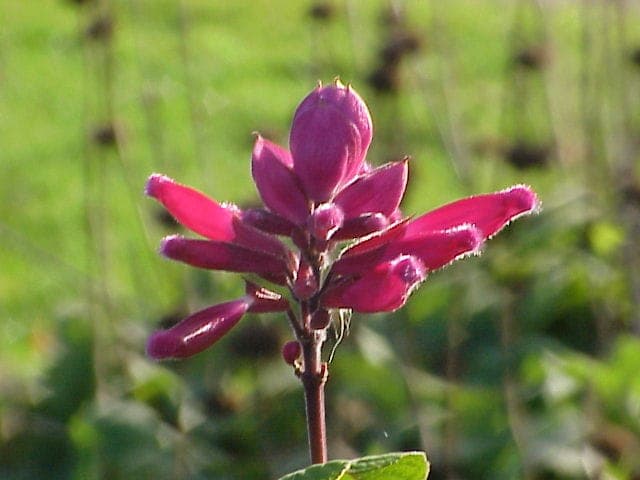
The flowers are the absolute highlight: densely packed, upright spikes in a bright pink to magenta color. The flowers appear from August through October, making this plant a late-summer and fall blooming ornament. The flowers are highly attractive to hummingbirds and much other insect life.
Ideal Location
Salvia involucrata thrives best in full sun to partial shade. A location with 5-8 hours of direct sunlight daily is ideal. However, in very hot climates some afternoon shade may be favorable to prevent leaf scorch.
A sheltered spot protected from strong, cold winds is important, especially in Northern Europe. The plant is frost-tender and is damaged by frost, so during the growing season preventing wind damage helps the plant be well-prepared for winter.
Soil
Salvia involucrata prefers nutrient-rich, well-draining soil. This is a mountain plant that grows in mountain forest soils with plenty of organic matter. Mix well-rotted compost or leaf mold through your planting hole. A slightly acidic pH (6.0-6.5) is ideal.
Good drainage is essential - this plant tolerates no waterlogging. If you live in a clay area, ensure lots of gravel or sand in the planting hole.
Watering
During the growing season (May-October), Salvia involucrata needs regular water. The soil should not dry out, especially not during bloom and hot summer days. Water deeply and regularly, especially during dry periods.
In winter (if you bring the plant indoors), you reduce watering considerably. The plant goes dormant and needs much less water. However, ensure the soil does not completely dry out.
Free design
Want to see Salvia involucrata: complete guide in your garden? Make a free design now.
Pruning
In early spring (March-April), prune back to approximately 30-40 centimeters tall. This encourages bushier growth and many more flowers. Remove dead wood throughout the growing season. After blooming (October-November), you can prune back lightly.
This plant responds well to pruning and will regrow from nearly all parts of the stem. Do not be afraid of aggressive pruning - it only encourages more growth.
Maintenance Calendar
Spring (March-May): Prune back to 30-40cm height, water, moderate feeding (compost). Summer (June-August): Water regularly, inspect for pests (especially whitefly), moderate feeding. Fall (September-October): Continue regular watering, enjoy blooming. Winter (November-February): Bring indoors or cover heavily, very minimal water.
Winter Hardiness
Salvia involucrata is frost-tender and cannot tolerate temperatures below -5 degrees Celsius. In the Netherlands and Belgium, protection is absolutely essential. You have three options:
- Container culture: Grow the plant in a large pot (30-40L) and bring it indoors for winter, place in a light, cool room (5-10 degrees).
- Heavy mulch: Plant outdoors, cover very heavily with mulch (30-40cm) and protective reed mats in November.
- Annual replacement: Treat as a bedding plant, replace annually in May.
Most gardeners in cold climates choose option 1 (container culture).
Companion Plants
Salvia involucrata combines beautifully with other late-blooming plants and accent plants. Try combining it with yellow-flowering plants (Helianthus, Rudbeckia) for a warm color play. White or silvery foliage (Senecio, Artemisia) makes the pink flowers stand out nicely.
Excellent combinations (especially for container culture):
- Salvia involucrata + Helianthus annuus (Sunflower) for warm contrast
- Salvia involucrata + Senecio cineraria for silvery-pink combination
- Salvia involucrata + Cosmos for airy, summery-feeling borders
Closing
Salvia involucrata is a true showstopper for those wanting to enjoy spectacular late-summer and fall blooming. The bright pink flowers on upright stems are truly striking and attract birds and other pollinators. Although frost-tender, container culture is manageable for the Netherlands and Belgium.
This plant is perfect for those wanting to add continuously blooming, exotic accents to a front garden or patio. Plant in May, prune in March, overwinter in October - follow this pattern and you will have years of enjoyment. For more inspiration on container plants and container gardening, consult Gardenworld.app. Gardenworld.app helps you design gardens that truly come to life through this dramatic pink sage.
The leaves sometimes also give a light red tint, especially in cool periods. This adds extra value to this already impressive plant.
Want to see Salvia involucrata: complete guide in your garden? Make a free design now.
Upload a photo, pick a style, and get a photorealistic design with plant list in under a minute.
No credit card required


Similar plants
Salvia clevelandii: complete guide
Salvia clevelandii
Discover the fragrant sage, a charming Californian ornamental with aromatic leaves and blue flowers. Perfect for dry front gardens.
Salvia discolor: complete guide
Salvia discolor
Discover the stunning Andean sage from Peru with near-black flowers. A spectacular, frost-tender plant for front gardens.