
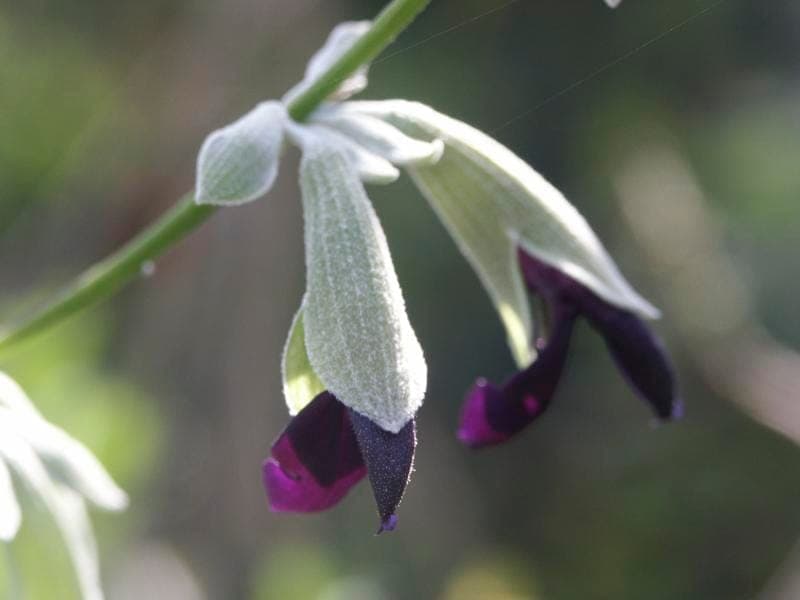
Scott Zona / CC BY 2.0, via Wikimedia Commons
Salvia discolor: complete guide
Salvia discolor
Want to see Salvia discolor: complete guide in your garden?
1 minute, no credit card
Overview
Salvia discolor, known as Andean Sage or Black Sage, is a mid-sized perennial plant originating from the Peruvian Andes. This striking sage is valued for its unusual, nearly black flowers - a characteristic rarely found in garden plants. In its natural habitat, the plant grows on mountain slopes at elevations of 1500-2500 meters, where it experiences a cool mountain climate.
This makes Salvia discolor an intriguing choice for gardeners who want to experiment with more exotic, frost-tender plants. In mild climates, the plant can overwinter outdoors, but in the Netherlands and Belgium it requires winter protection or container growing.
Appearance & Bloom
Salvia discolor typically reaches a height of 60-100 centimeters with straight, upright stems. The leaves are elongated, green, lightly hairy and fragrant when touched. The most distinctive feature is the flowers: these appear in dense, erect flower clusters and have a deep black to very dark purple color - almost black.
The flowers are highly attractive to hummingbirds and are produced from August to October. The contrast between the green plant and the nearly black flowers is visually very striking and creates a dramatic appearance. This is not for everyone, but for dedicated gardeners wanting unique accents, this is a true showstopper.
Ideal Location
Salvia discolor thrives best in locations with full sun to partial shade. A location with 5-6 hours of direct sunlight daily is ideal. The plant can also tolerate some afternoon shade, which is different from many southern-origin salvias.
Due to its mountain heritage, this sage tolerates cooler temperatures than many other tropical plants. However, strong, cold winds can be damaging. A sheltered spot protected from north winds is favorable.
Soil
Salvia discolor prefers nutrient-rich, well-draining soil. This differs from desert-like Salvias - this mountain plant grows in mountain forest soils with plenty of organic matter. Mix well-rotted compost or leaf mold through your planting hole.
The pH can be slightly acidic to neutral (6.0-7.0). Ensure good drainage - waterlogging can cause root problems, especially in winter.
Watering
During the growing season (spring-fall), Salvia discolor needs regular water. The soil should not dry out, but should not be waterlogged either. Water deeply and regularly, especially in warm summers. In winter, when the plant is less active, reduce watering.
If you keep the plant in a pot (recommended in cold climates), water regularly but ensure drainage.
Free design
Want to see Salvia discolor: complete guide in your garden? Make a free design now.
Pruning
Light pruning in spring helps keep the plant bushy and produce more flowers. Remove about a quarter of old growth and shape the plant as desired. At season's end, after blooming, you can cut back to about 30 centimeters tall.
This plant does not require aggressive pruning, but light shaping encourages better structure.
Maintenance Calendar
Spring (March-May): Prune lightly, water as regrowth begins, no feeding until mid-May. Summer (June-August): Water regularly, inspect for pests. Fall (September-November): Continue regular watering, enjoy blooms. Winter (December-February): In mild climates: much less water. In cold climates: bring pot indoors or cover plant heavily with mulch.
Winter Hardiness
Salvia discolor is frost-tender and can briefly tolerate temperatures of -5 to -8 degrees Celsius. In the Netherlands and Belgium, protection is essential. You have several options: (1) Bring the potted plant indoors for winter, (2) Cover the in-ground plant heavily with mulch and reed mats, (3) Overwinter the plant in a cold greenhouse.
In southern areas (Provence, Tuscany, southern Spain) you can sometimes leave the plant outdoors, but frost periods require monitoring.
Companion Plants
Salvia discolor works beautifully in combination with other mountain plants and plants with dark foliage. Try combining it with dark-leaved Heuchera, Carex and other fine-leaved green. Contrast plantings with silvery Artemisia or white-variegated Euonymus are spectacular.
Excellent combinations:
- Salvia discolor + Heuchera "Plum Pudding" for dark contrast
- Salvia discolor + Carex oshimensis "Evergold" for fine texture contrast
- Salvia discolor + white flowers (Gaura, Lychnis) for maximum dramatic effect
Closing
Salvia discolor is a true showstopper for gardeners wanting to stand out with unusual plants. The nearly black flowers make it botanically fascinating and visually spectacular. Although frost-tender and thus requiring more protection than other salvias, the effort is completely worthwhile for lovers of special plants.
When you want to add this unique sage to your front garden or container collection, you are prepared for a feast of the eyes and effort. The August to October bloom brings this dramatic black to your garden precisely when many other plants fade. For more inspiration on integrating exotic plants, consult Gardenworld.app. Gardenworld.app helps you design a front garden that truly comes to life through these rare jewels.
Want to see Salvia discolor: complete guide in your garden? Make a free design now.
Upload a photo, pick a style, and get a photorealistic design with plant list in under a minute.
No credit card required


Similar plants
Salvia clevelandii: complete guide
Salvia clevelandii
Discover the fragrant sage, a charming Californian ornamental with aromatic leaves and blue flowers. Perfect for dry front gardens.
Salvia involucrata: complete guide
Salvia involucrata
Discover Rosy-Leaf Sage, a Mexican beauty with vibrant pink flowers. Perfect as a container plant or in mild climates outdoors.