
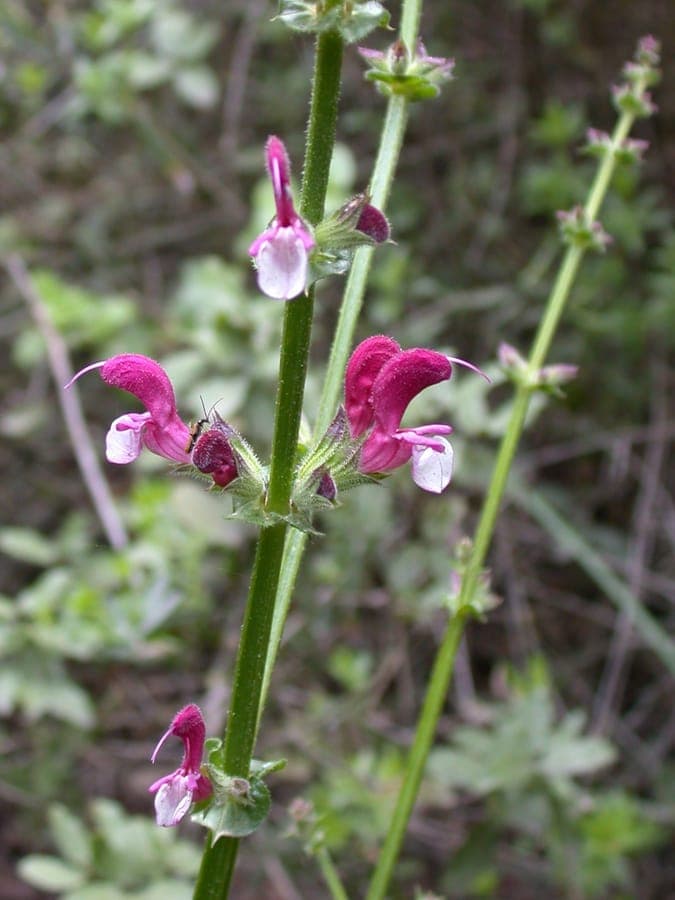
Gideon Pisanty (Gidip) גדעון פיזנטי / CC BY 3.0, via Wikimedia Commons
Salvia hierosolymitana: complete guide
Salvia hierosolymitana
Want to see Salvia hierosolymitana: complete guide in your garden?
1 minute, no credit card
Overview
Salvia hierosolymitana, known as Jerusalem Sage, is a fascinating sage originating from the Levant region of the Middle East (Cyprus, Lebanon-Syria, Palestine). This winter-hardy sage is highly valuable for gardeners seeking robust, Mediterranean plants that can thrive in warmer and drier climates. Unlike many other salvias, Jerusalem Sage is much harder and winter-hardier, making it suitable for gardens in temperate climates.
This plant blooms beautifully in late spring and summer with elegant, purplish flowers against green foliage. The plant grows naturally in dry mountain areas of the Middle East, so drought adaptation is built-in.
Appearance & Bloom
Salvia hierosolymitana typically reaches a height of 60-80 centimeters with an upright, compact growth habit. The leaves are oblong-lanceolate, green with a slightly rough, grayish texture. The foliage smells softly aromatic when brushed.
The flowers appear in upright, dense spikes in a beautiful purplish to lavender-like color. Blooming runs from May to July, making Salvia hierosolymitana a valuable plant for early to mid-summer bloom. The flowers are highly attractive to honeybees, butterflies and other pollinators.
Ideal Location
Salvia hierosolymitana thrives best in full sun. Minimum 6-8 hours of direct sunlight daily is necessary for optimal bloom and plant structure. The plant can tolerate some afternoon shade in very hot climates, but generally the more sun, the better.
A well-ventilated location is favorable, especially important for preventing fungal problems in humid climates. This Mediterranean plant does not thrive well in stagnant, moisture-laden environments.
Soil
Salvia hierosolymitana prefers well-draining, poor to moderately fertile soil. This is a plant that does not mind poor soils - indeed, over-rich soils can lead to excessive growth at the expense of blooming. The plant thrives fine in sandy or loamy soils.
Ensure good drainage. In clay areas, mix gravel or coarse sand through the planting hole. The pH can be fairly neutral to slightly acidic.
Watering
Once well-rooted, Salvia hierosolymitana has very low water needs. This is a drought-adapted plant that survives fine on rainwater alone in most areas. During very dry periods you can water occasionally, but do not overdo it.
Your best approach is: plant where it can settle, then give very minimal water. Overwatering is much more dangerous than underwatering for this robust plant.
Free design
Want to see Salvia hierosolymitana: complete guide in your garden? Make a free design now.
Pruning
Light pruning in early spring (March-April) helps keep the plant in shape and prevents leggy growth. Remove about a quarter of old stems and shape the plant as desired. After blooming (July-August), you can do light deadheading to keep the plant tidy.
This plant does not require aggressive pruning - it grows naturally compact and orderly.
Maintenance Calendar
Spring (March-May): Light pruning, minimal watering. Summer (June-August): Enjoy blooming, no feeding, very minimal water. Fall (September-October): Clear debris, no feeding. Winter (November-February): Plant survives frost periods without problem, no maintenance needed.
Winter Hardiness
Salvia hierosolymitana is very hardy and can tolerate temperatures of -15 degrees Celsius. This makes it an excellent choice for the Netherlands and Belgium. The plant will overwinter in virtually all winters without problems. Even in very severe winters it can remain well-established.
This is a major advantage over many other frost-tender salvias. You don't need to organize protection, covering, or container growing.
Companion Plants
Salvia hierosolymitana combines beautifully with other drought-tolerant, evergreen plants. Try combining it with Rosemary, Lavender, Teucrium (Germander) and Cistus (Rock Rose). For silvery effects, combine with Artemisia and Senecio (Dusty Miller).
Excellent planting combinations:
- Salvia hierosolymitana + Rosmarinus officinalis for classic Mediterranean look
- Salvia hierosolymitana + Lavandula angustifolia for purple-and-blue combination
- Salvia hierosolymitana + Helianthemum (Roses) for early summer spectacle
Closing
Salvia hierosolymitana is a truly underappreciated gem for Dutch and Belgian gardeners. Its hardiness, drought tolerance and elegant flowers make it ideal for those wanting to create a maintenance-friendly, Mediterranean front garden. This is a plant where you enjoy years of pleasure without anxious frost protection.
When you place this robust sage in your front garden, you choose reliability and beauty. It is perfect for mixed borders, xeriscaping, or as a focal point in a rocky garden. For more inspiration on creating sustainable, Mediterranean front garden designs, consult Gardenworld.app. Gardenworld.app helps you design gardens that truly reach their full potential through this reliable plant.
Early planting process: plant in April-May, water regularly the first month, then pamper it with neglect. By July you have beautiful purple blooms. By next spring? The same plant, even more beautiful, even more adaptable.
Want to see Salvia hierosolymitana: complete guide in your garden? Make a free design now.
Upload a photo, pick a style, and get a photorealistic design with plant list in under a minute.
No credit card required


Similar plants
Salvia clevelandii: complete guide
Salvia clevelandii
Discover the fragrant sage, a charming Californian ornamental with aromatic leaves and blue flowers. Perfect for dry front gardens.
Salvia discolor: complete guide
Salvia discolor
Discover the stunning Andean sage from Peru with near-black flowers. A spectacular, frost-tender plant for front gardens.