
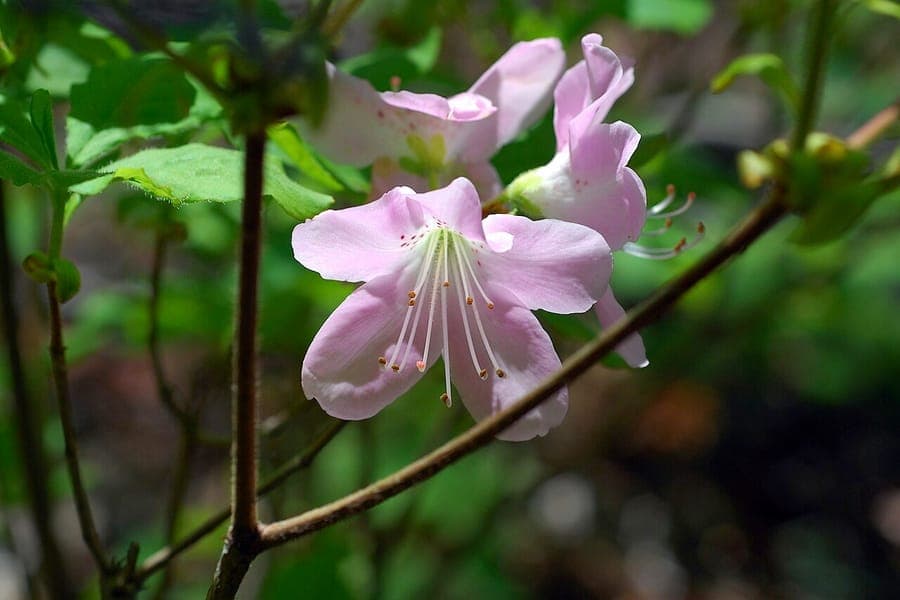
Eric in SF / CC BY-SA 3.0, via Wikimedia Commons
Schlippenbach rhododendron: complete guide
Rhododendron schlippenbachii
Want to see Schlippenbach rhododendron: complete guide in your garden?
1 minute, no credit card
Overview
Rhododendron schlippenbachii, commonly known as Schlippenbach rhododendron or Korean azalea, is a spectacular semi-deciduous shrub native to mountain regions of East Asia - northern China, Manchuria, Korea, and Japan. This plant is renowned for its large, pink flowers that create a dramatic effect in late spring. With its elegant growth habit and overwhelming bloom, it stands as an absolute classic among rhododendrons.
This is an ideal choice for gardeners seeking maximum ornamental value and visual impact. The Schlippenbach rhododendron delivers spectacular blooms with minimal maintenance.
Appearance and bloom
Rhododendron schlippenbachii grows as an open, elegantly-branched shrub reaching 2-4 meters in height. The plant develops a gracious, natural silhouette requiring minimal formal pruning. Foliage is large, elliptic-lanceolate, green, and partially or completely deciduous in winter.
The bloom is truly spectacular: in May, large, beautifully-formed flowers appear in shades of pink to bright red, sometimes with white markings. Flowers can reach 7-8 centimeters diameter and appear in clusters of 6-12 blooms. The fragrance is pleasant though not strong. The bloom lasts for several weeks and is incomparable.
After bloom, foliage remains decorative, and in autumn transforms to beautiful red tones before dropping.
Ideal location
The Schlippenbach rhododendron performs best in dappled shade with protection from strong afternoon sun. The plant thrives in cooler, mountainous conditions. In hot climates, increased shade is beneficial.
Position the plant in a sheltered corner, not exposed to strong winds. A location beneath tall trees or against a wall provides optimal conditions. The plant appreciates humid air.
Soil
The Schlippenbach rhododendron thrives on acidic, well-draining soils with pH between 4.5 and 6.0. The plant performs poorly in alkaline soils. Provide rich, humus-laden soil with abundant organic material.
Generously amend with peat moss, shredded leaves, or pine bark. Ensure good drainage while maintaining adequate moisture retention. The plant tolerates neither extremely dry nor waterlogged conditions.
Free design
Want to see Schlippenbach rhododendron: complete guide in your garden? Make a free design now.
Watering
The Schlippenbach rhododendron thrives in moderately moist, well-drained soils. Provide consistent watering, especially during the growing season and dry periods. The plant is sensitive to drought and deserves attentive water management.
Mulch well with shredded leaves or pine bark. In very warm conditions, daily misting can be beneficial to increase humidity.
Pruning
Regular pruning is not essential as the plant naturally develops an elegant form. After bloom, remove only dead, diseased, or overgrown branches. Gentle shaping is acceptable, but easily disrupts the natural appearance.
Avoid heavy pruning, especially in autumn. The plant forms flower buds immediately after the current season, so late pruning results in bloom loss.
Maintenance calendar
Spring: Water consistently. Apply fertilizer in April. Enjoy the spectacular bloom. Summer: Water regularly, especially during dry periods. Mulch well. Mist during hot spells. Autumn: Gradually reduce watering. Observe autumn color transformation. Winter: Protect from extreme frost. Minimal watering during cold periods.
Winter hardiness
Rhododendron schlippenbachii is moderately winter-hardy, tolerating temperatures to approximately -15 to -20 degrees Celsius. This is reasonable for many European regions. In very cold areas, winter protection may be needed. Protect especially from drying winds.
The plant can suffer from rapid temperature fluctuations that cause frost crack. A sheltered location is therefore beneficial.
Companion planting
The Schlippenbach rhododendron pairs beautifully with other large Asian rhododendrons and japonicas. Interesting combinations also emerge with hostas (with their large foliage), ferns, and other shade-loving plants.
Underplant with coral bells (Heuchera) or helleborus (Christmas roses) for additional seasonal interest. On gardenworld.app, you will find designs that maximize the potential of this magnificent flowering shrub.
Conclusion
Rhododendron schlippenbachii is an absolute masterpiece of nature. With its large, pink flowers and elegant growth habit, it is a must-have for gardeners seeking value and drama. This Asian classic brings spectacular bloom and visual impact to your garden.
Source quality specimens from specialist nurseries. Visit gardenworld.app for professional advice on rhododendron garden designs.
Want to see Schlippenbach rhododendron: complete guide in your garden? Make a free design now.
Upload a photo, pick a style, and get a photorealistic design with plant list in under a minute.
No credit card required


Similar plants
Zenobia pulverulenta: complete guide
Zenobia pulverulenta
Everything about Zenobia pulverulenta (honeycup): siting, acid soil, pruning and the fragrant white bells, in this complete care guide.
Dwarf huckleberry: complete guide
Gaylussacia dumosa
Everything about dwarf huckleberry (Gaylussacia dumosa): acidic soil, partial shade, pruning and care for this compact North American berry shrub.
Drooping leucothoe: complete guide
Leucothoe fontanesiana
Everything about drooping leucothoe (Leucothoe fontanesiana): shade tolerance, soil, watering, pruning, hardiness and companion plants.